

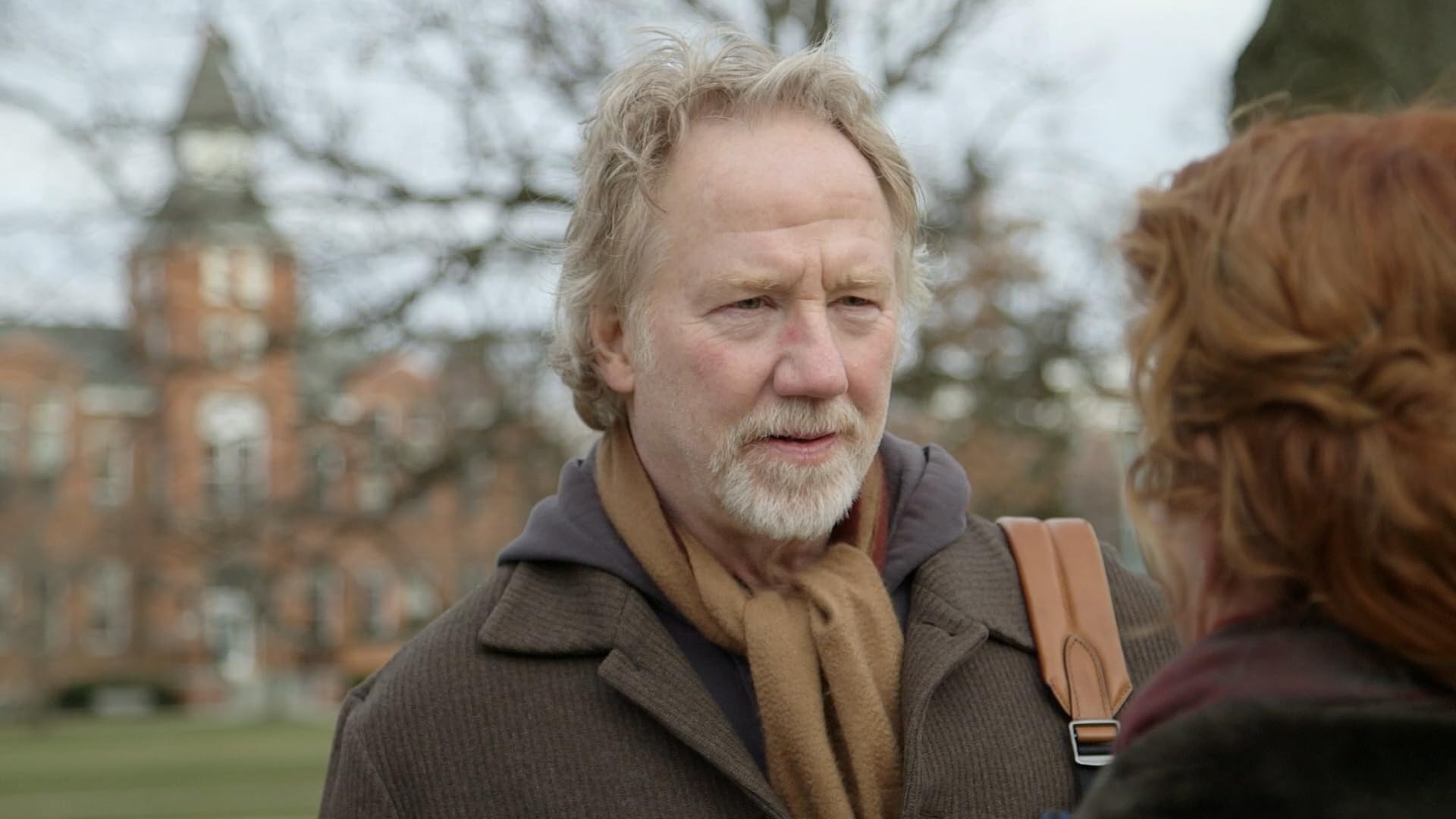
Newly surfaced police audio has complicated the already fraught child sex abuse case against actor Timothy Busfield, with the twin boys at the center of the allegations reportedly telling officers that he did not touch them inappropriately. The recordings, now circulating in legal filings and media accounts, have become a flashpoint in a prosecution that was already drawing intense scrutiny because of the children’s work in Hollywood and Busfield’s long career in television.
The case now turns not only on what the boys say happened, but on when and how they said it, and whether their shifting accounts reflect trauma, pressure, or exonerating doubt. As lawyers on both sides prepare for key hearings, the audio has raised fresh questions about the reliability of child testimony, the role of therapy in abuse disclosures, and how the justice system should respond when alleged victims appear to contradict the charges.
The criminal case against Timothy Busfield
Prosecutors in New Mexico have charged Timothy Busfield with two counts of criminal sexual contact of a minor and one count of child abuse tied to allegations involving twin child actors he met through work. According to detailed case summaries, the accusations center on alleged inappropriate touching that the boys say occurred while they were under his supervision, conduct that authorities argue crossed clear legal and ethical boundaries. The charges, which carry the potential for significant prison time, mark a dramatic turn for an actor whose public image was built on family dramas and network television roles, and they have quickly become a high profile test of how the industry handles alleged abuse involving working minors.
Case overviews note that Busfield, identified simply as Busfield in court documents, is accused of exploiting access he gained through his professional standing to commit the alleged acts. The charging documents, as described in one comprehensive breakdown of the accusations, state that Busfield is charged with two counts of criminal sexual contact of a minor and one count of child abuse related to the twin child actors. Those same materials emphasize that the case is still in its early stages, with prosecutors yet to present their full evidence at trial and the defense insisting that the allegations are unfounded.
How the twin accusers first came forward
The path from initial concern to formal accusation appears to have been indirect, running through therapy sessions rather than an immediate report to law enforcement. In the criminal complaint, prosecutors themselves acknowledge that the twin boys did not initially describe any inappropriate contact when first questioned, and that they only revealed the alleged abuse after spending time in counseling. That sequence has become central to the defense narrative, which points to the delayed disclosure as evidence that the boys’ memories may have been shaped or influenced after the fact, rather than reflecting spontaneous accounts of wrongdoing.
Reporting on the complaint notes that, as summarized in one account, In the criminal complaint, prosecutors concede that the boys only described the alleged inappropriate contact after those therapy sessions. That admission does not, on its own, undermine the state’s case, since delayed disclosure is common in child sex abuse matters, but it does give Busfield’s lawyers a clear line of attack on how the children’s statements evolved and whether any adults may have unintentionally steered their recollections.
The police audio where the boys deny being touched
The most striking development so far is the emergence of police audio in which the underage twins reportedly tell officers that Busfield did not touch them inappropriately. According to multiple descriptions of the recordings, the boys can be heard responding to direct questions from investigators and stating that there was no improper physical contact, a statement that appears to conflict with the later allegations that underpin the current charges. Defense advocates have seized on those denials as powerful evidence that the case rests on unstable ground, arguing that jurors should hear the boys’ earliest, most exculpatory statements alongside their later claims.
Accounts of the recordings describe the underage twin boys, who had worked with Busfield, speaking to police in a matter of fact tone as they deny that he touched them in a sexual way. One summary of the audio notes that the twins told officers he did not touch them inappropriately during an interview that took place before the therapy sessions that later produced the abuse allegations, a twist that has been highlighted in 24/7 News coverage. Another detailed account by Jane LaCroix explains that the boys are heard on tape saying he did not touch them, a point that has been widely cited as the core of the new evidentiary dispute.
Prosecutors’ explanation for the contradictions
Prosecutors have not backed away from the case in light of the recordings, instead arguing that the audio reflects the boys’ initial reluctance or inability to disclose abuse rather than proof that nothing happened. In their telling, the early denials are consistent with patterns seen in other child sex abuse cases, where victims may minimize or deny contact when first confronted, particularly if they fear consequences for themselves or for a trusted adult. That framing positions the therapy sessions not as contaminating influences, but as a setting where the twins finally felt safe enough to describe what they say Busfield did.
One detailed report notes that, according to prosecutors, the recordings show a failure to “disclose” abuse, not a reliable exoneration, and that the state continues to rely on later statements in which the boys describe Busfield allegedly touching their privates. That argument is reflected in coverage explaining that, But, according to prosecutors, the audio is better understood as evidence of non disclosure than as proof that no misconduct occurred. The state’s position underscores a broader legal reality: contradictions in witness statements do not automatically end a prosecution, but they do give defense lawyers potent material for cross examination and reasonable doubt arguments.
What the complaint and court records describe
Beyond the audio, court documents lay out a narrative in which Busfield allegedly used his proximity to the twins during a production to engage in sexual contact that the law defines as criminal. The complaint describes specific instances in which he is accused of touching the boys’ intimate areas, as well as broader conduct that authorities characterize as child abuse. These filings also detail the investigative steps that led to his arrest, including interviews with the children, their family, and others who worked with them, as well as the decision to seek pretrial detention based on the seriousness of the charges.
One extensive case history notes that an independent investigation was launched after concerns were raised about Busfield’s behavior while he was working in New Mexico, and that court documents say an investigator gathered statements that supported the allegations before he was booked into the Bernalillo County Metropolitan. Those same records reference the boys’ work on The Cleaning Lady, noting that The Cleaning Lady filmed in Albuquerque and that The TV series The Cleaning Lady began production in Albuquerque between 2022 and 2024, with a timeline that includes a key moment in Nov. when the investigation intensified. Together, the filings and supporting materials paint a picture of a methodical, if contested, inquiry that has now moved into the courtroom.
Busfield’s arrest, custody status, and legal posture
After learning of the warrant, Busfield did not wait to be picked up by authorities. Instead, he turned himself in to law enforcement, a move his supporters cite as evidence that he intends to fight the charges head on. Case summaries state that Busfield turned himself in on a Tuesday in mid January and has since been held while lawyers argue over whether he should remain behind bars or be released under supervision. The decision to surrender rather than attempt to evade arrest has been noted in legal commentary as a factor judges sometimes weigh when assessing flight risk and conditions of release.
According to one detailed account, Busfield turned himself on Tuesday, Jan. 13, and he remains in custody ahead of a pretrial detention hearing scheduled for Tues., where a judge will decide whether he can be released pending trial. Separate reporting on the audio notes that he has since been released on bail pending trial, creating some tension in the public record about his exact current status, although all accounts agree that his freedom is tightly constrained by the ongoing proceedings. In public statements quoted in those summaries, Busfield has maintained his innocence and expressed a desire to clear his name and return to working.
Industry fallout, from agency cuts to career scrutiny
The legal case has already reshaped Busfield’s professional life, with key industry partners moving quickly to distance themselves from him. On the same day he made his first court appearance on the child sex abuse charges, his longtime talent agency severed ties, a significant blow for any actor who relies on representation to secure roles and negotiate deals. The timing underscored how swiftly reputational damage can translate into concrete career consequences, even before a jury hears the evidence.
One report describes how, in an EXCLUSIVE, Innovative Artists dropped Timothy Busfield on the day he first appeared in court over the allegations, signaling that the agency saw too much risk in continuing the relationship. Separate coverage has revisited earlier complaints about his conduct in Hollywood, noting that They previously documented accusations that his behavior reflected a “calculated pattern of grooming, lack of boundaries, and exploitation of professional authority spanning decades,” according to documents cited in a detailed They noted account. Those prior allegations did not result in criminal charges, but they now form part of the broader conversation about his career and the power dynamics surrounding young performers.
How the new audio is reshaping the legal and public debate
The release of the police recordings has not only altered the legal landscape, it has also shifted public debate about the case. Supporters of Busfield argue that the boys’ initial denials should carry significant weight, framing the audio as the most reliable snapshot of their unprompted recollections. Critics counter that focusing on the earliest statements risks ignoring the complex ways in which child victims process and disclose abuse, particularly when the alleged perpetrator is a trusted adult or authority figure. The clash of interpretations has turned the recordings into a Rorschach test for broader beliefs about memory, trauma, and the justice system’s treatment of child witnesses.
Coverage by Jane LaCroix, who reported on the recordings for a national audience, notes that the audio has already been introduced in court filings and is expected to feature prominently in upcoming hearings. Her account explains that the twins are heard telling police that Busfield did not touch them, even as the criminal complaint later describes more explicit allegations that emerged after therapy. That tension is captured in summaries that describe how Jane LaCroix detailed the boys’ statements and the prosecution’s insistence that the case remains strong. For the public, the recordings have become a focal point in assessing whether the charges reflect a genuine pattern of abuse or a tragic misunderstanding amplified by the pressures of therapy and investigation.
What comes next for the case and the people involved
As the case moves toward a pretrial detention hearing and, eventually, a possible trial, the stakes are enormous for everyone involved. For the twins and their family, the process promises to be invasive and emotionally draining, with their statements, therapy sessions, and work history subjected to intense scrutiny. For Busfield, the outcome will determine not only his liberty but also whether he can salvage any part of a career that has already been severely damaged by the allegations and the swift reaction from employers and colleagues. The court will have to weigh the competing narratives around the audio, the timing of the disclosures, and the broader pattern of behavior described in the complaint.
More from Vinyl and Velvet:

Leave a Reply