

Royal watchers say the balance of power inside the House of Windsor is shifting, and not everyone is comfortable with the new reality. As Kate Middleton’s public standing climbs, insiders claim Queen Camilla has begun to feel pushed to the margins of a royal story that was supposed to be hers to help steer. Behind the polished balcony photos, a struggle over status, symbolism, and the future shape of the monarchy appears to be unfolding.
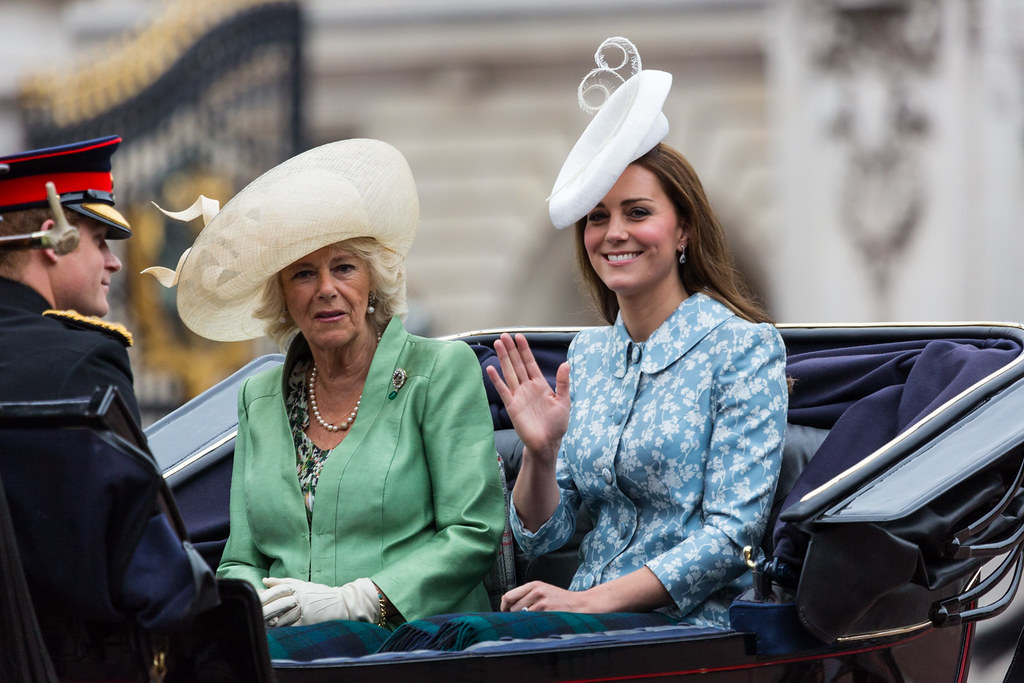
The new royal power dynamic
At the heart of the current tension is a simple but sensitive reality, the Princess of Wales has become the emotional center of the modern monarchy, while Queen Camilla holds the formal title of consort. Royal sources have suggested that Kate Middleton’s surging popularity has left Queen Camilla feeling “sidelined,” a word that cuts to the core of how influence is measured in a family that depends on public affection as much as constitutional authority. Those close to the situation describe a queen who expected to share the spotlight with her stepchildren, only to find that the brightest glare now follows the younger woman at almost every engagement.
Reports indicate that this sense of being overshadowed is not abstract but personal, with insiders claiming that the queen’s frustration is directed at none other than Kate Middleton herself. The suggestion that a reigning queen feels edged out by her daughter-in-law underscores how much the monarchy’s soft power now rests with the younger generation. It also helps explain why, according to those same sources, Kate is not inclined to retreat from the spotlight simply to soothe bruised feelings at court.
Polls that fuel palace insecurity
Public opinion data has given this private rivalry a hard numerical edge. A recent survey cited by Lucille Barilla reported that Kate Middleton secured a favorability score of 51, a figure that places her near the top of the royal league table even when she is not technically the single most popular royal. For a queen consort who has spent years working to rehabilitate her image, watching the Princess of Wales consolidate that kind of support can only sharpen anxieties about her own standing.
Other polling has reinforced the sense that the future of the institution is increasingly personified by the Waleses. The first major survey of the year found that Prince William and emerged as the most popular members of the British royal family, a result that effectively crowns them the public’s preferred face of the monarchy. For Queen Camilla, who occupies a higher formal rank but attracts less warmth, such numbers are not just a curiosity, they are a reminder that popularity, not protocol, now shapes the narrative of who truly leads the royal brand.
Kate’s relentless workload and “centre stage” role
Popularity does not materialize in a vacuum, and Kate’s schedule at the start of the year has underlined how hard she and her team are working to keep her at the forefront. Coverage of the period described how “Princess Kate Kicks Off” the year “Under Renewed Strain” as a “Royal Feud Grows Fiercer Than Ever,” with Kate Middleton reportedly in total demand for engagements and appearances that showcase her as a hands-on, modern royal. That framing casts her not as a passive beneficiary of public goodwill but as a central player in a family drama where every outing is weighed for its political and emotional impact, a dynamic highlighted in reports on Princess Kate Kicks the year.
Insiders have also pointed to the festive season as a flashpoint, saying that Kate’s visibility over Christmas was particularly striking. One account relayed that “Kate’s been centre stage over Christmas, and Cami is fuming,” a line that captures both the Princess of Wales’s elevated role and Queen Camilla’s alleged irritation at being eclipsed during a period traditionally dominated by the monarch and consort. Those same Insiders have suggested that Kate will not back down from this expanded platform, even if it deepens the rift with “Cami” behind palace walls.
Social media, YouGov and the Wales brand
Beyond traditional polling, the royal popularity contest now plays out in real time on social media, where fan accounts amplify every data point that flatters the Prince and Princess of Wales. One widely shared Instagram post trumpeted “New” findings with the phrase “According to the first YouGov poll of 2026, The Prince and Princess of Wales remain the most popular royals,” turning dry research methods into a celebratory banner for supporters. The same post stressed that “The Prince” and his wife are seen as the most popular in the United Kingdom, reinforcing the idea that the couple’s brand is not just strong but dominant, as highlighted in the New poll post.
Another fan account echoed those findings by declaring “NEWS” that the first YouGov Royal Family tracker of the year showed Prince William and Catherine as the most favoured senior royals, language that effectively brands them as the monarchy’s flagship couple. The post framed the survey as proof that the Royal Family is now led in the public imagination by the Waleses, not by the king and queen. For Queen Camilla, who has never inspired the same kind of online fandom, the sight of Kate’s supporters turning polling data into viral content is a reminder that the younger woman’s influence extends far beyond the palace gates.
Camilla’s simmering resentment and past flashpoints
The current mood cannot be separated from a series of earlier incidents that reportedly left Queen Camilla feeling exposed and resentful. One account from Sep noted that recent reports had indicated Queen Camilla fears being pushed to the sidelines due to Kate’s popularity, particularly as the younger royal’s every appearance seems to generate positive coverage. That same report suggested that the two women “do not get along so well,” hinting at a deeper personality clash that predates the latest polling and has been aggravated by each new sign of Kate’s ascendancy, as described in coverage of Queen Camilla and Kate.
Other flashpoints have centered on sensitive internal decisions, including the handling of Prince Andrew. Reports from Nov described how Tensions have reportedly risen within the royal family following Prince William and Princess Kate’s involvement in discussions concerning the disgraced duke, with Queen Camilla said to be “fuming” and accusing the couple of going behind her back. That narrative, which cast Tensions as a direct result of Kate and William asserting themselves on a controversial issue, reinforced the impression that Camilla sees the younger pair not just as rivals for public affection but as challengers to her influence over King Charles’s decisions.
Astrological warnings and talk of stepping back
Into this fraught atmosphere has stepped an unexpected voice, the astrologer once associated with Princess Diana, whose comments have been seized upon by royal watchers as a kind of cosmic commentary on Camilla’s predicament. In one interview, the astrologer suggested that “Astrologer Predicts Queen Camilla Will” “Step Back From Duties” in 2026 as “Her Dynamic With King Charles Will Be” tested, language that many interpreted as a prediction of reduced visibility or influence for the queen consort. The idea that a figure linked to Princess Diana would foresee a step back for Camilla has added a layer of symbolism to an already emotionally charged rivalry.
Another detailed reading framed the year ahead as a period when “2026 places Pluto, the powerful” planet of transformation, in a position that could reshape Camilla’s role both within the family and with the public. The astrologer argued that “She” has a knack for balancing her personal and private affairs, which she will continue to do in 2026, but also hinted that “Camilla” might find it necessary to recalibrate her duties as the pressure mounts. For those inclined to see celestial patterns in royal politics, such forecasts, shared in a Royal context, have been read as further evidence that the queen’s era at the center of the stage may be shorter and more fragile than once imagined.
King Charles III caught in the middle
All of this plays out against the backdrop of a monarch who still enjoys solid support but must manage competing egos within his own household. Recent polling has shown that King Charles III retains solid public backing, with six in 10 Britons expressing positive views of the monarch compared to roughly three in 10 who do not, a level of approval that is the highest he has recorded since March 2021. That data, highlighted in analysis of King Charles III and Britons, suggests that the king is not in immediate danger of losing the public’s confidence, even as his family navigates internal strains.
Yet Charles’s position is complicated by reports that Queen Camilla is “seething” at Princess Kate for challenging his power, with one account stating that Tensions are reportedly escalating within the royal household as the younger couple are accused of acting on their own. The suggestion that Kate and William are seen as encroaching on the king’s authority, and that this perception is fueling Camilla’s anger, points to a delicate balancing act for Charles as both husband and father. The report on Queen Camilla, Princess Kate for and King Charles suggests that the monarch must weigh his consort’s sensitivities against the undeniable fact that the public increasingly looks to the Prince and Princess of Wales as the de facto leaders of the royal project.
Symbolism, tiaras and the quiet language of status
Beyond polls and briefings, the rivalry between Kate and Camilla is also being read into the smallest details of royal pageantry. Insiders have said that tension between the two women is still simmering weeks after a huge state occasion, with one source claiming that Kate’s choice of tiara was “no accident and highly symbolic.” In that telling, the Princess of Wales used a piece of jewellery to signal her confidence and seniority, a subtle but potent message in a court where accessories can speak as loudly as speeches. The account, shared by Insiders who focused on Kate, suggests that every public appearance is now scrutinized for signs of one woman asserting herself over the other.
Such symbolism matters because it feeds into a broader narrative about who truly embodies the future of the Crown. When Kate appears in a dazzling tiara or a carefully chosen gown, commentators increasingly interpret those choices as declarations of her status as the next queen, rather than as deference to the current consort. For Queen Camilla, who spent years in the shadows before finally being crowned, the idea that her daughter-in-law’s wardrobe can overshadow her own hard-won position is more than a fashion quibble. It is a reminder that in the modern monarchy, image, popularity and subtle signals of hierarchy can be as consequential as any formal title.
What the feud means for the monarchy’s future
Taken together, the reports of private resentment, public polling and symbolic one-upmanship paint a picture of a royal household wrestling with generational change. Kate Middleton’s rising profile, bolstered by a favourability score of 51 and repeated confirmation that she and Prince William top popularity rankings, has created a situation in which the Princess of Wales often appears more central to the monarchy’s story than the reigning queen consort. For Queen Camilla, who is said to feel sidelined and even humiliated by some of these developments, the emotional toll is obvious, even if palace officials insist that all is well.
For the institution itself, the stakes are more complex. On one hand, the fact that The Prince and Princess of Wales dominate both traditional polls and social media enthusiasm suggests that the monarchy has a strong bench as it looks ahead to the next reign. On the other, persistent talk of feuds, Tensions and predictions that Camilla may Step Back From Duties risk undermining the image of unity that the Crown relies on in moments of national stress. Whether the key players can quietly resolve their differences, or whether the rivalry between queen and future queen continues to spill into public view, will help determine how stable the House of Windsor appears in the years to come.
More from Vinyl and Velvet:

Leave a Reply