

A California judge has ordered the godmother of a man who long claimed Jay-Z was his father to pay nearly six figures in legal costs, closing a decade of paternity litigation with a financial penalty instead of a DNA test. The ruling caps years of filings that targeted the rapper, born Shawn Carter, and affirms that the case lacked legal footing while still leaving lingering questions for the family that pursued it. For Jay-Z, the outcome is a rare instance of a celebrity not only defeating a high-profile claim but also walking away with a court-ordered reimbursement of his legal bills.
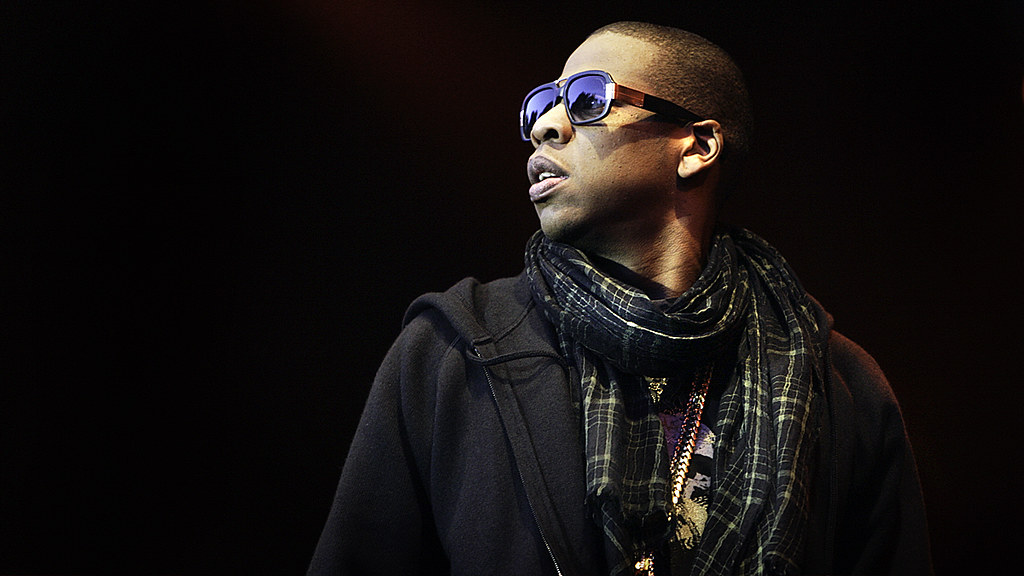
The decade-long fight over Jay-Z’s alleged son
The paternity dispute traces back roughly ten years, centered on allegations that Jay-Z secretly fathered a man who grew up believing the Brooklyn mogul was his biological parent. Over that period, the case moved through multiple courts and generated a thick stack of filings, but it ultimately ended not with genetic proof or a negotiated settlement, as some observers expected, but with a judge ordering the other side to pay. One summary of the saga notes that, After years of motions, the matter concluded “not with DNA but with a major bill to pay,” underscoring how far the litigation had drifted from its original goal of establishing parentage.
Throughout this period, the man at the center of the claims and his supporters argued that the music star and public officials had failed him, insisting that the courts should compel a test and recognize him as Jay-Z’s son. Yet the record that emerged in federal court painted a different picture, one in which judges repeatedly questioned the legal basis for the filings and eventually shut the door on further attempts. By the time the latest ruling arrived, the paternity narrative had become less about family ties and more about the consequences of pressing a weak case against a wealthy and well-represented defendant like Jay.
Who is Lillie Coley and why the court focused on her
The financial judgment did not fall on the alleged son himself but on his godmother, Lillie Cole, also identified in coverage as Coley, who became the driving force behind the legal campaign. Described as the godmother of Rymir Satterthwaite, she positioned herself as an advocate seeking accountability from a powerful entertainer she believed had abandoned his responsibilities. Over time, however, judges came to see her as the architect of a meritless crusade, not a guardian pursuing a viable claim.
Coley’s role expanded when she filed a fresh lawsuit in California in 2025, accusing the Brooklyn businessman of neglect and alleging that he and state officials had worked together to block a fair hearing of the paternity issue. By naming public entities and reviving decades-old accusations tied to the 1990s, she raised the stakes but also exposed herself to counterarguments that the litigation was abusive. The latest ruling, which orders her to cover Jay-Z’s legal costs, reflects the court’s conclusion that she crossed the line from advocacy into legally baseless harassment.
How the California court shut the case down
The turning point came when a California federal judge evaluated Coley’s newest complaint and sided decisively with Jay-Z’s legal team. According to a detailed account of the ruling, the judge concluded that the prolonged push to force a paternity reckoning had “no legal basis” and that the effort to keep the case alive needed to be shut down “once and for all.” One post summarizing the outcome noted that the hip-hop mogul effectively WALKS OUT WITH figures after the court’s decision, capturing the sense that the case had finally died in dramatic fashion.
Another description of the proceedings explains that the judge explicitly sided with Jay-Z’s legal team, finding that the long-running litigation campaign had become detached from any viable claim. That assessment paved the way for the dismissal of the paternity lawsuit with prejudice, a key legal phrase that, as another report on the Paternity Lawsuit notes, means the claims cannot simply be refiled in another form.
The six-figure award: $119K, $120K and “nearly $120,000”
At the heart of the latest headlines is the money. Multiple accounts agree that Jay-Z is now entitled to a six-figure reimbursement of his legal expenses, though they describe the exact amount in slightly different ways. One breakdown of the judgment states that the court awarded him $119K in legal fees, a figure echoed in another report that notes the judge “Awards Him” that amount after ending the case. Those references emphasize the precision of the court’s calculation and frame the payment as compensation for the cost of defending against years of filings.
Other summaries round the figure up, describing Jay-Z as “entitled to recover” nearly $120,000 from Coley, while a widely shared clip notes that $120K was awarded after the paternity lawsuit was thrown out. A separate write-up on the same ruling reiterates that JAY-Z is “entitled” to receive nearly $120,000, underscoring that, whether framed as $119K or “nearly $120,000,” the court’s order leaves Coley facing a substantial bill.
Judge Garnett’s dismissal with prejudice
The financial award is only part of the story. The judge’s decision to dismiss the case with prejudice carries its own weight, signaling that the court saw no path forward for the claims. One account identifies Judge Garnett as the federal jurist who previously tossed Coley’s paternity lawsuit in November, closing the door on further attempts to litigate the same allegations in that forum. The “with prejudice” label, highlighted in another summary that notes the court’s decision to Judge Dismisses the case, is crucial because it prevents the same claims from being repackaged and refiled.
That finality is especially significant in a dispute that has already stretched across a decade and multiple jurisdictions. By affirming that Jay-Z is “entitled” to recover his costs and that the paternity lawsuit is over “With Prejudice,” the court sent a message about the limits of persistence in civil litigation. For Coley and the alleged son, it means the federal courts have effectively exhausted their patience with the narrative that Jay-Z secretly fathered a child in the 1990s, a storyline that one report on the Judge Ends Jay case notes was tied to long-ago events.
Jay-Z’s consistent denials and public stance
While the legal arguments shifted over the years, Jay-Z’s public position did not. The rapper, referred to affectionately in some coverage as Hov, has consistently denied that he is the man’s father. One detailed summary notes that he “consistently denied the allegations,” even as Coley and her godson pursued new angles and new courts. That unwavering stance, combined with his willingness to fight the case rather than quietly settle, set the stage for the eventual fee award in his favor.
Another account underscores that, However, JAY-Z, born Shawn Carter, has “vehemently denied the allegations from day one,” a phrasing that captures both the intensity and the longevity of his response. For a figure whose personal life has often been scrutinized in music and media, the decision to fight this particular claim to the end, and to seek reimbursement, signals a desire not just to win but to deter similar accusations in the future.
Why the case ended without DNA evidence
One of the most striking aspects of the outcome is that, after all the filings and public debate, the case did not hinge on a DNA test. A widely shared summary points out that, after a decade of court activity, the Jay-Z paternity dispute “concluded not with DNA but with a major bill to pay.” That line captures the disconnect between what many observers assumed would be the decisive evidence and what actually mattered in court: procedural rules, statutes of limitation, and the sufficiency of the pleadings.
From the bench’s perspective, the absence of genetic testing was not a failure but a reflection of how civil litigation works. Judges are not obligated to order DNA simply because a party requests it, particularly when the underlying claims are time-barred or jurisdictionally flawed. By focusing on whether Coley’s filings met legal standards, rather than on the emotional weight of the paternity question, the court effectively reframed the dispute as a case study in overreaching advocacy. The result is a judgment that speaks more to the boundaries of the legal system than to the biological truth that Coley and her godson sought to establish about Jay.
Anti-SLAPP undertones and the cost of meritless claims
Several descriptions of the ruling highlight language and hashtags associated with anti-SLAPP principles, suggesting that the court saw elements of strategic or retaliatory litigation in Coley’s filings. One post celebrating the decision frames it as a moment when the court “shuts down” a meritless campaign against a “HipHopMogul,” tagging the update with AntiSLAPP to emphasize the broader free-speech and harassment context. While the precise legal mechanism is not fully detailed in the summaries, the rhetoric around the ruling aligns with a growing trend of courts penalizing litigants who use lawsuits to pressure or punish public figures.
Another recap of the outcome similarly notes that the court’s decision left the hip-hop star walking out “WITH SIX FIGURES” after the paternity case finally died, again pairing the financial result with language about shutting down abusive litigation. For celebrities and other high-profile defendants, the message is clear: courts are increasingly willing to not only dismiss weak claims but also to shift the financial burden back onto those who bring them, especially when the target is a public figure like Jay.
How social media framed Jay-Z’s “six-figure walkout”
Beyond the courtroom, the story of Jay-Z’s legal victory has been shaped heavily by social media, where short clips and captions distilled the complex case into a simple narrative of vindication. One viral post declared that JAY-Z “WALKS OUT WITH SIX FIGURES” after the paternity case finally died in court, turning the judgment into a punchy, shareable line. Another clip framed the outcome as a moment when the “Court Shuts Down” the long-running effort against the rapper, reinforcing the idea that the legal system had decisively sided with him.
Short-form video also played a role, with one reel emphasizing that #JayZ was awarded $120K after the lawsuit was thrown out and reminding viewers that Coley had long alleged that Jay-Z was the father. These posts, which compress years of litigation into a few seconds of video and a handful of hashtags, have helped cement the public perception that the case ended not in ambiguity but in a clear, financially backed win for Jay.
What the ruling means for future celebrity paternity claims
The outcome of this case is likely to reverberate beyond Jay-Z’s immediate circle, particularly for lawyers and litigants considering similar suits against high-profile figures. By ordering Coley to pay nearly six figures and affirming that Jay-Z is “entitled” to recover almost $120,000, the court signaled that pursuing weak or time-barred paternity claims against celebrities can carry serious financial risks. That message is reinforced by another summary that notes a California court ordered that Jay-Z is “entitled to recover” nearly $120,000 for his legal fees, underscoring the judiciary’s willingness to protect defendants from protracted, unfounded litigation.
At the same time, the case illustrates how emotionally charged family claims can collide with the cold logic of procedural law. For Coley, who filed a new lawsuit in California in 2025 accusing the Brooklyn businessman of neglect, the ruling is a harsh reminder that courts prioritize legal sufficiency over personal conviction. For other would-be plaintiffs, the message is equally stark: without solid evidence and a sound legal theory, taking on a superstar like Jay-Z can end not in recognition or support, but in a court order to pay their lawyer’s bill instead of his.
More from Vinyl and Velvet:

Leave a Reply