

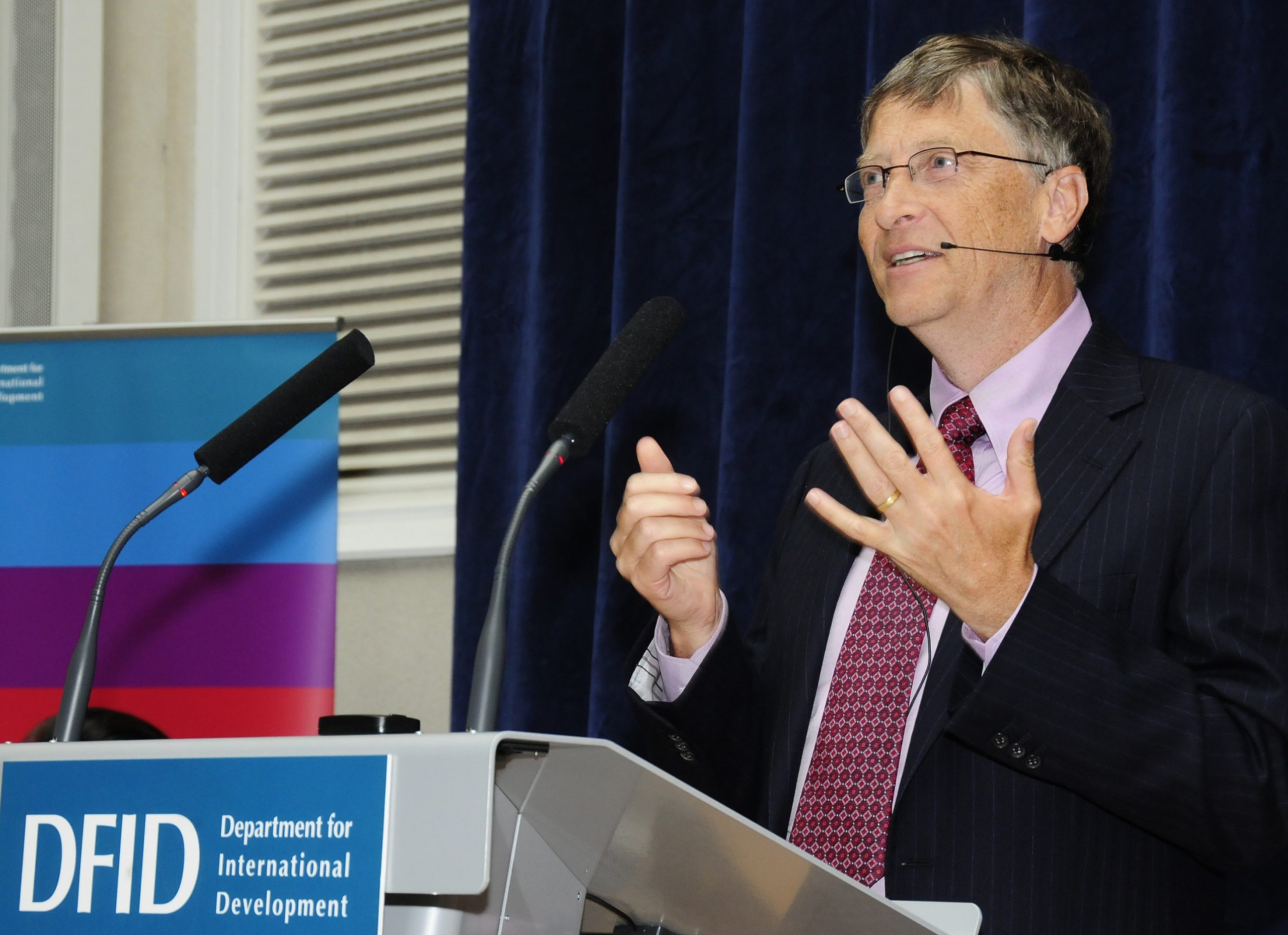
Bill Gates is sounding an alarm that cuts against his reputation as a relentless optimist. After decades of progress in global health and poverty reduction, he now warns that the world is sliding “backwards” and has roughly five years to avoid what he calls a modern Dark Age. His message is stark but not fatalistic, arguing that the same forces driving risk, from climate to artificial intelligence, can still be redirected toward a more equitable and resilient future if governments, philanthropies, and industry act quickly.
At the center of his warning is a simple tension: humanity has never had more powerful tools, yet some of the most basic measures of human welfare are deteriorating for the first time in a generation. Gates frames the next half decade as a closing window in which leaders must decide whether those tools entrench crisis or unlock a new wave of problem solving.
The Five-Year Window Gates Says We Cannot Waste
Gates has begun describing the next five years as a decisive period in which the world either doubles down on progress or drifts into a prolonged era of preventable suffering. In interviews and public notes, he argues that the combination of rising child deaths, climate shocks, and shrinking aid budgets is pushing societies off the trajectory that had defined the early twenty-first century. His warning that the world is going “backwards” is not just rhetorical flourish, it is tied to concrete reversals in health and development that he believes could harden into a generational setback if left unchecked.
According to reporting on his recent comments, Gates has attached a specific horizon to this concern, saying there is roughly a five year deadline before the world risks entering what he calls a new Dark Age, a period in which gains in health, education, and poverty reduction stall or reverse under the weight of overlapping crises. He links that risk to the way health and economic shocks have disrupted fragile systems, arguing that the next half decade will determine whether those systems are rebuilt or allowed to decay further, a point underscored in his warning that the world is going “backwards” and faces a five year window before a potential Dark Age.
Child Mortality: The Statistic That Shook His Optimism
The clearest data point behind Gates’s alarm is the reversal in global child mortality, a metric he has long treated as a litmus test for human progress. For more than twenty years, deaths of children under five fell faster than at any time in recorded history, a trend he credits to basic interventions such as Vaccines, improved sanitation, and wider access to primary care. That decline was central to his belief that targeted investments could steadily chip away at extreme poverty and disease, even in the poorest countries.
That story has now jolted into reverse. Gates has highlighted that, for the first time this century, global child deaths have risen, with under-five mortality increasing from 4.6 m in 2024 to 4.8 m in 2025. In another summary of his remarks, he points to the same reversal, noting that child deaths rose from 4.6 m to 4.8 m after years of steady decline. On social media, he has echoed that message, warning that the world is moving backwards as under-five deaths climbed from 4.6 million to 4.8 million, and tying that shift to reduced development assistance for health.
Why Aid Cuts and “Backwards” Budgets Matter So Much
Behind the mortality numbers is a quieter story about money and political will. Gates has repeatedly warned that development assistance for health is shrinking just as needs are rising, a combination he sees as particularly dangerous for low income countries that rely on external funding for vaccines, maternal care, and disease surveillance. He argues that when donors cut or freeze budgets, the impact is not abstract, it shows up in missed immunization campaigns, understaffed clinics, and delayed responses to outbreaks that would otherwise be contained.
In his recent reflections, Gates links the uptick in child deaths directly to these financial pressures, describing how reduced aid has limited access to lifesaving tools in the places that need them most. One account of his remarks notes that he is especially concerned about how shrinking budgets are undermining the distribution of basic health technologies, a trend he connects to the rise from 4.6 m to 4.8 m deaths and to the risk of a broader backslide in global health. He has also emphasized that these cuts are happening in some of the most generous countries, suggesting that political fatigue, not capacity, is driving the retreat.
Climate Shocks and the Risk of a Modern Dark Age
Gates’s Dark Age metaphor is not limited to health statistics, it is also rooted in the accelerating impact of climate change on vulnerable communities. He has warned that if rising temperatures are not contained, Climate will cause “enormous suffering” and join poverty and disease as a core driver of instability. That framing treats climate not as a separate issue but as a force multiplier that can unravel gains in food security, health, and education if left unchecked.
Recent reporting on his comments has pointed to specific events that illustrate this risk, including one of the worst tropical storms on record that hit Jamaica and devastated infrastructure. Analysts have used that storm to underscore how Climate change is already amplifying extreme weather, with the poorest communities bearing the brunt. Gates’s concern is that without rapid investment in clean energy and adaptation, such shocks will become frequent enough to erode state capacity, fuel migration, and push regions into the kind of chronic crisis that fits his Dark Age warning.
Yet: Why Gates Still Refuses to Give Up on Progress
Despite the severity of his language, Gates insists that the world is not doomed to slide irreversibly into a Dark Age. In his annual reflections, he writes that, Yet, he remains optimistic about the long term future and does not believe society will fall back into the Dark Age if it chooses to act. That optimism is not blind; he describes it as “with footnotes,” acknowledging that the path forward is narrower and more conditional than it appeared a decade ago.
Part of his confidence comes from the track record of science and innovation in solving problems that once seemed intractable. In another note, he points out that there was a time when humanity did not have effective tools against diseases like HIV, and now it does, arguing that similar breakthroughs are possible in other areas if investment continues. He writes that he believes that, within the next generation, the world can develop new solutions for major killers, a view he lays out in a reflection that again begins with the word Yet and explicitly rejects the idea that a Dark Age is inevitable.
AI and the Double-Edged Future of “No Upper Limit”
Artificial intelligence sits at the center of Gates’s cautious optimism. He has argued that there is “no upper limit” on what AI could do to improve lives, from accelerating drug discovery to personalizing education, if it is deployed responsibly. At the same time, he acknowledges that Bill Gates sees significant risks, including job disruption and the potential for AI systems to entrench inequality if access is limited to wealthy countries and companies.
Gates has framed AI as both an engine of productivity and a test of political judgment. He notes that Job disruption is already visible as software becomes more capable, and he has urged policymakers to invest in training and safety research so that AI’s benefits are widely shared. In his view, the technology could be “game changing” at scale for education and health, but only if guardrails are built quickly enough to prevent misuse and concentration of power, another reason he treats the next five years as a critical governance window.
Energy Innovation and the Race to Decarbonize
Alongside AI, Gates places clean energy innovation at the heart of any strategy to avoid a prolonged period of crisis. He argues that the world is already starting to see promising advances in areas like grid scale storage, low carbon fuels, and more efficient industrial processes, but that deployment remains far too slow to meet climate goals. In his view, accelerating this transition is not only about cutting emissions, it is also about reducing the long term economic damage that unchecked warming would inflict on agriculture, infrastructure, and health systems.
Gates has called for a surge of investment in technologies that can decarbonize the hardest sectors, from cement to aviation, and has highlighted the role that public policy can play in de risking early stage projects. He writes that the coming years can be ones of real progress if governments and companies commit to scaling up these solutions, a point he makes in a reflection on how energy innovation, if accelerated now, can help ensure that the decades ahead are remembered for breakthroughs rather than breakdowns in energy and jobs.
How Gates Frames Responsibility for Avoiding a Dark Age
Gates is careful to spread responsibility for the current backsliding across multiple actors, from national governments to philanthropies and the private sector. He has stressed that wealthy countries in particular have a duty to maintain or increase their support for global health and climate adaptation, arguing that their choices over the next few budget cycles will determine whether the recent rise in child deaths becomes a blip or a trend. He also points to the influence of major technology companies, including the one he co founded, in shaping how AI and clean energy tools are developed and shared.
In a widely discussed note, Bill Gates describes the “Thing” he is most upset about as the reversal in health equality, even as AI disruptions gather pace. Other summaries of his annual letter note that Gates strikes an optimistic tone anchored in AI’s potential, while acknowledging that challenges are mounting and that some of the most generous countries are now pulling back. That combination of frustration and guarded hope underpins his argument that the next five years are less about discovering what to do and more about mustering the will to do it.
From Warning to Playbook: What Gates Wants Leaders To Do Now
Gates’s Dark Age warning is ultimately meant to be a spur to action rather than a prediction of collapse. He has laid out a rough playbook for the coming years that centers on restoring momentum in child health, protecting aid budgets, accelerating climate action, and steering AI toward public benefit. He argues that relatively modest increases in funding for vaccines, primary care, and nutrition could reverse the recent rise in child deaths, especially if paired with stronger local health systems that can withstand future shocks.
On climate, he urges governments to treat clean energy deployment and innovation as complementary priorities, investing in both mature technologies like solar and wind and in emerging solutions that can cut emissions from heavy industry. He also calls for clearer rules and investments to ensure that AI tools are accessible to low and middle income countries, not just to wealthy users, so that the technology can help close gaps in education and health rather than widen them. In one widely shared summary of his remarks, Bill Gates is quoted warning that the world is going “backwards” and could face a present day Dark Age, but he pairs that with concrete suggestions for how leaders can still bend the curve back toward progress.
More from Vinyl and Velvet:

Leave a Reply