

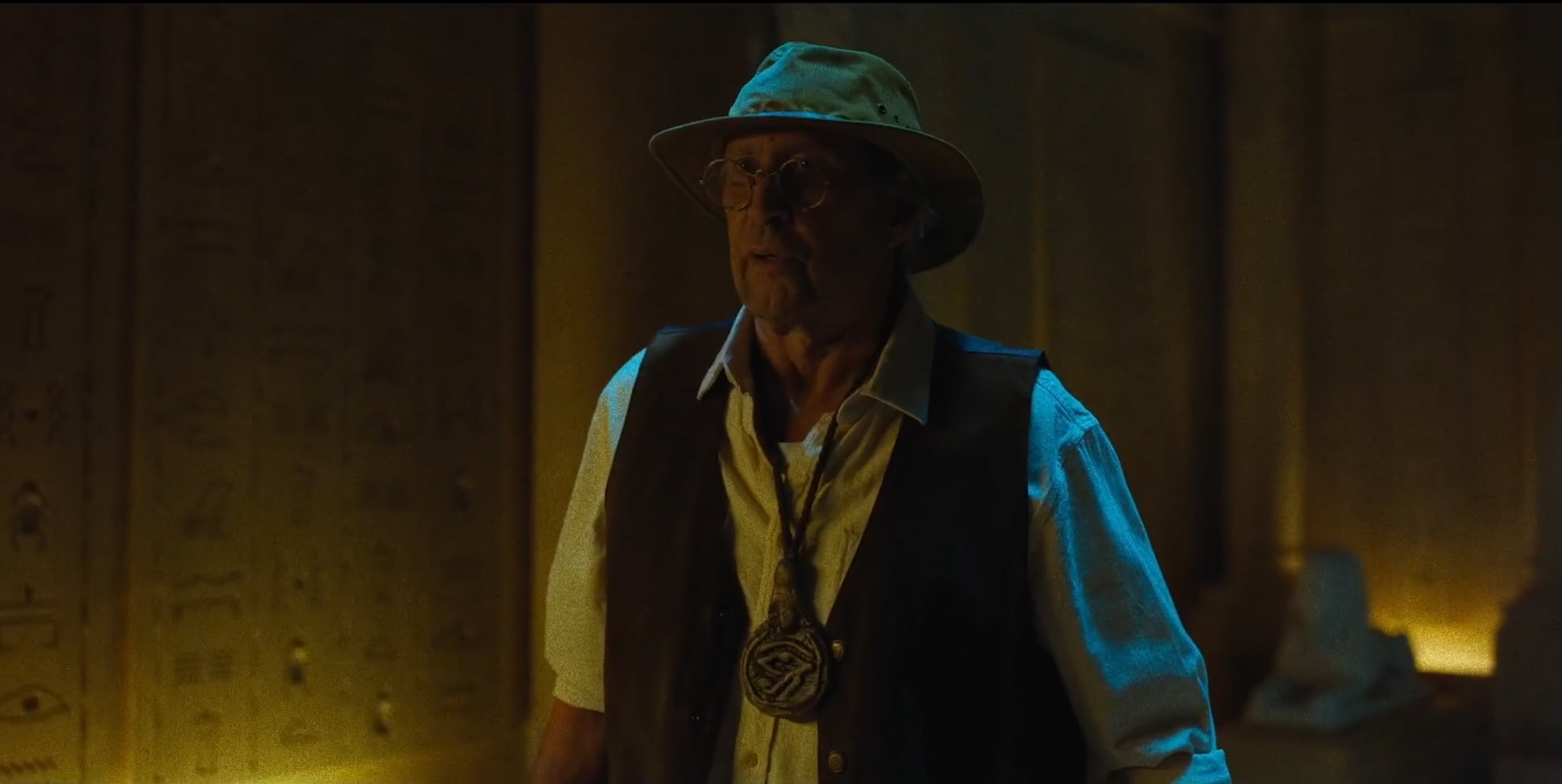
Chevy Chase’s family braced for a goodbye at his hospital bedside, convinced they might be watching his final moments. Instead, the 80-year-old woke from an eight day coma, listened to a nurse describe his condition, and cracked a perfectly timed “That’s what she said” punchline that told everyone in the room the old Chevy was still in there. The joke landed like a defibrillator for his loved ones, a flash of the same deadpan mischief that made him famous long before anyone had heard of heart failure or medically induced comas.
What happened around that one-liner is not remotely funny: a near fatal cardiac collapse, a family told to “prepare for the worst,” and a long recovery that has left lasting scars. But the way Chase and his children are talking about it now, ahead of a new CNN documentary, turns that hospital scene into something more complicated and more human, a reminder that even in the bleakest ICU, a dirty joke can double as a survival instinct.
The night Chevy’s family thought they were losing him
By the time doctors decided to put Chevy Chase into a medically induced coma, his heart had already failed so badly it could not pump blood properly, and his children were pulled aside for a conversation no family wants. His daughter Caley has described how specialists warned them they might not get him back, that they did not know how present he would be if he woke up, and urged them to prepare for the worst. The decision to keep him under for eight days was not some dramatic flourish, it was a last ditch effort to stabilize a body that had simply crashed.
Caley has since said the choice to induce that coma felt like watching her father “basically come back from the dead,” because the alternative was losing him outright. In one account, she recalls how the medical team spelled out the stakes, explaining that his heart failure in 2021 had left them with no guarantees about brain function or personality on the other side of sedation, and that they might never again see the version of Chase they knew from family dinners and old movie sets. That context makes the later moment, when he finally opened his eyes and reached for a joke, feel less like a throwaway gag and more like a small act of defiance against everything those doctors had just laid out in that stark warning.
The “That’s what she said” that broke the tension
When Chase finally surfaced from the coma, his family did not know what version of him they were going to meet, if any. Caley has said that at first all he could really do was use his voice, his body still heavy and uncooperative after more than a week of enforced sleep, and that everyone in the room was listening for clues about how much of him had survived. A nurse began explaining some aspect of his condition, using the kind of clinical phrasing that fills hospital rooms, and out of nowhere he cut in with the line that has now become legend in his family: “That’s what she said.”
In the retelling, that joke hit like a pressure valve releasing, the kind of slightly inappropriate, perfectly timed quip that has always been part of his arsenal. His children have said they instantly recognized it as proof that their father’s comedic instincts were still firing, even if his body was not, and that the nurse’s startled reaction only underlined how surreal it was to hear a punchline in that setting. The moment has since been folded into a broader account of his ordeal, including a social media post teasing a CNN project where his family revealed he nearly died in 2021 and punctuated the update with the all caps declaration “I’M BACK 💪,” a nod to the same stubborn streak that produced that bedside joke.
From “I’m Chevy Chase and you’re not” to “I’m back”
For anyone who grew up on his work, that hospital wisecrack lands with an echo of an earlier catchphrase. Long before heart monitors and ICU alarms, Chase built a career on a kind of smug, self aware persona, crystallized in the line “I’m Chevy Chase and you’re not,” which became a calling card for his early television and film work and still trails him in retrospectives and archives. That character, the guy who always seemed half amused and half above the chaos around him, is exactly who his kids were hoping to see again when he opened his eyes. Hearing him reach for a familiar brand of innuendo in a hospital bed suggested that the old rhythm was still there, even if the setting had changed.
In the years since that 2021 crisis, Chase has leaned into that continuity, framing his survival as a kind of comeback tour. His family’s “I’M BACK 💪” message, shared ahead of a CNN documentary, reads like a deliberate callback to that earlier persona, a way of saying that the man who once strutted through sketches and movies with unearned confidence is now doing a more fragile, hard won version of the same thing. It is not that the health scare has been minimized, it is that he and his children are choosing to tell the story with the same dry, slightly cocky tone that defined his “I’m Chevy Chase and you’re not” era, even as they acknowledge how close they came to losing him.
The brutal reality of heart failure and its aftermath
Strip away the gallows humor and the medical file is sobering. Chase has described how his heart failure in 2021 left him in a five week hospital stay, with doctors explaining that his heart simply could not pump his blood properly and that a medically induced coma was the only way to give his body a chance to reset. A new documentary details how he spent eight days under, with his family told bluntly that they might never get him back in any meaningful way, a warning that has been echoed in accounts of the ordeal that quote doctors telling them to prepare themselves for the worst. The phrase “back from the dead” is not metaphorical flourish here, it is how his own daughter has chosen to describe what it felt like to see him wake up.
Even after he survived, the bill came due in other ways. While Chase recovered from the coma, he suffered serious side effects, including major memory issues that he has linked directly to the heart failure and the time he spent sedated, telling interviewers that, according to his doctors, his memory would be “shot” and that this is exactly what has happened. Later coverage has filled in more detail, noting that while Chase recovered from the coma he has been left with significant cognitive fallout, a reality that sits in tension with the breezy tone of his jokes but does not erase them, as he and his family continue to talk about how While Chase is back, he is not unchanged.
How his family, and Chevy himself, are framing the comeback
What stands out in the way the Chases are telling this story now is how much agency they are claiming in the narrative. Caley has been explicit about the terror of hearing doctors say they might not get him back and that all he might be able to do is use his voice, yet she has also chosen to highlight that first joke as the moment she knew her father was still himself, even if the road ahead would be rough. In one account, she recalls being told to prepare for the worst and then watching him immediately test the boundaries of what was appropriate to say to a nurse, a whiplash that only makes sense if you know the man she grew up with.
More from Vinyl and Velvet:

Leave a Reply