

Beyoncé and Taylor Swift are no longer just pop stars with massive fan bases, they are billionaires whose money and megaphones now sit squarely inside America’s political arena. As their fortunes and cultural reach grow, so does the backlash from critics who say they are turning private wealth into public power in ways that look uncomfortably similar to the billionaires they once seemed to counter.
The debate is not really about whether they care about issues, it is about what happens when two of the most influential entertainers on the planet start to operate in the same political space as corporate donors, super PACs, and dark money groups, only with stadium tours and streaming numbers as their leverage.
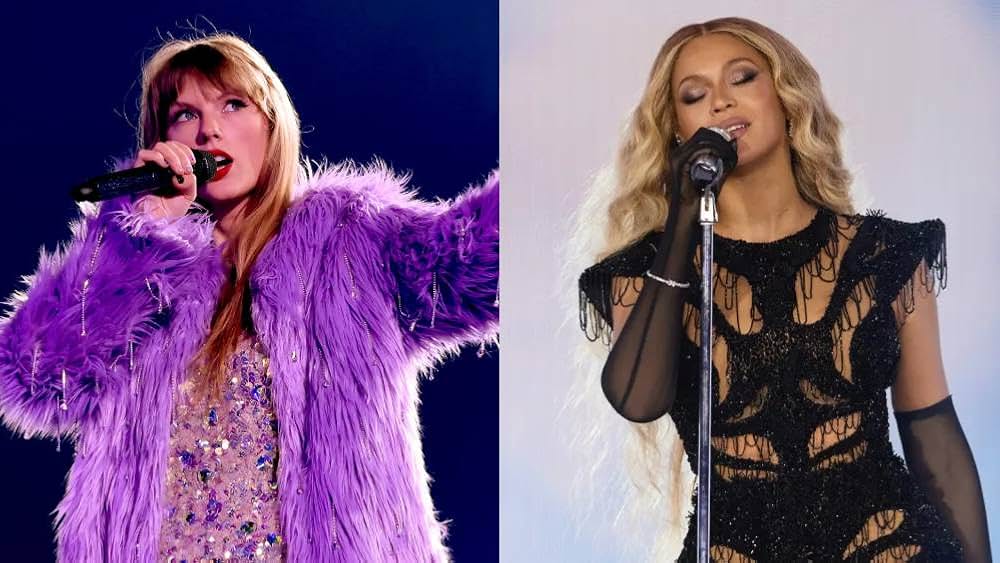
The billionaire pop-queen problem
The starting point for the criticism is simple: Beyoncé and Taylor Swift are now part of the billionaire class, and that changes how their activism lands. Commentators have framed them as the latest examples of celebrity wealth intersecting with politics, asking whether their fortunes give them an outsized say in public life that regular voters can never match, a concern sharpened by the way the billionaire label now trails both women. The worry is not just that they speak out, but that they can bankroll entire narratives, from voter-registration pushes to issue campaigns, in a way that blurs the line between civic engagement and private lobbying.
That anxiety sits on top of a legal and financial system already tilted toward big money. Critics point to the proliferation of tax loopholes and the 2010 Supreme Court ruling that opened the door for corporations and wealthy individuals to spend virtually unlimited sums on politics, arguing that billionaire entertainers now slot neatly into that same ecosystem. When fans buy tickets to a Beyoncé, Springsteen or Swift concert, skeptics say, they are not just funding art, they may also be indirectly fueling political operations that reflect one person’s priorities far more than any community’s vote.
From bonuses to ballots: how money turns into clout
Swift’s recent tour became a case study in how financial power can morph into political capital. During her global run, reports highlighted that During her global tour, Swift distributed nearly $200 m in bonuses to her staff, including $100,000 each to truck drivers, a gesture that underscored both her generosity and the sheer scale of her resources. The same reporting noted that she handed out $200 million in total and that some workers received $100,000, numbers that critics say illustrate the gap between her financial world and that of the average voter whose political voice begins and ends at the ballot box.
Those eye-popping figures feed into a broader narrative that billionaire entertainers can use cash to shape political outcomes, whether through donations, targeted get-out-the-vote efforts, or partnerships with advocacy groups. Commentators have described how Billionaire Pop Queens and Taylor Swift Under Fire have been pressed to use their fortunes to influence policy fights, from voting rights to reproductive access. The criticism cuts both ways: some accuse them of not doing enough with their money, while others argue that any move they make risks turning democratic debate into a luxury-brand project.
That tension is especially sharp for Swift, whose political evolution has been dissected in granular detail. Subject to media scrutiny, Subject Swift has been praised and criticized by all sides of the political spectrum, with some conservatives accusing her of being “MAGA undercover” and others on the left questioning whether her endorsements are more branding than belief. The result is a strange kind of double bind: she is told to use her influence responsibly, then blasted as manipulative when she does.
Do endorsements actually move voters?
For all the noise about celebrity kingmakers, the data on their actual impact is far more mixed. A national poll found that a nod from Taylor Swift, Beyonc or Kim Kardashian would not necessarily sway most voters, suggesting that the average person is less impressionable than political Twitter might assume, even when the endorser is Taylor Swift at the height of her powers. The poll undercut the idea that a single Instagram post can flip an election, even as campaigns still scramble for a coveted shout-out.
Other research into the 2024 race pointed in the same direction. Data suggested that Harris’ celebrity endorsements could actually have hurt her campaign, with some voters reacting so strongly that one respondent flatly declared, “I HATE TAYLOR SWIFT,” a backlash captured in Data from late in the campaign. That kind of reaction shows how quickly star power can harden partisan lines instead of softening them, especially in an era when cultural identity and political identity are so tightly fused.
Backlash, defenses and the new culture war front
The pushback against Beyoncé and Swift is not just coming from anonymous commenters. Political figures have weighed in too, with one analysis noting that Both women had higher negative ratings from one group, Republicans, and that Thirty four percent of Republicans reported unfavorable views of Swift, a snapshot of how polarizing she has become in some circles. That breakdown, which also referenced “Bad Blood” among one group, was highlighted in coverage of how Bad Blood and other hits now double as shorthand in political polling.
Supporters counter that telling artists to stay out of politics is its own kind of power play. Abrams told Yahoo Entertainment that she finds the argument that pop stars should stick to music “extraordinarily reductive,” insisting that entertainers are also citizens with a right to speak, a point she made while discussing how Abrams views the new wave of celebrity activism. In that framing, the real problem is not that Beyoncé and Swift speak up, it is that the political system is so skewed toward wealth that their voices land with more force than they should.
What it means when pop stars join the billionaire class
Part of why the criticism feels sharper now is that both women have crossed a symbolic financial threshold. Reports on country music’s richest singer noted that the artist worth $1 billion is Beyoncé, with the Cowboy Carter star joining a tiny club of performers whose net worth rivals tech founders and hedge fund managers, a milestone highlighted when Beyonc was identified as the top earner in her genre. For the fans who grew up with Destiny’s Child and early Swift albums, that shift from relatable superstar to billionaire institution can be jarring.
Commentators have started asking whether, as billionaires, the Beyoncés and the Taylor Swifts will stand up to the very system that helped make them so rich. One analysis argued that, in the sequel to earlier eras of celebrity activism, that has not really been the case, noting that There are stranger things than watching some of the wealthiest in the world stay quiet on structural reforms while the growing stack of bills lands on everyone else’s doorstep. That critique, which framed the current moment as a follow up to earlier, more confrontational protest culture, was laid out in a piece that However asked whether these new billionaires will ever truly challenge the rules that benefit them.
Even the language around them has shifted, with some coverage repeatedly referring to “Billionaire Pop Queens Beyo” and Swift as shorthand for a new kind of political player. That phrase, which surfaced in discussions of how Billionaire Pop Queens are expected to use their fortunes, captures the core unease: when pop idols become billionaires, their political choices stop looking like fan-service and start to resemble the strategic moves of any other member of the ultra rich.
More from Vinyl and Velvet:

Leave a Reply