

The best 80s songs do more than trigger nostalgia, they still light up dance floors, karaoke nights, and streaming playlists. These ten tracks keep hitting because their hooks, stories, and cultural impact feel immediate, not archived. From stadium anthems to synth-pop breakthroughs, each one still lands with the same jolt it had the first time it blasted from a car radio or flickered across a bulky TV.
1) Billie Jean by Michael Jackson
“Billie Jean” by Michael Jackson, released in 1982 on the album Thriller, is the rare hit that reshaped pop on contact. In a 1983 interview, Jackson called it “the track that changed everything for me,” and chart history backs him up, with the single topping the Billboard Hot 100 for seven weeks. Posts marking the moment note that Michael Billie Jean hit number one on the Billboard Hot and stayed there, underlining how completely it dominated radio and TV at the time.
Several retrospectives describe how the song’s release helped Released Billie Jean Billboard Hot become one of the defining pop records of its era. Another look back stresses that Billie Jean Thriller Jackson turned Thriller into the best-selling album of all time, while a fan history notes that the song spent seven weeks at number one on the Billie Jean Billboard Hot. The detailed entry on Billie Jean Thriller Jackson adds that it became Jackson’s best-selling solo single, which helps explain why its bassline and beat still feel like a blueprint for modern pop and R&B.
2) Like a Prayer by Madonna
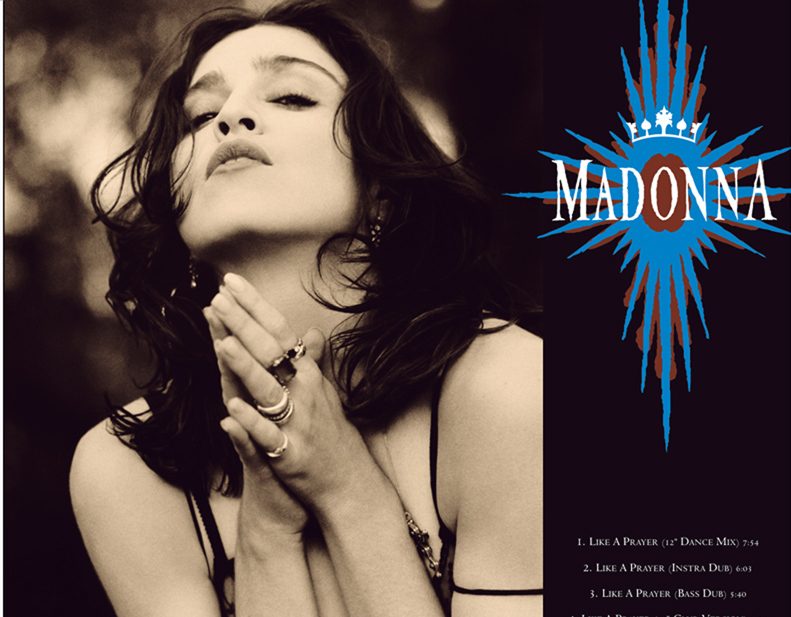
“Like a Prayer” by Madonna arrived in 1989 as a pop song that sounded like a confession and a revolution at once. It reached No. 1 on the Billboard Hot 100, proof that a gospel-tinged track with rock guitars and deeply personal lyrics could still dominate mainstream radio. The song’s structure, building from intimate verses to a choir-backed climax, gives it the kind of emotional arc that keeps resonating with listeners decades later.
The video turned that emotional charge into cultural shockwaves. Featuring burning crosses and religious imagery, it drew criticism from the Vatican, as reported in a widely cited Vatican controversy over its symbolism. That backlash only amplified the song’s reputation as a bold statement about faith, race, and desire. Today, when artists push boundaries with visuals and themes, “Like a Prayer” still stands as a reference point for how pop can challenge institutions and still top the charts.
3) Sweet Child o’ Mine by Guns N’ Roses
“Sweet Child o’ Mine” by Guns N’ Roses, from their 1987 debut Appetite for Destruction, is one of those rock songs that even casual fans can hum from the first guitar lick. The track hit No. 1 on the Billboard Hot 100, a rare feat for a hard rock band at the time, signaling that their mix of grit and melody could cross over far beyond metal circles. Its soaring chorus and Slash’s instantly recognizable riff keep it lodged in classic rock rotations.
According to Slash’s 2007 memoir, the song was written about Axl Rose’s girlfriend Erin Everly, which gives the lyrics a specific tenderness beneath the band’s rough exterior. That personal core, wrapped in stadium-sized production, helps explain why it still anchors wedding playlists and bar jukeboxes alike. In an era when guitar-driven rock has less chart presence, “Sweet Child o’ Mine” remains a benchmark for how emotional storytelling and virtuoso playing can still feel immediate.
4) Every Breath You Take by The Police
“Every Breath You Take” by The Police, released in 1983 on Synchronicity, is often mistaken for a straightforward love ballad, which makes its staying power even more striking. When When Every Breath You Take Billboard Hot came out, it soared to No. 1 on the Billboard Hot 100 and stayed there for eight weeks, becoming one of the biggest hits of the year. Its clean guitar lines and steady drum pattern give it a hypnotic, almost soothing surface.
Beneath that polish, though, Sting has repeatedly called it “a sinister song,” a description he emphasized in a 1983 interview. A detailed profile on Every Breath You Take English The Police Synchronicity Written Sting notes that it was the band’s biggest hit, and later coverage describes how it became one of the Eighties defining tracks. That tension between romantic-sounding melody and unsettling lyrics keeps the song relevant, especially in a streaming era that loves to reexamine older hits through a more critical lens.
5) Don’t Stop Believin’ by Journey
“Don’t Stop Believin’” by Journey, from the 1981 album Escape, did not initially dominate the charts the way some of its peers did, peaking at No. 9 on the Billboard Hot 100. Yet its long-tail impact has arguably been even greater. The song’s slow-build structure, saving the full chorus for late in the track, invites singalongs that feel earned rather than automatic, which is part of why it has become a staple at sports arenas and karaoke bars.
Its commercial afterlife is staggering. A certification report credits the song with over 7 million digital sales, confirming that over 7 million digital copies have been sold as of 2023. That figure shows how a track that was “only” a top ten hit in its own time can evolve into a multi-generational anthem. For artists and labels, it is a case study in how streaming and downloads can transform a catalog song into a modern standard.
6) Girls Just Want to Have Fun by Cyndi Lauper
“Girls Just Want to Have Fun” by Cyndi Lauper, released in 1983, is one of the decade’s most enduring pop declarations. It topped the Billboard Hot 100, powered by Lauper’s elastic vocals and a bright, synth-driven arrangement that still sounds fresh on contemporary playlists. The song’s hook is simple, but the performance turns it into a joyful shout of independence rather than a throwaway slogan.
Lauper has explained that her version was inspired by a 1982 demo by songwriter Robert Hazard, a detail she revisited in her 2012 autobiography. By flipping the original male perspective into a feminist pop anthem, she helped set a template for later artists who wanted to pair catchy hooks with messages about autonomy and fun on their own terms. The track’s continued presence in movies, commercials, and social media clips shows how its core idea still resonates with new generations of listeners.
7) Take on Me by a-ha
“Take on Me” by a-ha, from the 1985 album Hunting High and Low, is inseparable from its groundbreaking video, but the song itself has more than enough power to stand alone. The single reached No. 1 on the Billboard Hot 100, driven by Morten Harket’s sky-high vocals and a synth-pop arrangement that balances sweetness with urgency. Its instantly recognizable keyboard riff makes it a go-to reference whenever 80s pop is evoked.
The track’s success was supercharged when its rotoscoped video began airing heavily on MTV, a run that helped push sales to over 1 million copies. A retrospective on the clip notes that MTV Video Music Awards Take On Me Waaktaar recognition cemented its status as a visual landmark. For today’s artists, “Take on Me” remains a reminder that pairing inventive visuals with a bulletproof pop song can create a cultural moment that lasts far beyond its original chart run.
8) Livin’ on a Prayer by Bon Jovi
“Livin’ on a Prayer” by Bon Jovi, released in 1986 on Slippery When Wet, is arguably the definitive 80s rock anthem. It hit No. 1 on the Billboard Hot 100, powered by Richie Sambora’s talkbox guitar and a chorus built for stadium singalongs. The song’s structure, with its key change and escalating tension, makes it feel like a mini drama every time it plays.
Jon Bon Jovi and Richie Sambora co-wrote the track about working-class struggles in Sayreville, New Jersey, grounding its big hooks in the everyday realities of characters like Tommy and Gina. That focus on economic pressure and resilience keeps the song relevant in cycles of boom and bust. For fans and musicians alike, “Livin’ on a Prayer” shows how songs about local hardship can scale into global anthems without losing their sense of place.
9) With or Without You by U2
“With or Without You” by U2, from the 1987 album The Joshua Tree, brought atmospheric rock into the pop mainstream. The track debuted at No. 1 on the Billboard Hot 100, a rare achievement that signaled how fully the band’s sound had connected with American audiences. Its slow-building arrangement, anchored by a pulsing bassline and The Edge’s textured guitar, creates a sense of emotional suspension that still feels modern.
Bono has described the song as “the sound of longing,” a phrase he used in a 1987 sound of longing feature to capture its mix of desire and doubt. That emotional ambiguity, paired with a chorus that feels both intimate and universal, helps explain why it remains a staple of live sets and streaming playlists. For contemporary bands, “With or Without You” is a touchstone for how to make introspective rock that still fills arenas.
10) Faith by George Michael
“Faith” by George Michael, released in 1987 as the lead single from his solo album, marked his full emergence as a pop auteur. The song spent four weeks at No. 1 on the Billboard Hot 100, driven by its rockabilly-tinged rhythm guitar and a vocal performance that balanced swagger with precision. Its compact structure and handclap groove make it instantly replayable, which is why it still pops up on everything from oldies stations to workout playlists.
The single also introduced a visual persona that became iconic, with Michael’s leather jacket, jeans, and sunglasses look dominating the video and promotional imagery. A profile of the era notes that this image helped the album sell 25 million copies worldwide, framing 25 million albums as a benchmark of solo success. For today’s pop stars, “Faith” remains a model of how a tightly crafted song and a clear visual identity can combine into a global phenomenon that still hits every time it plays.
Supporting sources: On this date in 1983, Michael Jackson hit #1 on the ….
More from Vinyl and Velvet:

Leave a Reply