

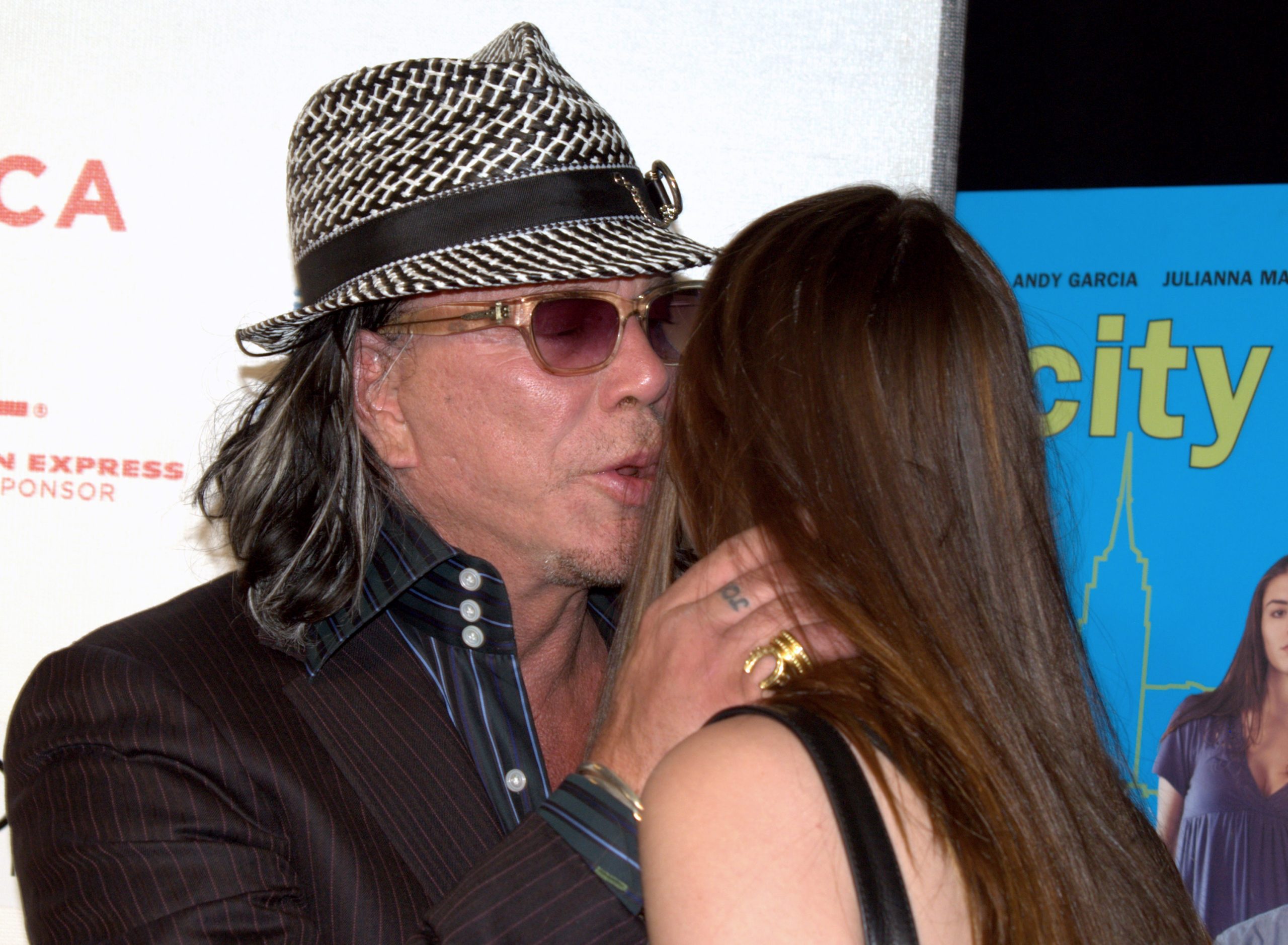
Mickey Rourke’s latest drama is not on a film set but on the internet, where a high-profile GoFundMe set up to keep him in his home has spiraled into a public tug-of-war over pride, privacy, and survival. The 73-year-old actor has blasted the fundraiser as “humiliating,” even as his own manager insists it is legitimate and pleads with him to let fans help cover mounting rent debt and stave off eviction. The clash has turned a private financial crisis into a very public debate about what it means when a Hollywood veteran is forced to rely on online charity.
The eviction threat behind the viral fundraiser
At the heart of the controversy is a stark financial reality: Mickey Rourke has been facing the possibility of losing his home. Earlier this winter, the actor was served with a notice to pay nearly $60,000 in back rent or vacate his place in Los Angeles, a figure that undercuts the myth that past fame guarantees present security. According to his own account, work dried up after COVID and the writers’ strike “killed” his income, leaving him to borrow money from a friend just to stay afloat. For a performer whose career has swung from leading-man paydays to long stretches in the wilderness, the eviction notice is a harsh reminder of how precarious even iconic careers can become.
That financial pressure is what Rourke’s team says prompted the GoFundMe in the first place. His manager, Kimberly Hines, has described a client who is behind on rent, short on options, and still supporting a small entourage of people and animals who depend on him. She has portrayed the online appeal as a last-ditch effort to harness the goodwill of fans who have followed Mickey Rourke through decades of comebacks and setbacks, rather than a cynical cash grab. In her telling, the campaign was less about exploiting celebrity and more about acknowledging that a 73-year-old actor can still fall through the cracks of an industry that rarely looks back.
Rourke’s furious rejection of “humiliating” charity
Rourke’s own response has been explosive, and it has unfolded in real time on social media. In a profanity-laced video posted to Instagram, Rourke insisted he had not authorized the GoFundMe and declared that if he ever needed money, he would not ask strangers for it. He called the campaign “really f***ing embarrassing” and “humiliating,” stressing that he has “too much pride” to accept what he sees as charity. In another clip, he complained that Somebody had set up “some kind of foundation or fund” in his name, insisting that was not him and that he was “not taking charity.”
In a separate video, Rourke went further, saying he would give back any money raised in his name and that he had already repaid the friend who helped him when COVID and the strikes left him short. He framed the entire episode as a violation of his dignity, saying public fundraising “ain’t my style” and that he would rather hustle for work than be seen as a charity case. That stance has not only put him at odds with the campaign’s organizers, it has also created confusion among donors who believed they were answering a direct plea for help from the star himself.
A manager caught in the crossfire
While Rourke has been busy disowning the GoFundMe, his manager has been just as busy defending it. Kimberly Hines has publicly confirmed that the campaign is real and that it was launched with the intention of keeping the 73-year-old in his home, even after he took to Instagram to distance himself from it. She has described pleading with him to accept that fans genuinely want to help, reportedly telling him that pride should not cost him his home. In her account, the fundraiser was not a rogue operation but a desperate measure taken by someone who has watched his finances deteriorate and feared the consequences if he refused assistance.
Hines has also pushed back on the suggestion that Rourke was blindsided by the campaign. She has said he was aware of the effort and that she believed he had tacitly accepted it before his public outburst. In one detailed explanation, she recounted how the GoFundMe was set up to tap into years of Rourke fan support, only for him to denounce it as “embarrassing” once it went viral. Her plea for him to “let people help” is as much about salvaging the relationship with donors as it is about keeping a roof over his head, and it highlights the awkward role managers play when private hardship collides with public image.
The $100,000 question and donors in limbo
Despite Rourke’s anger, the GoFundMe itself has been remarkably successful. The campaign quickly surpassed its $100,000 g target, ultimately drawing pledges of $100,000 from fans who believed they were helping stave off eviction. At one point, reports indicated that roughly $96,000 had been collected before the donations were halted. The outpouring underscores how much affection still exists for Actor Mickey Rourke, whose cult status from films like “The Wrestler” and “Sin City” has clearly not faded among loyal followers.
Yet that generosity has now collided with platform rules and Rourke’s own refusal to accept the money. After his videos denouncing the fundraiser, the campaign’s organizer moved to pause contributions, and Clarification from GoFundMe explained that donations can be frozen or refunded at the organizer’s request. Rourke has vowed to return every dollar, and his manager has said that if he will not take the funds, that money will indeed be sent back. For donors, the saga has turned a simple act of support into a waiting game, as they watch to see whether their contributions will rescue a screen icon from eviction or simply be reversed back to their bank accounts.
Pride, image, and the new reality of celebrity crowdfunding
Beyond the immediate question of rent, the Rourke GoFundMe drama exposes a deeper tension between celebrity image and financial vulnerability. On one side is a 73-year-old star who insists he would never, “in a million years,” ask the public for help, and who has flatly denied any involvement with a $100k style GoFundMe. On the other is a manager who sees online crowdfunding as a practical tool in an era when even household names can struggle to pay the bills. Their clash reflects a generational and cultural divide: Rourke’s old-school code of self-reliance versus a newer reality in which fans expect to be able to step in directly when their heroes are in trouble.
The saga also highlights how messy that intervention can become when communication breaks down. Rourke has complained that Mickey Rourke calling the GoFundMe “humiliating” was his only way to reclaim control of his narrative after the campaign went public without his blessing, while Hines has argued that she was simply trying to keep him housed. Reports detailing how Mickey Rourke blasted the fundraiser even as she insisted it was real, and how Kimberly tried to explain its origins, show a relationship strained by both financial stress and public scrutiny. In the end, the GoFundMe has become more than a rent lifeline; it is a case study in how modern celebrity, digital fundraising, and personal pride can collide in ways that leave everyone, from managers to fans, wondering where the line between help and humiliation really lies.
More from Vinyl and Velvet:

Leave a Reply