

Queen Elizabeth II publicly wished Prince Harry and Meghan Markle well when they stepped back from royal duties, but a new biography suggests she privately regarded their departure as a squandered chance to modernize the monarchy. The late monarch is said to have viewed the couple’s exit not only as a personal disappointment, but as a strategic loss for an institution she had spent a lifetime trying to steady and adapt. That tension between warm grandmotherly affection and cool constitutional calculation now sits at the heart of a fresh round of royal revelations.
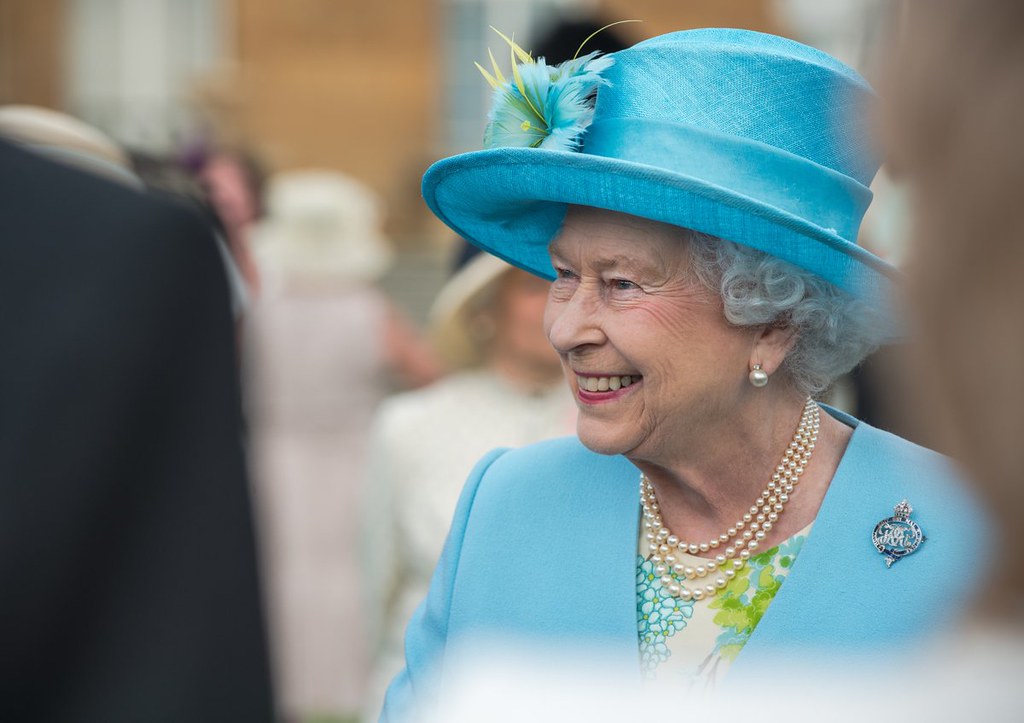
The Queen’s Private Regret Over a Public Break
In public, the late Queen Elizabeth II kept her tone measured and affectionate, sending her “well wishes” to the Duke and Duchess of Sussex as they charted a new life outside the royal fold. Behind palace walls, however, royal biographer Robert Jobson writes that she regarded Harry and Meghan’s decision to leave the United Kingdom as a “missed opportunity,” a phrase that captures both her disappointment and her sense that the institution had lost something it badly needed. According to Jobson, the monarch believed that a more flexible arrangement could have allowed the couple to serve as a bridge between the Crown and a younger, more global audience, even as they pursued greater independence.
Jobson’s account suggests that Queen Elizabeth shared these private misgivings with close aides, even as she maintained a calm public front. He describes how she felt that, with better communication and more patience on all sides, the situation might have been salvaged before, in his words, “it all fell apart,” a judgment he sets out in detail when discussing Queen Elizabeth and her reaction to the couple’s move. That contrast between the Queen’s outward serenity and her inner sense of loss underscores how personally she took the rupture with her grandson, even as she continued to prioritize the stability of the Crown.
The Half-In, Half-Out Plan That Never Took Flight
At the heart of the saga was a proposal that, at the time, seemed radical to courtiers but logical to the couple themselves. Harry and Meghan suggested a hybrid model in which they would split their time between the United Kingdom and North America, continuing some royal duties while also pursuing independent projects and financial freedom. The idea was to remain part of the royal “firm” while living for significant stretches in Canada or the United States, a plan that would have seen them operating across the Atlantic as semi-detached ambassadors for the Crown.
Jobson reports that this arrangement, floated when tensions were already high, was ultimately rejected by the Queen and her advisers, who feared it would blur the lines between official duty and private enterprise. The biography notes that, at the time, “the duke and duchess proposed an arrangement where they would split their time between North America and the U.K.,” a compromise that never materialized and that he describes in his account of events beginning with the word At the. In hindsight, that failed experiment in flexibility has become a touchstone in debates about whether the monarchy can adapt to modern expectations without losing its core identity.
Harry the “Maverick” and a Grandmother’s Sense of Betrayal
Jobson’s portrait of the late Queen is not one of cold detachment, but of a grandmother who felt personally let down by a grandson she had long regarded as a free spirit. He recounts that she saw Harry as a “maverick,” a label that carried both affection and exasperation, and believed he had failed to live up to the responsibilities that came with his royal status. In his telling, she was particularly pained that he chose to step away at a moment when the family, and the institution, were already under intense scrutiny and strain.
In a separate interview, the same royal author, identified as Royal Robert Jobson, said that “she saw him as a maverick who had let her down,” and that the way he exited public life felt like a rejection of everything she had tried to model. Another detailed account of the palace’s internal deliberations, framed as Inside The Queen and her “Firm Stance On Prince Harry And Meghan” and their “Royal Exit,” reinforces the picture of a monarch who believed that stepping back from royal duties while retaining full titles and privileges was incompatible with the standards she had upheld throughout her reign. Together, these accounts show a woman torn between love for her grandson and a lifelong conviction that duty comes before personal preference.
How Long-Simmering Tensions Set the Stage
The rupture did not emerge from nowhere, and earlier reporting on the royal family’s internal dynamics helps explain why the Queen’s disappointment ran so deep. Historian Robert Lacey has previously traced the origins of the rift between Prince Harry and Prince William to the period when Meghan Markle first joined the royal ranks, arguing that the institution struggled to accommodate her different background and expectations. Lacey has said that Meghan’s departure from the royal family “could well have a long-lasting effect on the monarchy,” warning that the mix of celebrity culture, social media scrutiny, and rigid tradition created a combustible environment.
In that analysis, Meghan’s decision to step away was not simply a personal choice, but a symptom of a system that had failed to evolve quickly enough. Lacey, whose work is cited in a report on how Meghan and Harry’s exit exposed deeper tensions, suggested that the monarchy risked alienating younger generations if it could not find space for figures who did not fit the traditional mold. Against that backdrop, the Queen’s view of the couple’s departure as a “missed opportunity” reads as an acknowledgment that the institution had failed to harness the very qualities that made Harry and Meghan so compelling to many supporters.
The Lilibet Dispute and the Limits of Sentiment
Even after the couple left the United Kingdom, their relationship with the palace continued to be tested, and one of the most sensitive flashpoints involved a name that could hardly have been more personal. When Harry and Meghan chose to call their daughter Lilibet, they selected Queen Elizabeth II’s childhood nickname, a term of endearment used only by her closest family. A later royal biography claims that the monarch was “infuriated” by the couple’s public suggestion that she had been fully consulted and had effectively blessed the choice, a portrayal that reportedly clashed with her own recollection of events.
The account, which describes how Getting to the truth of the Lilibet conversation became a point of contention, suggests that Queen Elizabeth II felt her private nickname had been drawn into a public relations battle. That sense of intrusion into something deeply personal appears to have hardened her view that the couple were willing to leverage royal symbolism in ways she found uncomfortable. It also underscored the broader challenge of managing a family dispute in an era when every detail, from baby names to seating plans, can become fodder for global debate.
Titles, Tradition, and Meghan’s Reported U-Turn
The question of how Harry and Meghan’s children should be styled has been another recurring fault line, highlighting the tension between tradition and the couple’s desire for autonomy. Early on, Meghan suggested that she was wary of royal titles for her children, linking the issue to concerns about security and fairness. Yet a later account by author Robert Hardman indicates that her position evolved after a key conversation about what those titles represented, and how they might shape the children’s place in the family and in history.
Hardman writes in his book But, titled “Charles III: New King, New Court. The Inside Story,” that one member of staff “privately” described a “huge U-turn” after Meghan reconsidered the implications of denying or accepting those styles. The book, which also delves into the use of the Queen’s childhood nickname, suggests that debates over titles were not just about status, but about how closely the Sussex children would be tied to an institution their parents had partially rejected. For Queen Elizabeth, who had spent decades treating titles as markers of duty rather than celebrity, such reversals likely reinforced her concern that the lines between service and self-promotion were becoming dangerously blurred.
King Charles III, Security, and a Family Still in Flux
With Queen Elizabeth II gone, it has fallen to King Charles III to manage the long tail of the Sussex saga, and new reporting suggests that he is approaching the task with a mix of caution and frustration. A recent book on his reign recounts that he is “wary of welcoming” Prince Harry back into the royal fold, even as practical questions such as security and funding continue to arise. The same account notes that Charles reportedly bristled when Harry sought financial support, with the monarch said to have replied that he was “not a bank” after his son “demanded funds,” a phrase that captures the strain between paternal concern and institutional boundaries.
Those tensions have played out alongside legal and logistical battles over Harry’s security arrangements in the United Kingdom, including his efforts to regain government-funded protection when visiting. The new biography, which details how King Charles Reportedly Said He Was “Not” a “Bank” “After Prince Harry Previously” “Demanded Funds,” paints a picture of a monarch determined not to let personal ties override what he sees as fair treatment for all working and non-working royals. That stance, while perhaps understandable from a governance perspective, also shows how far the relationship has drifted from the days when a disappointed grandmother quietly hoped her “maverick” grandson might yet find a way back into the fold.
A Legacy of What Might Have Been
Taken together, the latest revelations about Queen Elizabeth’s private feelings, the failed half-in, half-out plan, and the subsequent disputes over names, titles, and money sketch a story defined as much by missed chances as by open conflict. The late monarch appears to have believed that Harry and Meghan could have helped carry the institution into a new era, particularly with their appeal in North America and among younger audiences. Instead, a combination of rigid rules, bruised egos, and clashing expectations turned that potential into a slow-motion separation that continues to reverberate through the House of Windsor.
For observers of the monarchy, the new biography’s claim that the Queen saw the couple’s departure as a “missed opportunity” is less a bombshell than a sobering confirmation of what many suspected: that behind the carefully worded statements and choreographed appearances lay a family struggling to reconcile love, duty, and modern life. As one report on Jan and the Queen’s reaction notes, the late sovereign understood better than anyone that institutions survive by adapting, not by standing still. Her regret, as described by Jobson, may yet serve as a quiet warning to her successors: that the real danger to the Crown is not change itself, but the failure to harness it.
More from Vinyl and Velvet:

Leave a Reply