

Ever think about how movies from decades past would fare in today’s cultural landscape? It’s kind of wild to consider that some beloved classics might not even make it past the initial pitch meeting if they were to come out now. Society’s values, humor, and sensibilities have evolved, and with that, the way stories are told on screen has shifted dramatically. So grab your popcorn, and let’s chat about seven films that would definitely be made differently today.
1. Blazing Saddles (1974)
Mel Brooks’ “Blazing Saddles” is often hailed as one of the greatest comedies of all time. But let’s be real: the film’s satirical take on racism and Hollywood tropes would likely raise a few eyebrows today. The humor is sharp, but it toes a line that many might consider too risky or insensitive now. It’s a brilliant commentary on racial stereotypes, but the way it handles them would probably spark some serious debates about what’s offensive and what’s just plain funny. Can you imagine the pitch? “So, we’re going to make fun of racism…by using a ton of racial slurs.” Yikes!
2. Revenge of the Nerds (1984)
Ah, “Revenge of the Nerds” — the quintessential underdog story that had us all rooting for the geeky misfits. But if you look under the surface, there’s some seriously problematic stuff happening here. The film includes scenes that would be categorized as sexual assault today, masked as humor. You’d think it was just a comedy for nerds, but it’s a perfect example of how our understanding of consent and relationships has evolved. Watching it now, you can’t help but cringe at some of those moments that once seemed innocent.
3. The Breakfast Club (1985)
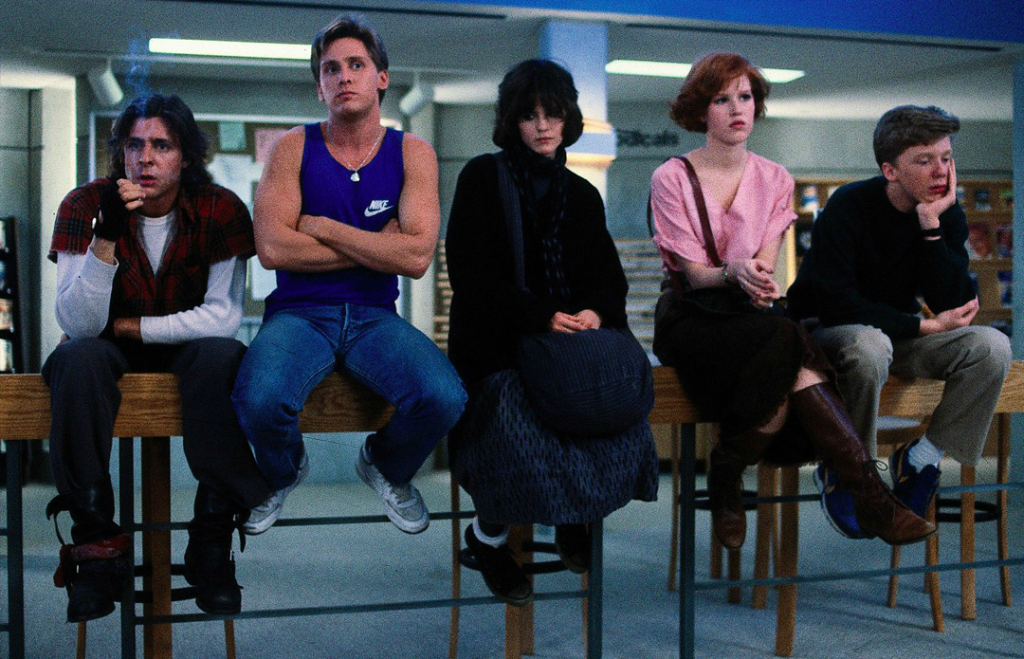
“The Breakfast Club” is a classic coming-of-age film, and it’s beloved for a reason. However, some of the themes around mental health and bullying would be approached differently today. While the film does touch on serious issues, the way it romanticizes the breakdown of communication and the struggles of adolescence might not sit well with today’s audience. Plus, the portrayal of stereotypes — the jock, the princess, the criminal — could get a serious makeover. Who knows, maybe they’d end up bonding over TikTok instead!
4. Sixteen Candles (1984)
Another John Hughes classic, “Sixteen Candles,” is full of nostalgia, but it’s also filled with cringe-worthy moments. The film features a plot point where a girl’s family forgets her birthday, leading to a series of embarrassing events. But what stands out in hindsight is the way it treats the Asian character, Long Duk Dong. The portrayal is a blatant stereotype, and today, that just wouldn’t fly. In a world striving for more authentic representation, you can bet that character would be reimagined — maybe he’d even get his own storyline!
5. Animal House (1978)
“Animal House” redefined the college comedy genre, but it’s also a prime example of how far we’ve come in terms of understanding consent and behaviour. The film glorifies binge drinking, reckless behavior, and a complete disregard for boundaries. If it were made today, the fraternity antics would likely be met with a much harsher lens, and the focus would probably shift toward accountability and the consequences of those actions. College life is no walk in the park, but this movie definitely had its head in the sand about some serious issues.
6. A Clockwork Orange (1971)
Stanley Kubrick’s “A Clockwork Orange” is a fascinating exploration of free will and societal control, but its violent content and depictions of sexual assault would lead to an uproar if it were released today. It’s a film that challenges viewers to think deeply, but it does so with some brutally graphic scenes that many would consider too extreme for modern audiences. While it’s a classic, you can bet that any remake would have to tread carefully, possibly opting for a more psychological approach rather than a visual one. Plus, who can forget the infamous “Singing in the Rain” scene? Yikes.
7. Gone with the Wind (1939)
This one’s a heavy hitter. “Gone with the Wind” is often lauded as one of the greatest films in history, yet it romanticizes the antebellum South and glosses over the horrors of slavery. In today’s climate, it’s clear that the film would face intense criticism for its portrayal of race and history. While it remains an important piece of cinematic history, many modern viewers struggle with its outdated and harmful narratives.
More from Vinyl and Velvet:

Leave a Reply