

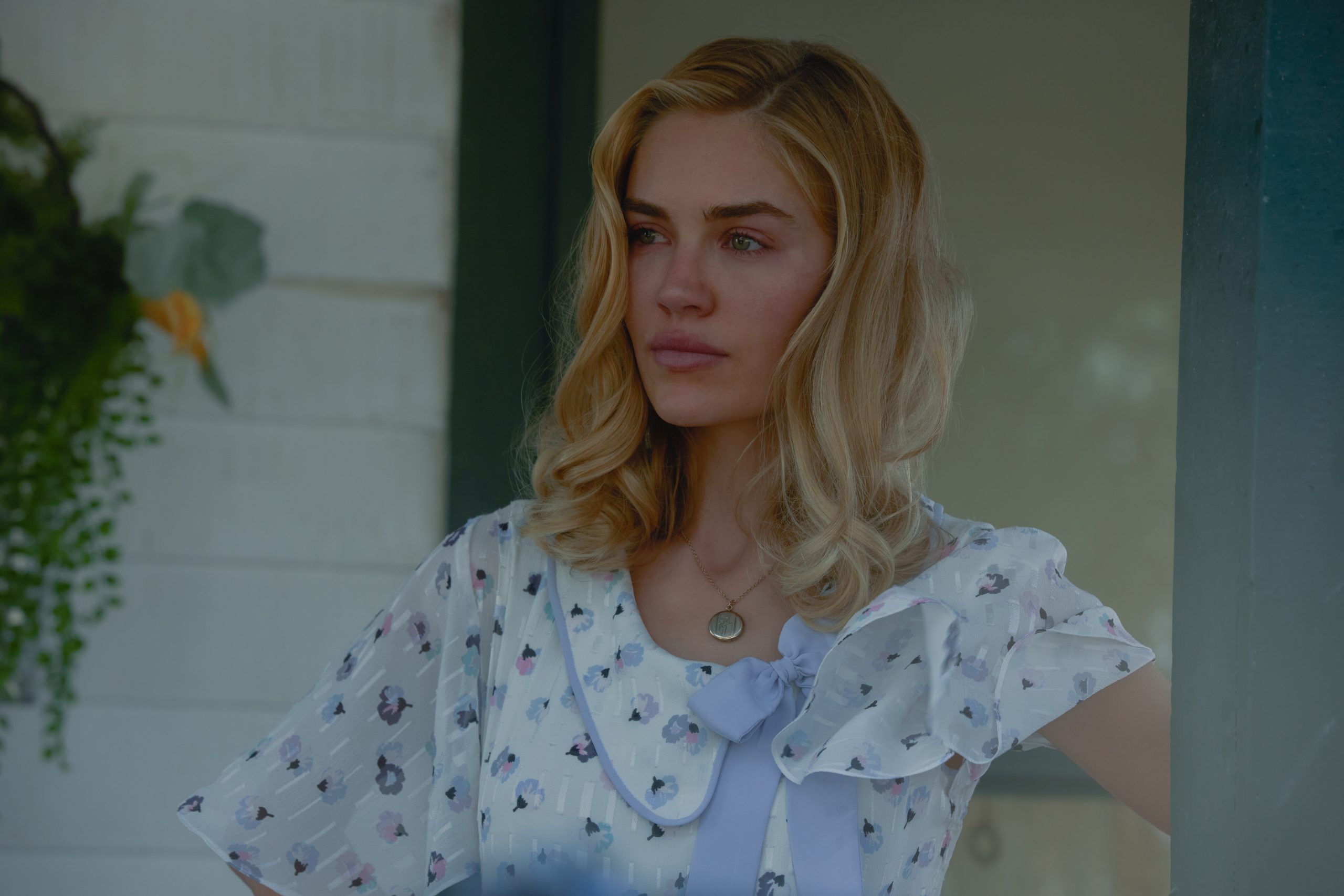
Michelle Randolph has quickly become one of the most talked‑about faces in Taylor Sheridan’s TV empire, in part because the women she plays are designed to split audiences. From a privileged ranch heiress in 1923 to a chaotic oilman’s daughter in Landman, her characters are written to be abrasive, naive, or worse, and viewers have not been shy about saying so. Rather than retreat from that backlash, Randolph has started to explain why she embraces roles that many fans are primed to dislike and how she tries to find something human inside them.
Her comments arrive at a moment when Sheridan’s dramas are expanding and hardening their grip on the small screen, and when social media criticism can define an actor as much as any performance. By talking candidly about playing “super unlikable” women that some viewers “despise,” Randolph is sketching out a philosophy of acting that treats divisiveness as a feature, not a bug, of modern prestige television.
From 1923 To Landman, A Career Built Inside Sheridan’s Universe
Randolph’s relationship with Taylor Sheridan began when she joined the Yellowstone prequel 1923, a period drama that extends the Dutton family saga into the early twentieth century. In that series, she plays a young woman whose life is shaped by the violent, land‑hungry world that Sheridan has been mapping across multiple shows, and the job effectively inducted her into his creative stable. The collaboration deepened when she was cast in Landman, a contemporary drama that shifts the focus from Montana ranches to the high‑stakes oil fields of West Texas, giving Randolph a second major role under the same showrunner’s umbrella.
Landman itself has quickly become a flagship for Sheridan’s modern‑day storytelling, with the series framed as a West Texas oil rig drama that digs into the fortunes and failures of the energy boom. Randolph’s character, Ainsley, is introduced as the rather ditzy daughter of a powerful figure in this world, a choice that immediately sets her up as a lightning rod in a story already crowded with hardened roughnecks and corporate sharks, as detailed in coverage of Landman. Moving between a historical epic like 1923 and a present‑day oil saga has positioned Randolph as one of the few actors threading Sheridan’s past‑and‑present universes together, and it has also meant she is repeatedly entrusted with roles that are anything but safe.
Why She Signs On To Play “Super Unlikable” Women
Randolph has been explicit that she knew what she was getting into when she accepted Sheridan’s offers. She has described some of her characters as “super unlikable” on the page, the kind of women viewers might instantly judge or even “despise” before the opening credits are over. That awareness did not deter her, and instead seems to have been part of the appeal, because she saw an opportunity to complicate those first impressions and to test how far she could push an audience before pulling them back. Her comments about moving from one Sheridan show to the next, and about how harsh these roles can look in script form, were laid out in an interview that noted how Michelle Randolph has been cycling through this universe.
In her telling, the challenge is not to sand down the rough edges that Sheridan writes, but to inhabit them so fully that they start to make sense. She has said that when a character is conceived as someone the audience will not root for, the actor’s job becomes finding the private logic that explains why she behaves that way, even if the behavior never becomes admirable. That approach is especially visible in Landman, where Randolph’s Ainsley is scripted as a bundle of entitlement and bad decisions, yet the actor talks about her with a kind of protective curiosity, insisting that there is more going on than the “super unlikable” label suggests.
Ainsley In Landman: Ditzy, Divisive, And Deliberate
Nowhere is Randolph’s taste for polarizing material clearer than in her portrayal of Ainsley in Landman. The character is introduced as a rather ditzy blonde whose life is cushioned by her father’s wealth and status in the oil business, a setup that invites viewers to laugh at her or dismiss her outright. Reporting on the show has emphasized that in Landman, Taylor Sheridan’s West Texas oil rig drama, Michelle Randolph plays Ainsley as the rather ditzy daughter of a titan in that world, and that the performance is intentionally pitched to provoke strong reactions.
Randolph has acknowledged that Ainsley is divisive, but she pushes back on the idea that the character is empty. She has argued that the “ditzy” label flattens a young woman who is actually sincere, emotionally earnest, and shaped by a mother who kept her sheltered from harsher realities. In one account of how she built the role, Randolph explained that she imagined Ainsley’s mom keeping her in a bubble, which helps explain why the character can be both infuriating and oddly vulnerable, a point she expanded on while discussing what she has said about Ainsley and the criticism that followed.
Responding To “Ditzy Blonde” Critiques Without Apology
The backlash to Ainsley has been specific, with viewers and commentators tagging her as a “ditzy blonde” stereotype and questioning why such a character exists in a prestige drama about the oil industry. Randolph has not tried to deny that the stereotype is present, but she has argued that the writing and her performance are meant to complicate it rather than simply repeat it. In a conversation with co‑star Demi Moore, she addressed those critiques directly, explaining that what people see on screen is only part of the story and that she is more interested in the sincerity and emotional truth underneath the surface, a stance she laid out while speaking to Moore in an Interview conversation.
Her defense of Ainsley hinges on the idea that naivete and privilege do not cancel out sincerity. Randolph has said that the character is funny precisely because she is so earnest, and that this earnestness is a quality many people find likable in real life, even when it leads to cringe‑worthy choices. A short clip of her discussing the role captures this view, with Randolph noting that Ainsley’s sincerity is what makes her compelling to play, a point she makes in a video where she talks about her Landman character Ainsley and why that quality matters more than whether audiences initially roll their eyes.
Finding Humanity In Characters Viewers “Despise”
Across both 1923 and Landman, Randolph has framed her work as an exercise in finding humanity inside characters that many viewers might initially hate. She has said that she looks for small, redeeming details, like the way Ainsley loves her family or the quiet moments when a seemingly selfish woman reveals a flash of loyalty or fear. In one account of her process, she emphasized that Ainsley loves her family and that this love is a key to understanding her, even when her behavior is reckless, a point highlighted in coverage of Taylor Sheridan’s hit series Landman and its most polarizing characters.
Randolph has also talked about how visual storytelling can soften or sharpen those edges. She has credited the way scenes are shot and lit, including work by photographers like Emerson Miller for Paramount, with helping audiences see glimpses of vulnerability in characters that might otherwise read as caricatures, a point that surfaced when she discussed how her Landman character Ainsley was framed on screen. For Randolph, those choices are not cosmetic; they are part of a broader effort to make sure that even the most “despised” women in Sheridan’s universe feel like people rather than punchlines.
“It’s Irrelevant”: How She Weighs Audience Criticism
One of Randolph’s most striking comments about her recent work is her claim that audience criticism is “irrelevant” to how she approaches a role. She has said that once the cameras are rolling, she cannot afford to think about whether viewers will like or hate a character, because that kind of second‑guessing would flatten the performance. Instead, she focuses on the internal logic of the person she is playing and lets the chips fall where they may, a philosophy she outlined while explaining why audience criticism is not worth her time.
That stance does not mean she ignores the conversation around her work, only that she refuses to let it dictate her choices. Randolph has acknowledged that social media can amplify extreme reactions, especially to women who are written as messy or morally compromised, but she argues that chasing approval would be a losing game. Her comments were echoed in a separate write‑up that summarized her view with the phrase “It’s Irrelevant,” underscoring that, in her mind, the only useful feedback loop is the one between actor, script, and director, a point that was reiterated when coverage of why audience criticism is not worth her time pointed back to her work across Landman and 1923.
Gratitude To Sheridan, And His Blunt Response
For all the heat her characters attract, Randolph has been consistently effusive about Taylor Sheridan himself. She has described her parts in 1923 and Landman as “dream” roles and has said she feels like she owes her career to him, crediting his scripts with giving her the chance to stretch beyond conventional ingenue parts. When she has tried to thank him directly, however, Sheridan’s response has reportedly been blunt, with one account noting that he brushes off her praise with a simple “Michelle, stop,” a dynamic captured in a piece about how Taylor Sheridan has this blunt reaction when Michelle Randolph thanks him for dream roles.
That same push‑and‑pull surfaced in another account of their collaboration, which described how Randolph feels “eternally grateful” for the opportunities and how Sheridan, for his part, prefers to redirect the conversation back to the work. The coverage noted that she spoke about this dynamic while reflecting on both 1923 and Landman, and that she framed Sheridan’s brusque manner as a kind of tough‑love mentorship rather than a dismissal, a nuance that came through in a report on how Taylor Sheridan and Michelle Randolph navigate gratitude and credit on set.
Inside The Sheridan Machine: Landman, 1923, And Beyond
Randolph’s comments also shed light on how Sheridan’s broader TV machine operates, particularly when it comes to recurring collaborators. She has spoken about catching up with reporters while promoting the second season of 1923 and the rollout of Landman, describing a schedule that has her bouncing between period costumes and modern oil‑patch wardrobes with little downtime. One account of that promotional push noted that Randolph recently caught up with an outlet to talk about the new season and to praise Sheridan for her roles, while also pointing out that Landman is being positioned as a major new series for Paramount, a detail highlighted in a piece that described how Randolph recently caught up with interviewers to discuss Sheridan’s expanding slate.
Within that ecosystem, Landman has already secured enough momentum to be renewed for another season, with reporting noting that Taylor Sheridan’s hit series Landman was renewed for season 3 and raising questions about which stars will return. Randolph’s place in that conversation is central, since Ainsley has become one of the show’s most talked‑about figures, and her willingness to keep leaning into divisive material suggests she is prepared to ride out whatever reaction comes next, a point underscored in coverage of Landman season renewals and the evolving cast.
What Her Choices Say About Female Complexity On TV
Taken together, Randolph’s roles and her commentary amount to a quiet argument for more complicated women on television, even when that complexity makes them hard to love. By embracing characters who are spoiled, naive, or abrasive, she is pushing back against the idea that female leads must be aspirational or instantly sympathetic to be worth watching. Her work in 1923, which is cataloged alongside other Yellowstone‑adjacent projects in searches for the series 1923 cast and story, and her turn in Landman both show her leaning into the messiness that comes with that territory.
Landman in particular has become a testing ground for how far audiences are willing to go with such characters. The show’s focus on the West Texas oil boom, its roughneck culture, and the fortunes made and lost in that world has been widely documented, and Randolph’s Ainsley sits at the intersection of those forces and the gendered expectations placed on women in prestige dramas. As coverage of the series has noted, Landman’s premise gives Sheridan room to explore power and privilege, and Randolph’s willingness to play someone viewers might initially “despise” suggests she sees value in making that exploration as uncomfortable as it needs to be.
More from Vinyl and Velvet:

Leave a Reply