

George Clooney and President Donald Trump have known each other for decades, long before politics turned them into antagonists. Their relationship has shifted from casual New York acquaintanceship to a very public feud, tracing the broader transformation of Trump from celebrity fixture to polarizing political figure. Revisiting that arc reveals not only how two famous men fell out, but also how American culture itself has changed around them.
What began as a light, even amused familiarity has hardened into a clash of values, language and power. Clooney’s evolution from calling Trump “a big goofball” to predicting his political downfall mirrors the way many in Hollywood recalibrated once Trump entered the White House and then returned to the campaign trail. The story of their complicated history is, in many ways, a story about how entertainment, media and politics became inseparable.
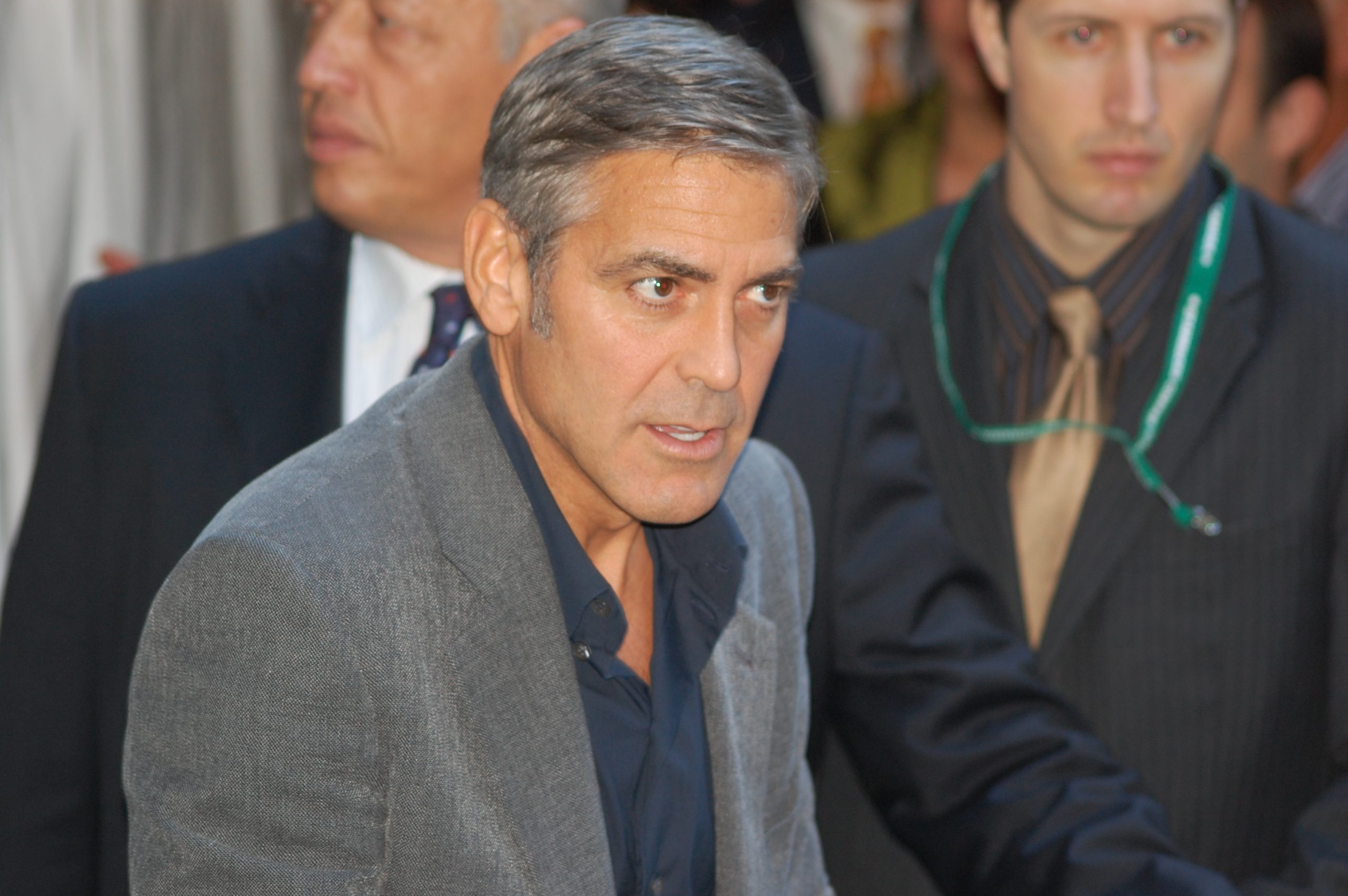
From Manhattan fixtures to unlikely acquaintances
Before politics, George Clooney and Donald Trump moved in overlapping circles defined by Manhattan real estate, charity galas and television fame. Clooney has described knowing Trump for roughly 30 years, recalling him as a familiar presence on the social scene rather than a serious political actor. In those years, Trump was better known for splashy buildings, tabloid-ready romances and his role on “The Apprentice” than for any ideological project, which made him, in Clooney’s telling, more of a background character than a rival.
That early phase is crucial to understanding why Clooney initially spoke of Trump with a kind of bemused distance. In a conversation captured on video, Clooney referred to the future president as someone who had long been around and whose reputation centered on chasing women and playing up a playboy image, a portrait that fits the era when Trump was a staple of New York gossip pages rather than the Oval Office. Clooney’s confidence that “we’re going to get through the Trump era” came from that long familiarity with a man he once saw as a showman first, a sentiment he voiced while discussing how people had “known him for 30 years” in a clip shared by Apr remarks.
A pre‑politics Trump in Clooney’s memory
When Clooney looks back on Trump before the 2016 campaign, he tends to emphasize how unserious he seemed as a potential leader. He has recalled a man who was part of the celebrity ecosystem, not someone anyone in his world expected to see controlling the nuclear codes. That memory colors Clooney’s later criticism, because it frames Trump’s political rise as a jarring break from the persona that had been on display for decades in New York and on television.
In one detailed recollection, Clooney described how Trump’s shift into politics left “a lot of things that have to be repaired,” a phrase that underscored his view that the country had been damaged by the transition from entertainer to president. He contrasted the earlier, more frivolous Trump with the figure who launched a national campaign, suggesting that the stakes changed dramatically once the man he had known socially began speaking for the United States. Clooney’s reflections on what Trump was like before launching that 2016 bid, including his observation that “There’s a lot of things that have to be repaired,” were captured in an interview highlighted by There and Never.
“A big goofball”: the once‑friendly phase
For all the later acrimony, Clooney has been clear that he once regarded Trump with a kind of indulgent affection. He has said that in those earlier years Trump was “a big goofball,” someone who could be the butt of a joke or the source of a good story but not a figure to fear. That language suggests a relationship that, while not intimate, was at least cordial enough that Clooney felt comfortable characterizing Trump in playful terms rather than as an adversary.
Recent reporting on Clooney’s reflections describes him opening up about that former friendship and repeating that Trump was “a big goofball” before politics hardened their dynamic. He framed that period as one in which Trump’s antics were mostly harmless, part of the background noise of celebrity culture. The shift, Clooney suggested, came when that same personality was placed in charge of national policy and international crises, a change he discussed in detail when he revisited his past friendship with George Clooney and Donald Trump in a Dec conversation cited by Fiction Horizon and George.
“Well, he was”: when the friendship broke
The turning point in Clooney’s description of Trump is encapsulated in a small but telling phrase: “Well, he was.” Clooney has used those words to mark the moment when “a big goofball” stopped being a harmless label and became a warning about what happens when a showman gains real power. That pivot reflects not only a personal reassessment but also a broader sense among many in Hollywood that Trump’s presidency crossed a line between entertainment and governance that could not be ignored.
In recounting how the relationship changed, Clooney has linked Trump’s election in 2016 to a fundamental shift in how he viewed the man he once knew socially. He has said that everything changed once Trump became President Donald Trump, suggesting that the stakes of their interactions were no longer confined to red carpets or charity events. Clooney’s remark that “He’s a big goofball. Well, he was. That all changed” came as he detailed his past friendship with President Donald Trump, underscoring how his view of Trump hardened once the reality television persona was seated in the White House.
From private disappointment to public criticism
As Trump’s political profile grew, Clooney’s criticism moved from private circles into the public arena. He began speaking more bluntly about what he saw as the damage done to American institutions and civic norms, framing Trump not just as a former acquaintance but as a symbol of a deeper democratic crisis. That shift mirrored a broader trend in which entertainers who had once kept politics at arm’s length felt compelled to weigh in on the presidency.
In one widely discussed interview, Clooney talked about his once friendly relationship with Trump and how it deteriorated as Trump’s battles with the US media intensified. He described watching the president’s confrontations with reporters and the press as a breaking point, suggesting that the attacks on journalism cut against values he considered nonnegotiable. Clooney’s account of that evolution, including his reflections on Trump’s clashes with the press and the end of their cordiality, was laid out when George Clooney and Don were discussed in a Dec profile introduced with the words “Your support makes all the difference. Read more.”
Predicting a political downfall
As the relationship soured, Clooney’s language about Trump grew more pointed, moving from disappointment to outright predictions of political collapse. He has spoken as an outspoken Democrat who believes Trump’s style of politics is unsustainable, arguing that the same instincts that made him a compelling television figure would eventually undermine his hold on power. In Clooney’s view, the traits that once made Trump a “goofball” in social settings became liabilities when translated into policy and governance.
That perspective crystallized in comments where Clooney predicted that Trump “will be finished,” framing the president’s trajectory as one headed toward a clear endpoint rather than indefinite dominance. He cast Trump’s rise and potential fall as part of a larger story about populism, media and accountability, suggesting that the same public that elevated him could eventually turn away. Clooney’s forecast of Trump’s eventual downfall, and the description of him as a Democrat with a “storied rivalry” with President Donald Trump that has “heated up over the past year,” was highlighted in coverage of how Clooney and Trump have clashed.
Taking aim at Trump’s persona and legacy
Clooney has not limited his criticism to policy or elections; he has also targeted Trump’s persona, arguing that the same showmanship that once amused him now poses a problem for the country’s political culture. He has contrasted the pre‑politics Trump, whom he saw as a “big goofball,” with the president who embraced grievance and division as central themes. That contrast allows Clooney to frame Trump’s legacy as a cautionary tale about what happens when celebrity and power merge without restraint.
In one pointed set of remarks, Clooney took aim at Trump by explicitly tying his earlier antics to the man who became President Donald Trump, suggesting that the transformation from entertainer to head of state was less a reinvention than an amplification of long‑standing traits. He argued that the same instincts that once drove Trump to chase attention in tabloids now shape his approach to governing and campaigning. Those comments were captured in a report on how George Clooney takes aim at Trump, which noted that Clooney, identified as George Clo, explicitly linked the “goofball” of old to the president he now criticizes.
The op‑ed, the Times and a viral rejoinder
Clooney’s willingness to confront Trump has occasionally taken creative forms, including the use of op‑eds and pointed media appearances. After he publicly urged President Joe Biden to step aside in 2024, Trump seized on Clooney’s influence, suggesting that the actor should write another opinion piece to push political outcomes. That jab reflected Trump’s view of Clooney as a Hollywood power player whose words could sway elite opinion, even as he mocked the idea of celebrities shaping politics.
In a later interview, Clooney was asked whether he had considered writing an op‑ed in the Times calling on Trump himself to step down, with the question framed around the idea that such a move had “worked once” and might be tried again. Clooney’s reaction, captured in a video clip, showed him treating the suggestion with a mix of humor and seriousness, acknowledging the oddity of a movie star being drawn into direct political maneuvering. The exchange, which referenced the Times and the notion of repeating an op‑ed strategy, was featured in a segment titled George Clooney Reacts, underscoring how their feud now plays out in both politics and media satire.
New Year’s Eve insults and the MAGA comeback
By the end of 2025, the Clooney‑Trump rivalry had become a reliable feature of the political news cycle, with each man using the other as a foil. As the year closed, Donald Trump used his Truth Social account to attack George Clooney and Clooney’s new film, turning a holiday moment into another skirmish in their ongoing war of words. The post fit a familiar pattern in which Trump singled out high‑profile critics in entertainment, framing them as out‑of‑touch elites aligned against his movement.
Clooney’s response was characteristically sharp. He agreed with Trump’s slogan that “We have to make America great again,” but added a twist, saying, “We’ll start in November,” a clear reference to the coming election and his hope that voters would deliver a verdict on Trump’s political future. That rejoinder turned Trump’s own branding against him, signaling that Clooney saw the ballot box as the ultimate arena for settling their dispute. The exchange was detailed in coverage that noted how Donald Trump capped off 2025 with those New Year’s Eve insults and how Clooney, identified in an UPDATED section as Clooney and George Clooney and, turned the “Make America Great Again” line into a promise to start that work at the polls.
More from Vinyl and Velvet:

Leave a Reply