

King Charles has opened the doors to one of his most closely guarded homes, inviting cameras into a private residence that has long existed more in myth than in public record. The rare access comes through a new eco-focused documentary that uses intimate footage of his domestic life to illustrate the values he has championed for decades. The result is a portrait of a monarch who is using his own living space as a case study in how heritage, landscape and sustainability can coexist.
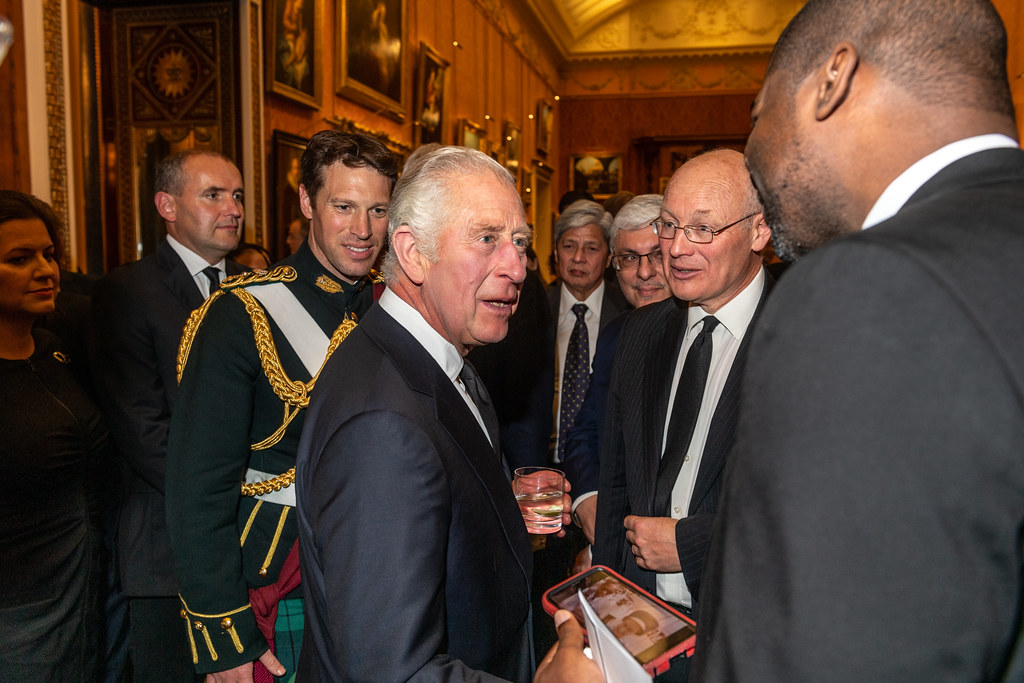
A monarch invites cameras into his private world
The new documentary presents King Charles not in the formal surroundings of state, but in the quieter rooms and gardens where he has spent much of his adult life. Rather than relying on archival clips or distant commentary, the film places the King inside his own home, allowing viewers to see how he moves through spaces that are usually shielded from public view. That decision reframes the monarchy as something lived and personal, rooted in the daily rituals of a man who has spent decades thinking about how buildings, land and people fit together.
In the trailer, the King is shown speaking directly about his long running concerns, with the footage cutting between his remarks and glimpses of the residence that has shaped his thinking. The production leans on the language of contemporary streaming culture, with prompts like Tap, Your, Learn and Try appearing on the video interface as viewers are encouraged to unmute and watch the scenes unfold. Those same on screen cues sit alongside the King’s own words, which, as reported in one preview of the project, include reflections on how his private surroundings have informed his public advocacy for conservation and thoughtful urbanism.
Highgrove House steps into the spotlight
The residence at the heart of the new footage is Highgrove House, the Gloucestershire country home that has served as King Charles’s rural base for decades. Long known to royal watchers through carefully controlled photographs of its gardens, Highgrove has rarely been filmed from the inside, and almost never with the King moving naturally through its rooms. The documentary changes that, using the house as a narrative anchor for a broader story about how a private estate can be reshaped around environmental principles.
Early clips show Charles walking through familiar Highgrove vistas, but the camera lingers on details that have usually stayed out of frame, from interior furnishings to the way the house opens directly onto experimental planting schemes. The project’s title, Finding Harmony: A King’s Vision, signals that this is not simply a home tour but a manifesto in bricks, timber and soil. In one report on the trailer, the film is described as featuring scenes at his cherished Highgrove House, with the name Finding Harmony and the phrase A King’s Vision explicitly tied to the way Charles has tried to align his personal surroundings with his public message about balance between people and nature, and with the King himself, Charles, appearing on screen as both homeowner and King.
“Finding Harmony: A King’s Vision” and its eco message
Finding Harmony: A King’s Vision positions the private residence as a living laboratory for the environmental ideas that have defined Charles’s public life. Rather than delivering a lecture from a podium, the King lets the camera follow him through orchards, wildflower meadows and carefully restored interiors that demonstrate how older buildings can be adapted for modern, lower impact living. The film’s structure suggests that the house itself is a character, evolving alongside its owner’s thinking on climate, biodiversity and rural livelihoods.
The documentary’s eco message is not abstract. It is grounded in specific choices visible on screen, from the way water is managed in the gardens to the use of traditional materials in maintenance and restoration. Coverage of the project notes that the film is framed as a vision piece, with the words Finding Harmony and A King’s Vision used to underline how Charles sees his home as proof that environmentalism can be woven into everyday life rather than bolted on as an afterthought. In the trailer, the King is seen explaining how his approach to land stewardship has changed over time, while the camera captures the surrounding countryside and the house itself in a way that makes the private estate feel like a case study in applied urbanism and rural design.
A first video of 2026 and a “secret home” revealed
The release of the trailer also doubles as a symbolic opening to the royal family’s public calendar for the year. The palace chose to make this glimpse of the King’s private life its first official video of 2026, signaling how central his environmental agenda has become to the monarchy’s image. Rather than a formal address from a throne room, the year begins with Charles walking through his own rooms and gardens, inviting viewers to see the monarchy through the lens of his personal priorities.
Reporting on the launch notes that the royal family described the property featured in the footage as a kind of “secret home,” a phrase that underscores how rarely it has been shown in such detail. The video is also linked directly to his long standing sustainability charity, The King’s Foundation, which uses Highgrove and other properties as training grounds for traditional crafts and green building techniques. In coverage of the announcement, it is stated that the royal family released the first video of 2026 with a sneak peek into King Charles’s private life and that the project is explicitly connected to his sustainability charity, The King’s Foundation, which uses the King’s own residences as showcases for conservation minded projects.
Highgrove’s long evolution as an environmental experiment
The new footage lands differently when set against the long history of Highgrove as a site of experimentation. Since acquiring the property, Charles has gradually transformed it from a conventional country house into a showcase for organic gardening, wildlife friendly planting and low impact land management. The documentary appears to capture the latest stage of that evolution, with mature trees, established meadows and restored outbuildings illustrating how patient, incremental change can reshape an estate without erasing its character.
One report on the trailer emphasizes that the King uses the film to reflect on how his approach to farming and land use has often run against the grain of mainstream agricultural policy. In that coverage, the project is framed against a backdrop of political debates, with references to a Left-wing plot that could see Labour MPs working with Lib Dems and Greens to keep Reform out of power, and with King Charles described as having long warned about the dangers of ripping out hedgerows and traditional landscapes in the name of agricultural progress. The documentary’s scenes at Highgrove House, highlighted in that same report, show how he has tried to reverse some of those trends on his own land, restoring features that modern farming once treated as obstacles.
Hollywood attention and a growing documentary footprint
The new project also fits into a broader pattern of filmmakers turning their cameras on the King’s life and ideas. In recent years, Charles has become a recurring subject for documentary makers who see in his story a way to explore the changing role of the monarchy, the evolution of environmental politics and the pressures of public duty. The latest film, with its focus on a private residence, adds a fresh angle by tying those themes directly to the spaces where he lives.
Coverage of the new documentary notes that it has already attracted praise from a Hollywood A lister, underscoring how the King’s environmental message is resonating beyond traditional royal audiences. In one report, writer Joel Lefevre describes how the project has drawn attention in the entertainment world, with a Photo Credit naming Chris Jackson as the photographer behind a widely circulated image of the King linked to the film. That same piece frames the documentary as part of a growing body of screen work about Charles, noting that his latest appearance has earned positive reactions from figures who usually focus on movies rather than monarchy, and that the praise has helped position the King as a subject of serious cinematic interest.
How this project differs from earlier royal documentaries
Royal documentaries are not new, but the tone and access level of the latest film mark a departure from earlier efforts. Past projects have often relied on archival footage, formal interviews and commentary from historians, keeping the focus on public events and constitutional milestones. By contrast, Finding Harmony: A King’s Vision uses the King’s own home as its primary set, blurring the line between biography and lifestyle film and inviting viewers to read meaning into the way he arranges furniture, tends borders and chooses materials.
The shift becomes clearer when set alongside earlier works that promised an up close look at the monarch. One such project, titled King Charles: The Boy Who Walked Alone, was promoted as an informative documentary from See It Now Stu that would offer an up close and personal look at the life of King Charles III, including aspects of his life that had never gone public before. That earlier film, highlighted in a listing that explained how to watch it on Apple TV, Fire TV, Roku and mobile, focused on his emotional journey and relationships. The new Highgrove centered documentary, by contrast, uses the house and gardens as narrative devices, suggesting that the King now prefers to express his story through the physical spaces he has shaped rather than through direct discussion of private traumas.
The digital rollout and the language of streaming culture
The way the new footage has been released also reflects how the monarchy is adapting to digital viewing habits. Instead of a single, heavily trailed television broadcast, the first glimpse arrived as a short online video designed to be watched on phones and laptops. The interface language is familiar to anyone who has scrolled through social platforms, with prompts like Tap to unmute and buttons labeled Tap, Your, Learn and Try appearing as part of the viewing experience. That design choice places the King’s private residence in the same visual ecosystem as viral clips and influencer content, even as the subject matter remains resolutely traditional.
Reports on the trailer note that the King’s remarks about his home and environmental concerns are delivered over footage that can be paused, replayed and shared like any other online video. One write up describes how the trailer invites viewers to Tap to unmute before Charles begins speaking, a small but telling detail that shows how the palace is embracing the grammar of streaming platforms to reach younger audiences. The same coverage points out that the King’s comments about his private residence and his broader vision for sustainable living are embedded in a format that encourages quick engagement, with the familiar prompts Tap, Your, Learn and Try appearing on screen as part of a user interface that treats the monarch’s home as content to be explored rather than a distant, untouchable symbol.
What the rare access reveals about King Charles today
Beyond the novelty of seeing inside a royal residence, the documentary offers clues about how King Charles wants to be understood at this stage of his reign. The emphasis on Highgrove’s gardens, traditional craftsmanship and ecological balance suggests a monarch who defines himself less by ceremony and more by long term projects that will outlast his own lifetime. By inviting cameras into his private rooms and pathways, he is effectively arguing that the true measure of his role lies in the landscapes he has nurtured and the institutions he has built around them.
The decision to make this intimate footage the first major royal video of the year, and to tie it so explicitly to The King’s Foundation and to his decades of environmental advocacy, indicates that the King sees no clear boundary between his personal tastes and his public mission. The documentary’s focus on Highgrove House, on the language of Finding Harmony and A King’s Vision, and on the small domestic details that reveal how he lives, all point to a monarch who believes that private choices carry public weight. In opening one of his most private residences to the world, King Charles is not simply satisfying curiosity, he is using his own home as a persuasive tool in a larger argument about how people, buildings and the natural world should coexist.
More from Vinyl and Velvet:

Leave a Reply