


You once needed certain hands-on skills to get through daily life and work; now those same skills mostly collect dust. This article shows which nine abilities from the 2000s have fallen out of practical use and why they no longer matter for most people.
You’ll learn which familiar tasks no longer save you time or effort, so you can stop holding on to outdated practices. Expect clear examples from navigation, office work, photography, and crafts that illustrate how technology and changing habits replaced them.
Map reading with a compass
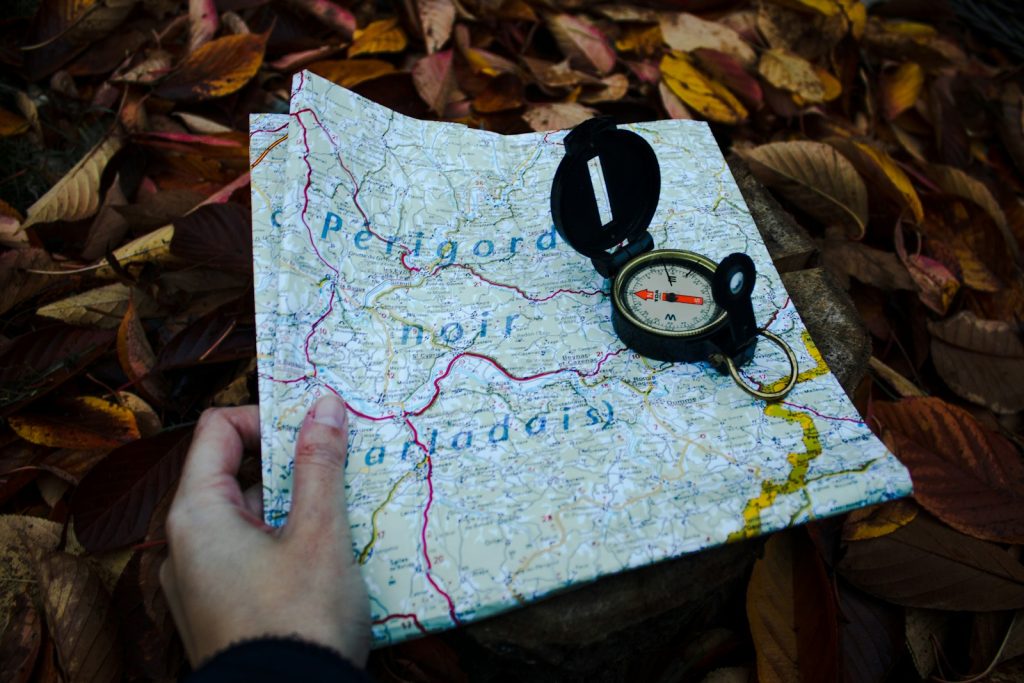
You once needed a compass to orient maps and take bearings for navigation.
Now your phone’s GPS and offline maps usually handle orientation and position for you.
Learning to triangulate with a compass still builds useful spatial sense.
But for everyday travel and most outdoor trips, that skill has largely been replaced by accurate digital tools.
Typing on a typewriter
You probably learned to pound keys on a mechanical typewriter, where every mistake meant white-out or starting over.
Those machines taught posture, rhythm, and the home-row method, skills that helped your basic typing.
Today you rarely need a typewriter; digital editors let you fix errors instantly and format with a click.
Keeping a fondness for the tactile clack is fine, but the practical need for typewriter proficiency has mostly disappeared.
Using fax machines
You used to know where the fax line was and how to feed the paper without jamming it.
Today, digital scans, email, and cloud services do the same job faster and with searchable records.
Some industries still keep fax for legal or regulatory reasons, so you might need it occasionally.
For most people and small businesses, learning fax etiquette no longer matters.
Manual bookkeeping
You used to balance journals and post ledgers by hand, tracking every debit and credit with pen and paper.
Today, most businesses use accounting software that automates calculations and reconciliations, so manual ledgers are rarely required.
You might still encounter manual bookkeeping in very small or cash-heavy operations, or when software isn’t available.
But for most roles, learning digital tools gives you far more practical value than perfecting handwritten column totals.
Handwriting letters
You used to write letters for birthdays, thank-yous, and updates; now you mostly text or email.
Handwritten notes still feel personal, but you rarely need them for everyday communication.
Schools cut back on cursive, and most signatures and forms moved online.
Keep handwriting for special occasions or as a hobby, not a required skill.
Knitting by hand
You probably learned hand knitting because it was practical and affordable back then.
Now mass-produced garments and affordable yarn alternatives make it less necessary for everyday clothing repairs.
You can still enjoy knitting as a hobby, stress relief, or creative outlet.
But if your goal was solely to save money or replace wardrobes, machine-made items usually win.
Analog photo developing
You once needed a darkroom, chemicals, and precise timing to get a usable photo.
Now you can shoot, review, and edit instantly on your phone or camera.
Developing film still teaches patience and technique, but it’s no longer a practical skill for most jobs.
If you enjoy the tactile process, it remains a rewarding hobby — not a workplace requirement.
Switchboard operation
You used to need the knack for patching calls, listening for dial tones, and routing lines by hand.
Now most workplaces use automated PBX systems or VoIP, so manual patching rarely comes up.
You might still see legacy hardware in very old buildings, but you won’t be hired for that skill alone.
Learn modern telecom basics instead if you want relevant phone-system experience.
Film photography editing
You used to spend hours dodging, burning, and timing chemical baths to get one perfect print.
Now you can scan a negative and fix exposure, contrast, and dust in minutes with consumer software.
Those darkroom skills still teach you patience and a good eye, but you rarely need the gear or chemicals anymore.
If you enjoy the process, keep it; otherwise, digital tools handle the heavy lifting faster and cheaper.
More from Vinyl and Velvet:

Leave a Reply