

Here is a little quiz for the jewelry lovers out there. Picture a gold ring with a thin chain trailing from it and a tiny decorated clamp on the end. What on earth would a woman in the 1800s have done with that?
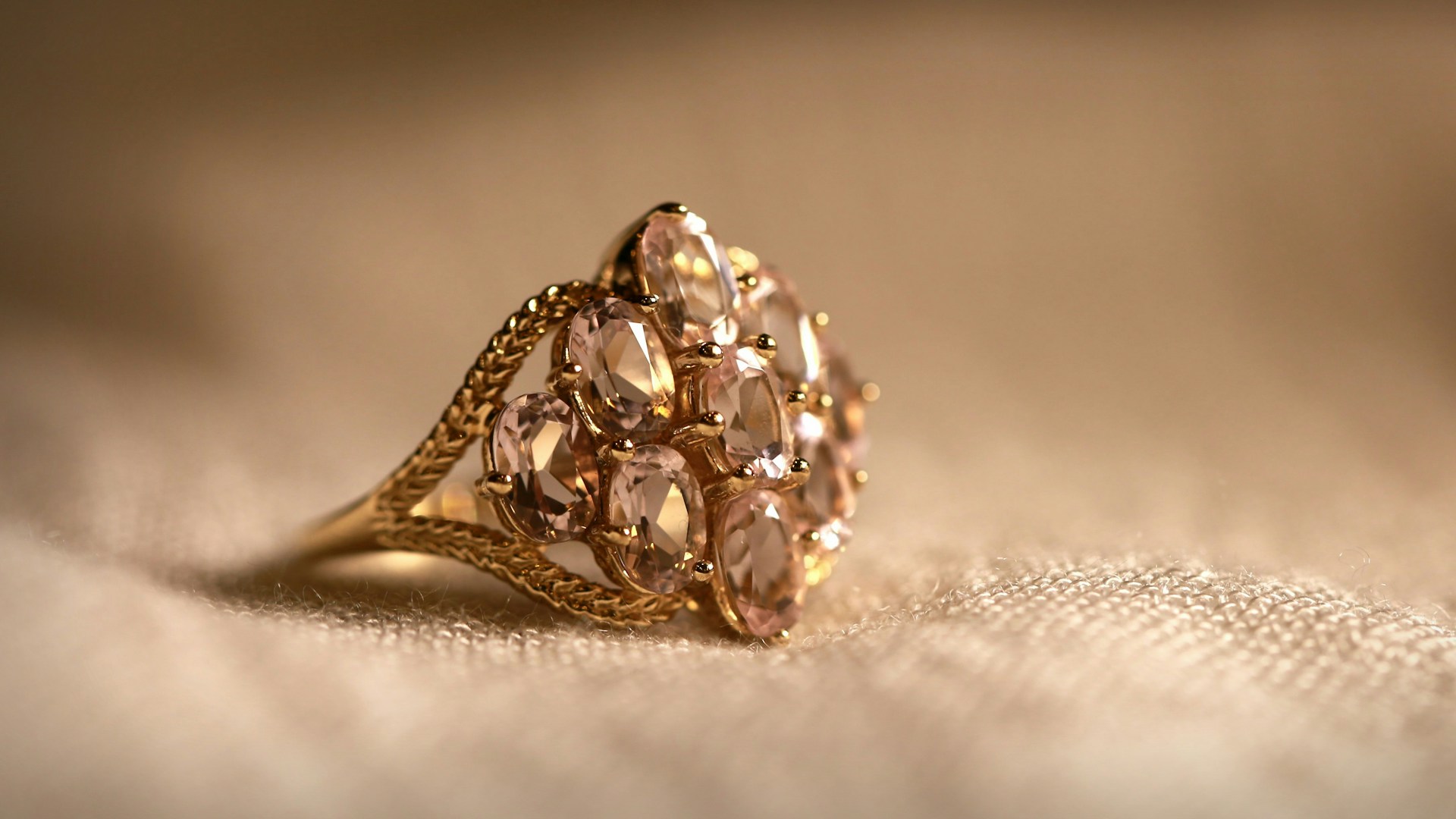
Vintage jeweler @MaejeanVintage posed exactly that question about a piece of 19th century jewelry, and the answer is delightfully practical.
“Take a guess,” she says. “What do you think this piece of 19th century jewelry was used for?”
The Answer Is A Victorian Handkerchief Holder Worn On The Finger
The piece is a Victorian era handkerchief holder. A woman would wear the ring on her finger, and a hanky would be clamped securely on the other end of the chain so she would not lose it.
It sounds like a small thing, but think about the problem it solved. A lady’s handkerchief was a daily necessity, and a loose scrap of cloth is very easy to drop, especially in a crowded room.
The solution was to tether it to the hand, in a way that looked elegant instead of awkward.
It Left Her Hands Free For Activities Like Dancing At Parties
That is the real payoff. According to the jeweler, the design left women hands-free for activities like dancing at parties.
Imagine a ballroom in the 1800s. Dancers moved through waltzes and quadrilles, holding partners, handling fans and managing long skirts, and nobody wanted to be fiddling with a hanky at the same time.
With the cloth anchored to the ring, a woman could spin across the floor, take her partner’s hand and keep her handkerchief safely at her side.
A 10 Karat Band, An 18 Karat Chain And A 14 Karat Clamp With Black Enamel
The details of this particular piece are what make it fun for collectors. She says the ring features a 10 karat gold band, an 18 karat gold chain and a 14 karat gold clamp with decorative black enamel.
Three different gold purities in one small item might surprise you. Jewelers in the past sometimes used different alloys for different parts, choosing a harder gold for pieces that took more wear and a richer, softer gold for decorative elements.
Black enamel was a popular decorative touch in the Victorian period, and it gives the clamp a crisp, dressy look against the warm yellow of the gold.
The mix also hints at how hands-on the work was. Many pieces from that age were made by small workshops, and craftsmen chose materials by feel and function, not by a single factory standard.
A band that circles the finger every day needs strength, while a chain that drapes gracefully can afford a purer, more flexible gold. The clamp, which has to grip fabric, needs a little spring, and the enamel gives it polish.
Small Jewelry With A Big Job
Victorian households were full of specialized accessories. Women carried chatelaines to hold keys and sewing tools, wore watch chains for pocket watches and kept tiny cases for everything from toothpicks to pills.
The handkerchief ring belongs to that family. It was not a showpiece to be put in a box, but a tool meant to be worn and used, then handed down as a keepsake.
That is why surviving examples are so charming today. Each one carries a hint of a real social moment, a party where someone wanted both to look elegant and to keep a pocket square from vanishing.
Handkerchiefs themselves were also part of the social language. A fine square of linen or lace might be embroidered with initials, handed down in families or tucked into a sleeve at a special event, so keeping one secure was not just a matter of convenience.
Seeing the ring today, you can almost picture the whole scene: the gaslit room, the rustle of skirts and a gloved hand with a flash of gold and black enamel.
How To Spot And Care For Antique Gold Jewelry
If a quiz like this has you wondering what is tucked away in your own jewelry box, a few simple habits will help you appreciate and protect what you find.
- Look for tiny karat stamps such as 10K, 14K or 18K, and a maker’s mark where one exists.
- Use a magnifier to examine clasps, chains and enamel for wear, cracks or repairs.
- Keep pieces separate in soft pouches so enamel does not chip and chains do not tangle.
- Skip harsh dips and ultrasonic cleaners on enameled items; a soft dry cloth is safer.
- If a piece is valuable or fragile, ask a qualified jeweler for advice before cleaning.
Even if you never own a handkerchief ring, the story is a reminder that everyday life in the past was full of clever solutions. Someone saw a problem on the dance floor and answered it with a ring, a chain and a clamp.
So the next time you find an odd little piece of gold in a drawer, do not toss it aside. It might be a solution to a problem you never knew existed, and it might have a story worth telling at your next party.
More Stories You May Like
- Jimmy Miller Produced Let It Bleed, Sticky Fingers And Exile On Main St, And Keith Richards Says His Name Is Written In Gold In Rock And Roll Heaven
- Nearly Everyone Wore A Hat Until The Early 1960s, Then They All Stopped, And The Real Reasons Include Cars, Better Heating And The Beatles Showing Off Their Hatless Heads
- McFarlane Put Freddy Krueger Jason Voorhees And Leatherface On Toy Shelves In 1998 And Movie Maniacs Made Adult Horror Collecting So Normal That Rivals Crowded In And The Edge Wore Off

Leave a Reply