

Fire took their home. Friends brought them a gift when the new one was ready. And for years, that gift hung on the wall as a mirror while its real purpose, and its real value, stayed hidden in plain sight.
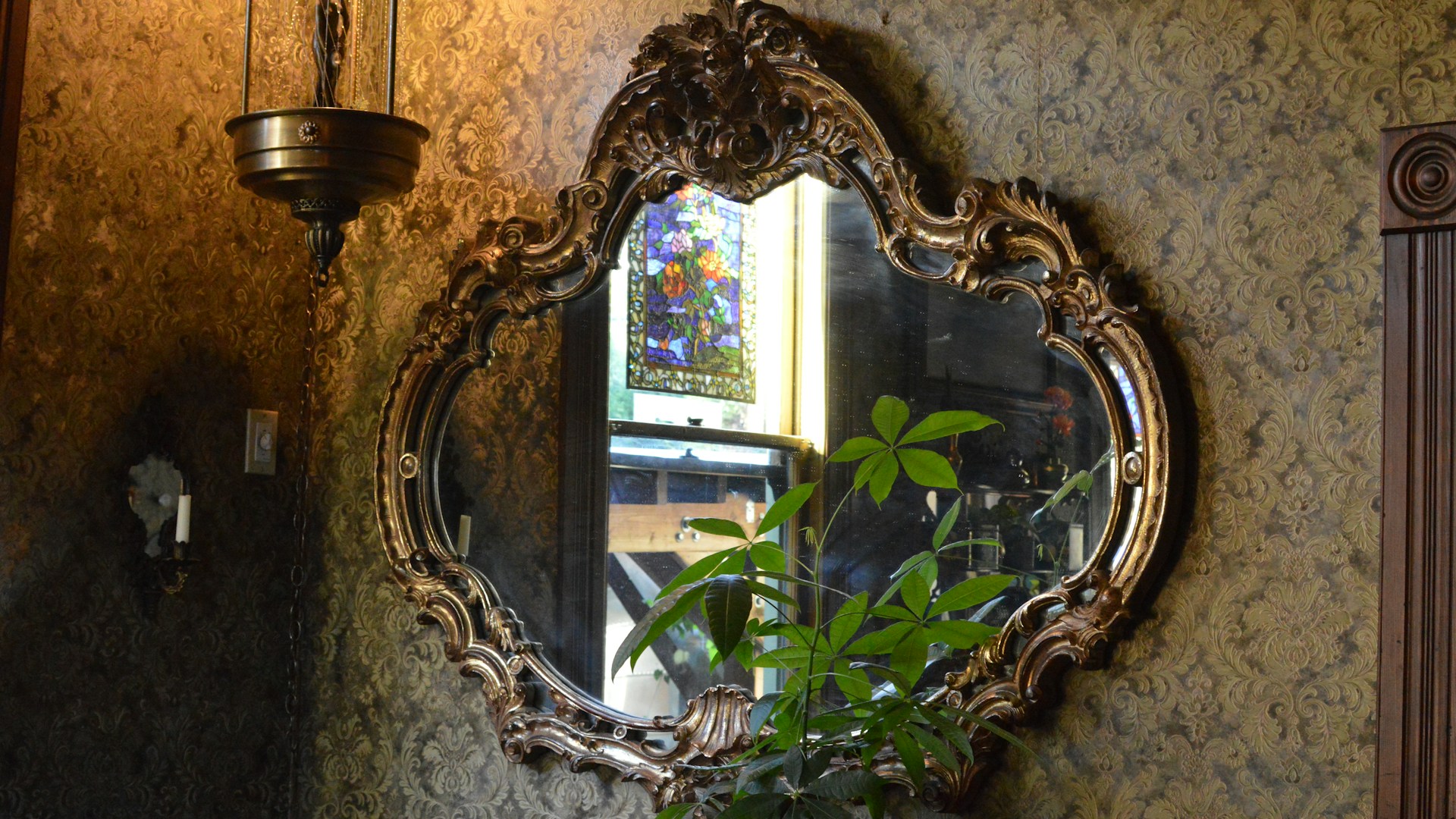
The couple’s story appears on the channel @JimParker, and it comes with one of the great reveals in the antiques world.
“A house burned down,” the owner explains. “We built a new house and our friends gave us a housewarming party and our dear friends brought us this object.”
“We Bolted Them Together In The Back And Hung It As A Mirror”
The appraiser asks how the couple had been showing it off. The answer is practical and a little funny.
“Well, it comes in three pieces,” the owner says. “So, we bolted them together in the back and hung it as a mirror because I thought it belonged on a table, but we didn’t have a table big enough.”
It was a kind guess, and it turned out to be half right. They thought the piece belonged on a table. They just never imagined what kind.
The Expert Says Their Instinct Was Right, And The Piece Is Called A Plateau
“Your instinct was right,” the expert tells them. “This was made for a table. It’s what we call a plateau.”
A plateau, in the language of fine French furniture and decorative arts, is a mirrored base set in the middle of a dining table to hold centerpieces such as candelabra, flowers or figures. The large ones often came in sections, which explains why this one arrived in three pieces.
The expert points to the decorative bronze elements around the edge. They were cast bronze, he says, and the surface was applied by fire gilding.
Fire Gilding Means Mercury And Gold, And Paris Made This One Around 1820
Fire gilding is a demanding old technique. The expert describes it as mercury and gold mixed together, applied to the bronze and heated so the mercury burns away and leaves a rich layer of gold.
The result is that deep, warm glow you see on fine French clocks and candelabra from the period. It is also a dangerous process, since the fumes from mercury were a real health hazard for the craftsmen, which is part of why the technique is so rarely used today.
Then comes the date. “This piece was actually made in Paris in about 1820,” he says. The couple, and the audience, react the way anyone would. “My goodness.”
“Plateaus Are So Rare. We Would Give This An Auction Estimate Of $50 To $70,000”
This is where the story turns. The expert explains that plateaus are so rare, and he places an auction estimate of $50,000 to $70,000 on it.
The owner’s reply is the one we would all give: “Oh my gosh.” For a gift that spent its life on the wall as a mirror, it is a staggering reversal.
The piece was made nearly 200 years ago, and its age, its fine bronze and gilding and its rarity combine to give it that value. The couple did not pay a cent, and the reveal came from a friend’s kindness and a curious appraiser.
It helps to picture how it all began. A fire is about as painful a loss as a family can face, and friends who show up at a housewarming with a gift are trying to bring a little warmth back into an empty house.
They had no idea they were handing over a piece that a specialist would later value at as much as $70,000. The gesture mattered more than the object, and then the object turned out to matter too.
The reveal also shows how easily value hides. A large mirrored object in three parts looks like a mirror to most of us. It takes a trained eye to read the bronze, the gilding and the shape and say what it really is.
What To Do If You Own A Mystery Piece Like This
Most of us do not have a Paris plateau hanging in the hall, but many homes hold something that nobody has ever studied closely. Before you decide how to use or display an unusual old piece, a little homework can save you from a costly mistake.
- Do not clean, polish, repaint or alter it. Original surfaces, including gilding, matter a great deal to value.
- Photograph it from all sides, including the back and underside, and note any marks.
- Keep all the parts together. A piece that comes in sections is worth more when complete.
- Ask an appraiser or auction house specialist to look at it, and ask about insurance.
- Avoid drilling or bolting into a piece, which can reduce its value.
It is worth noting that this couple did bolt their pieces together, which is the kind of change collectors usually dislike. They were lucky, and the expert was gracious about it.
The bigger lesson is simple. A gift, an inheritance or a garage find can hide a whole story. If something looks like it does not fit in your house, find out what it is before you decide what it is for.
More Stories You May Like
- Slayer Stop Their Reign In Blood 40th Anniversary Show Eight Songs In After Fans Start Trashing The Venue, And Tom Araya Threatens To Go Home
- Billy Idol Waited Since 2007 To Get Into The Rock Hall, Was Nominated Only Twice, And Says He Called Himself Billy Idol So He Could Be His Own Hero
- Travis Barker Plays The Drum Fill Everybody Air Drums To While Cynthia Erivo Sings In The Air Tonight For Phil Collins, Who Said He Wasn’t Match Fit To Play It Himself

Leave a Reply