

Every old house keeps a few secrets, and the garage workshop is often where the best ones hide. When the creator behind @sandiegofurnitureflipper looked up at the wall of her workshop, she found a rusty collection of baby jars, hanging in rows and stuffed with nuts and bolts.
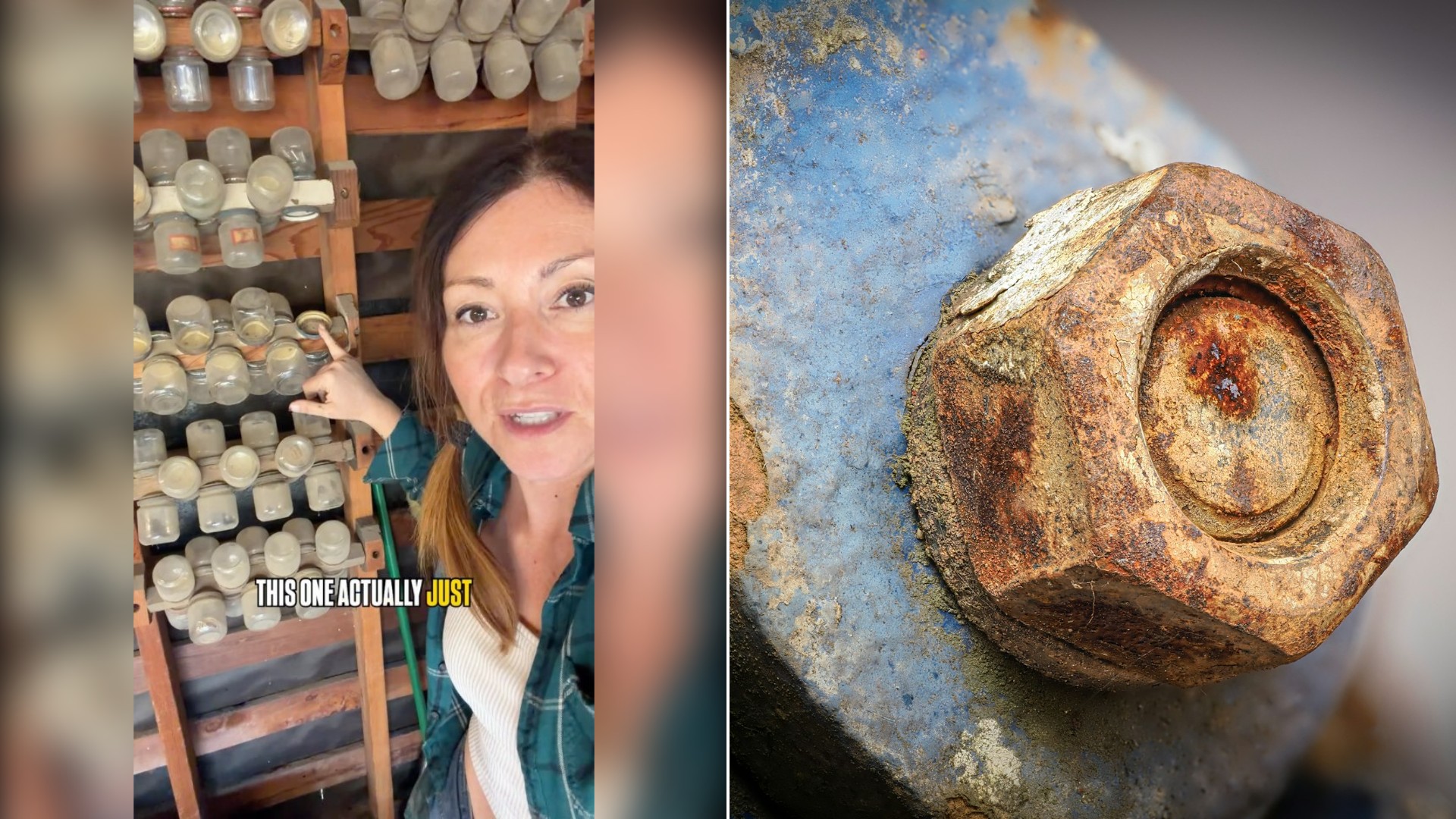
The setup was the handiwork of a previous owner of the house, which she says was built around 1931. Nearly a century later, the jars were still there, doing the job they were given decades ago.
A Rusty Wall Of Jars In The Garage Workshop
The jars are mounted so that the glass hangs below a shelf while the lids stay fixed in place. Over the years, moisture and age have left the metal lids with a coat of rust, and the glass carries the dust of a working garage.
Inside are the kind of small parts every handyman collects, including nuts, bolts and other hardware. It is an organized system that looks like it grew out of necessity, with no store-bought bins in sight.
View this post on Instagram
The 1931 House And Its Handy Previous Owner
The creator says the house dates to about 1931, which means the garage workshop has seen generations of projects. A homeowner of that era had little access to the plastic organizers we take for granted, so reusing glass jars was a smart and thrifty choice.
Whoever built this wall clearly wanted to see every part at a glance. A quick look through the glass shows the size of a bolt without opening a single drawer.
One Jar Broke Along The Way
Not every jar survived the discovery. The creator notes that one of them broke, a reminder that glass and age are a delicate pair.
It is a good lesson for anyone exploring an old garage or basement. Items that look sturdy can be brittle after decades, and loose glass mixed with metal bits can be a real hazard for bare hands.
Why Jar Storage Was A Workshop Classic
The idea behind the jar wall is simple and clever. A metal lid is screwed or nailed to the underside of a shelf, and the jar twists on and off. You can grab a handful of screws with one hand, and the lid keeps the contents from spilling.
The method uses the empty space beneath a shelf, which is the most underused spot in most workshops. It also keeps small parts sorted by type and size, so you never have to dig through a coffee can looking for the right washer.
Baby Food Jars Meet The Depression Era Spirit
Reusing containers was a way of life for many families in the early to mid twentieth century. Jars, tins and boxes found second and third lives, and nothing was thrown away if it could hold something.
Baby food jars came into wide use in the 1920s and 1930s, and their small size is perfect for hardware. Their popularity in garages across the country shows how often practical thinking beats fancy storage.
How To Make Your Own Jar Storage Wall
You can copy this idea for very little money. Gather small glass jars with metal lids, such as baby food, jam or spice jars, and wash them out. Screw the lids to the underside of a shelf or a wooden board, using screws that go through the center of each lid.
Then fill the jars with parts, twist them onto the lids and label them if you like. A few notes will help:
- Use small jars only, since glass full of hardware gets heavy fast
- Mount lids to a solid, well-secured shelf or board
- Keep the wall out of reach of children and away from busy walkways
- Consider plastic jars if you worry about breakage
Safety When You Inherit An Old Workshop
Old garages can hold surprises beyond jars. Wear sturdy gloves and closed shoes when handling rusty hardware, and keep your tetanus shots up to date. Look out for old paint cans, solvents and chemicals, which should go to a household hazardous waste drop-off rather than the trash.
If you find glass that has cracked or broken, pick up large pieces carefully and sweep up the rest with a brush and pan. Wrap shards in newspaper before throwing them away so no one gets cut.
Is The Rust Worth Saving
Rust on old lids is mostly surface wear, and in many cases a wire brush and a little oil will clean it up. If you want to keep the vintage look, a coat of clear sealer can stop further corrosion without erasing the character.
Some collectors prize workshop finds exactly because of that patina. A weathered jar wall can be a conversation piece in a modern garage, or even a rustic display for plants and craft supplies indoors.
The Joy Of Finding What Others Left Behind
There is something moving about a task completed decades ago that still works today. The previous owner never expected a stranger to admire the jars, yet here they are, still holding the same bits of hardware.
The creator at @sandiegofurnitureflipper turned an ordinary garage discovery into a small piece of history. Anyone who has bought an older home will understand the thrill of opening a door and finding a bit of the past waiting there.
More Stories You May Like
- Jimmy Page’s New Dragonette Amp Costs $9,000 For Just 6 Watts, Hand Wired In New York, Built To Order And Signed By Page Himself
- Def Leppard’s Vinyl Collection Volume 4 Includes An Unreleased Beatles Cover Of Revolution Recorded For A TV Ad That Never Aired
- Aerosmith And Run-DMC Close The Rock Hall With Walk This Way, The 1986 Mashup Rick Rubin Orchestrated, And Chad Smith Fills In For Joey Kramer On Drums

Leave a Reply