

A tiny agate stone with a crack in it once sat on a table at Antiques Roadshow in Fort Worth, Texas. It turned out to be the personal seal of James Madison, the fourth president and the man often called the Father of the Constitution.
The Antiques Roadshow Detours episode “A Lasting Impression” traces how a favor between two Virginia neighbors led to the seal, and why its value has jumped since the TV appraisal.
A Favor From England Sparked The Order
The story starts with a friendly offer. James Barbour, Madison’s neighbor in Orange County, Virginia, was headed to England as minister to Great Britain, the modern equivalent of an ambassador. He wrote to ask whether Madison needed anything while he was there.
In September 1828 Madison took him up on it. Writing letters by the dozen every day, he wanted something fancy, and he ordered two wax seals, one in stone and a cheaper one in silver.
“They Fully Answer My Wishes”
Barbour went to Pall Mall in London, the center of the luxury trade, and trusted an engraver who promised the seals were of the latest fashion. He sent them off with a letter. On February 6, 1829, Madison wrote back that the seals fully answered his wishes.
The seals made an impression on people too. President John Quincy Adams mentioned in 1831 that he had received a letter from Madison and described the seal. “His seals said, this is not junk mail,” the episode quips.
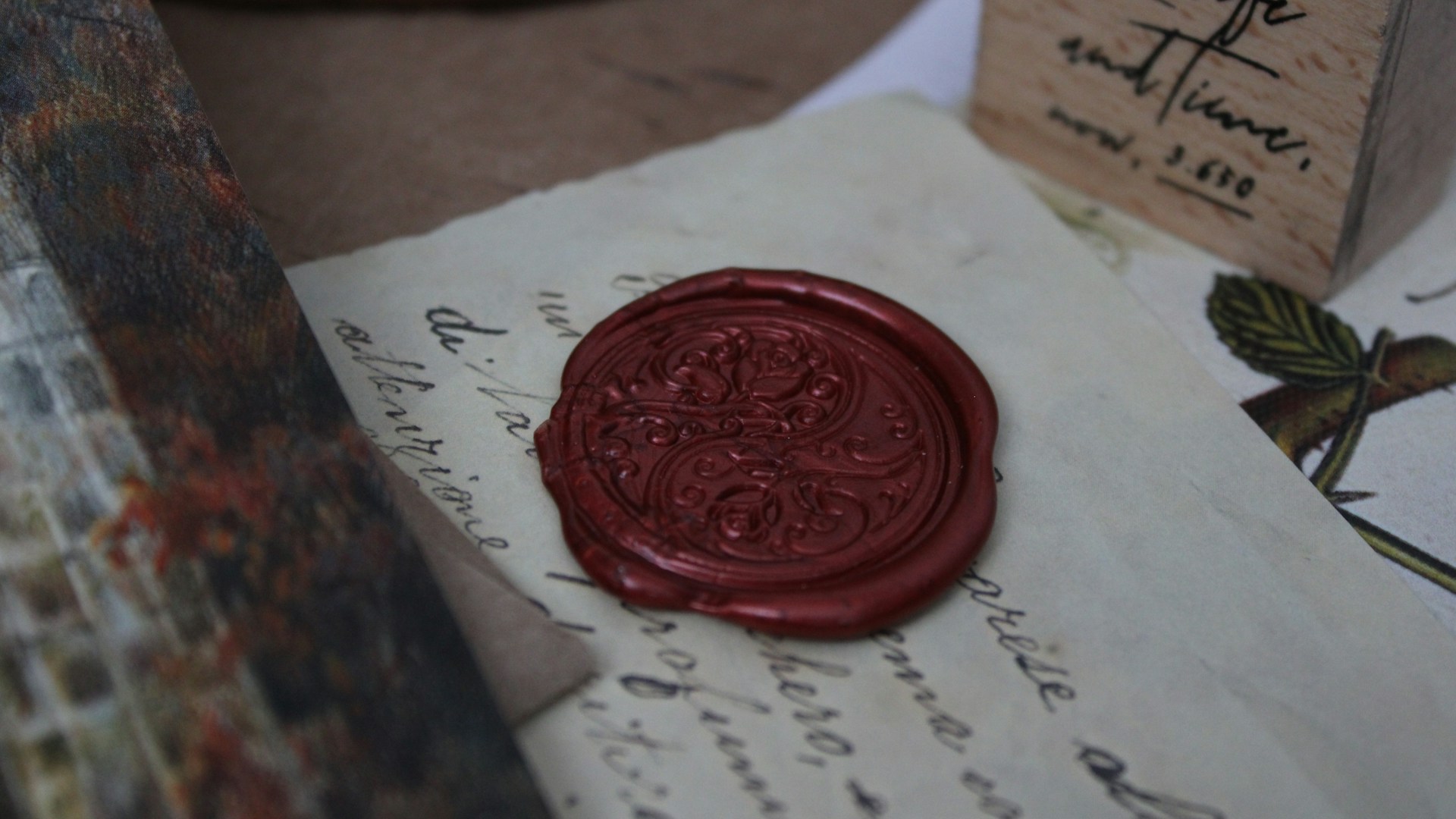
Back then, letters were folded and closed with hot wax pressed with a personal seal. It worked as a nineteenth-century version of an encrypted email, since a cracked seal signaled that someone had peeked, and an expensive custom-carved seal was also a status symbol.
Madison Was Busy, Even In Retirement
Madison served in Virginia’s constitutional convention in 1776 and became the youngest member of the Continental Congress at 29. At the 1787 Constitutional Convention in Philadelphia he arrived with the Virginia Plan and set the agenda. He co-authored the Federalist Papers and wrote the Bill of Rights.
He was Secretary of State under Thomas Jefferson and became president in 1809. During the War of 1812, British troops burned the White House in 1814, and his wife Dolley famously saved George Washington’s portrait.
In retirement he returned to Montpelier in 1817 and promptly took on helping start the University of Virginia. Associate editor Armin Matthes of the Papers of James Madison says the project holds more than 38,000 letters to and from him. There are 48 letters between Madison and Barbour alone.
The Seal’s Trail Leads Through Dolley Madison’s Family
The seal next surfaces in Dolley Madison’s estate when she died in 1848. Records found by historian Hillary Hicks show she willed the agate seal to a niece.
That niece died young, leaving the seal to her five-year-old orphaned daughter, who was raised for a time by her uncle Benjamin Fisher. Notes from a Madison descendant say he lost the seal and found it again “much mutilated,” so he stopped wearing it on his watch chain. Hicks wondered if that was the crack appraiser Wes Cowan noticed.
The owner, Lynn, inherited it from her mother, who always called it James Madison’s presidential seal. Lynn later learned it was a personal seal. She traced the family link herself: her grandfather’s grandmother’s brother was married to Dolley Madison’s niece, and Benjamin Franklin Fisher was her great-great-grandfather.
Why Experts Believed It
When Wes Cowan appraised it in 2016, he found a rolled gold setting, which is brass plated with gold, holding an agate stone. It carries Madison’s initial and a Latin motto, “Veritas non verba magistri,” meaning truth, not the word of teachers.
Cowan says he was not skeptical, only “in awe.” Better yet, Montpelier owns an envelope from a Madison letter to Edward Everett, the orator who spoke before Lincoln at Gettysburg. Everett tore carefully around the wax so he could keep it, and the impression matches the seal, apart from the crack. “It only makes the story richer,” Hicks says.
$10,000 To $15,000 Then, $20,000 To $30,000 Now
In 2016, Cowan estimated a good auction value of $10,000 to $15,000. Lynn’s reaction: “Wow, I’m impressed.”
Now, Cowan says he was too low. Interest in the American Revolution and the nation’s founding has surged, and he thinks the seal is probably double that today. “Probably would bring $20,000, $30,000, who knows today.”
For Lynn, it is priceless. She keeps it in a bank lockbox and tells very few people she has it. “It’s not every day that one of the founding fathers’ personal seals comes into Antiques Roadshow,” the episode notes, and it is the only time it has happened.
One More Seal Could Be Out There
Madison ordered two seals, one in stone and one in silver. The Roadshow team wonders where the other one went. If you have a seal bearing his Latin motto, it could be the missing one.
If you have an old family keepsake with a famous name attached, there are lessons here:
- Write down the family story and look for documents that back it up, as Lynn did with her genealogy.
- Contact museums and research projects. Montpelier’s historians could match the seal to a letter and an envelope.
- Expect values to move. Cowan says the revived interest in the founding of the country pushed his estimate up.
- Store it safely. Lynn keeps hers in a bank lockbox.
Sometimes the most valuable thing in the house is the story that came with it, and a cracked little stone from Virginia proves it.
More Stories You May Like
- Trent Reznor Inducts Joy Division And New Order Into The Rock Hall, Peter Hook Is The Only Member Present, And Reznor Says Nirvana And Radiohead Would Sound Different Without Them
- Iron Maiden Goes Into The Rock Hall While Rocking Halfway Around The World, And Annie Clark Leads The Trooper After Once Playing It On Bass At A Middle School Talent Show
- UK Thrifters Spot A Complete 1970s Briglin Pottery Coffee Set At A Charity Shop For £10 And Think It Could Resell For £25 To £30

Leave a Reply