

“David sold me this house. His mother lived here. She was a weaver. People came to her from all around. Then she suddenly stopped weaving.”
That is how the creator behind the YouTube channel Victor Homem begins a walk through his new old house. Her son never found out why she stopped, and he made the buyer promise just one thing.
“Whatever you find in the attic, don’t burn it.”
A Dark House With Wooden Dishes, A Huge Stove And An Old Icon
The house has had no power for ages, and the old wiring is still in place. It is completely dark further in, so he moves slowly with a torch he wishes were stronger.
There is a veranda with patterned windows, which he calls beautiful work. A wasps’ nest hangs nearby, and he jokes that it is a good thing it is autumn.
Inside he finds a stove in a cramped room, which tells him people lived here through the winter. A bigger stove in another room makes him wonder how much bread was baked in it. Even the dishes are wooden, and an old icon hangs with its paint peeled away by age.
A Pantry, A Barrel And A Tablecloth With Flowers
A pantry holds jars and bottles, plus a huge container where a whole harvest would fit. A barrel reminds him that families pickled food for winter, and an old bottle makes him remember returning bottles for a deposit.
A tablecloth with flowers looks shop bought, which he finds odd in a weaver’s home. Galoshes sit in the middle of the room as if she had only just taken them off, and a little yellow chair makes him wonder if David sat in it as a child.
The house has a TV picture tube, an ornate curtain rail she probably wove curtains for, and a floor littered with the things people leave behind.
A Weaver With An Empty Chest
Then comes the first real clue. He opens a chest, the kind people used for their best cloth. “Empty. Completely empty,” he says. “A weaver, and an empty chest? Where did all the cloth go?”
Along the way he keeps finding odd pieces. There is a slat with a little wheel, a heavy piece carved from a single piece of wood that is rusty and falls apart in his hands, and a wheel with no rim, just straight turned spokes. Beads on threads hang from the wall.
“The further I go, the more questions I have,” he says. Someone took things apart, he notes, and everything seemed to have been dismantled with care.
The Attic Where The Loom Was Hidden
The ceiling has collapsed in one room, which tells him the attic is right above. He goes up and finds it: something tightly wrapped in thread, boards and frames so smooth they look polished by hands.
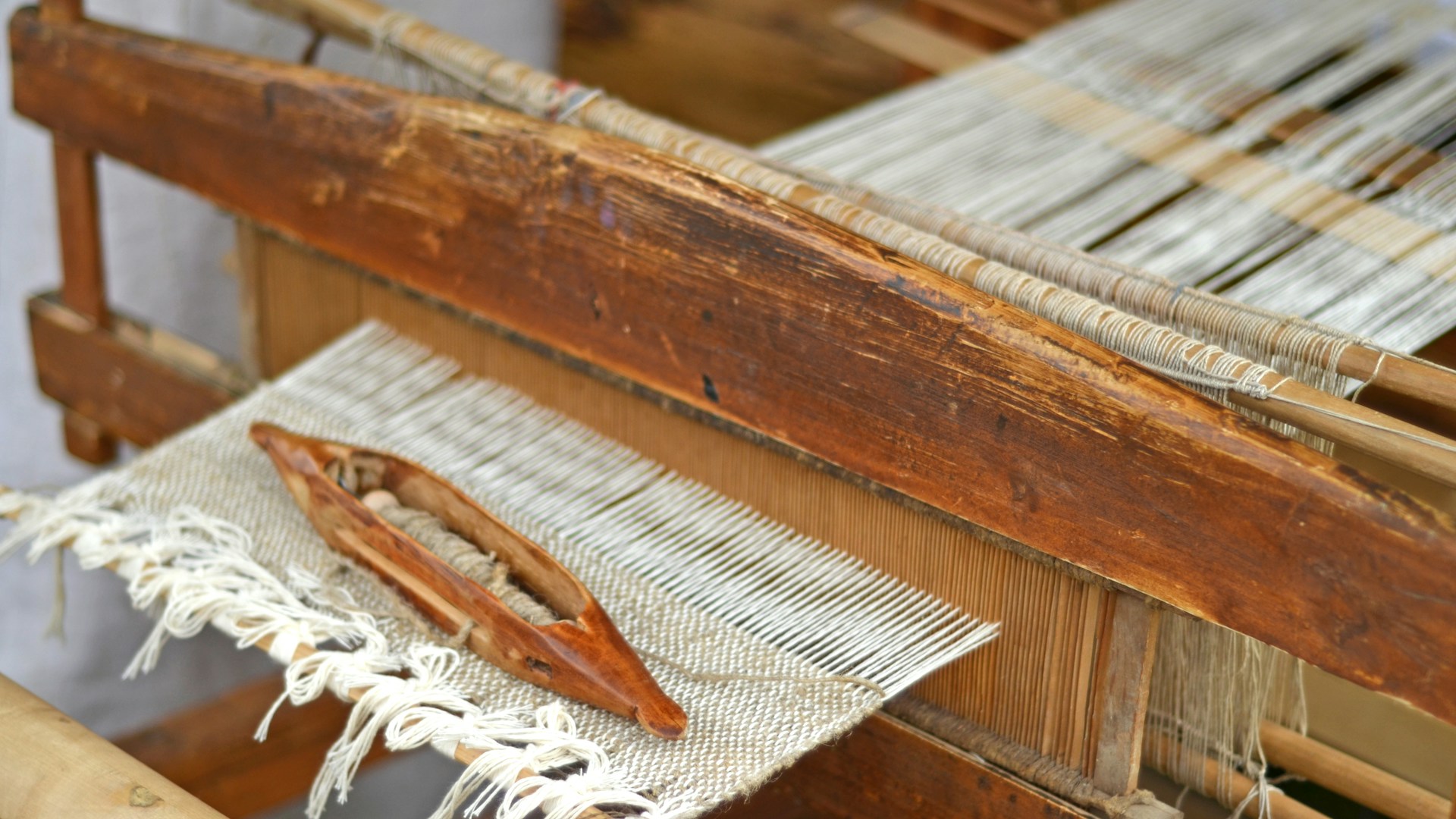
Then he finds a cogwheel, the kind found on a loom. Then a shuttle. “No doubt now. It’s her loom,” he says. “This is what I wasn’t to burn. She didn’t sell it or throw it away. She took it apart and brought it up here.”
He realizes that the pieces downstairs could have been loom parts too, including a wooden roller with a wheel that would have been used to wind the cloth. Put them together, he says, and the loom will work.
“She Didn’t Stop Weaving Out Of Laziness”
He thinks the mother may have hidden the loom on purpose. “More likely, she was hiding the loom,” he says. “But from whom? And why? And where’s all her cloth?”
An empty chest and a hidden loom look to him like a decision: never again. Earlier, in the room where the loom would have stood, the floor was covered in straw and only wreckage remained.
He keeps his promise. “I’ll keep the loom, as I promised. Maybe I’ll put it together someday.”
A Solid House And A Cellar Where Flax Grew
Looking at the structure, he says the builders made the house to last, with wooden lath beneath the plaster. There is a lot of work to do, but he says it is solid and that he likes it.
In the old cellar with stone walls and steps, a neighbor tells him her flax grew nearby. According to the neighbor, she grew it, spun it and wove it herself. An old shed outside has a collapsed roof.
He ends with questions for viewers. Why did she hide the loom instead of selling it? Why is the chest empty? Maybe she wove a gift for someone who never came. “What do you think happened?” he asks, and invites people to write in the comments.
How A Loom Turns Flax Into Cloth
If you have never seen one, a loom is a frame that holds long threads tight so another thread can be passed back and forth across them. The shuttle he found carries that cross thread, and a cogwheel and roller help hold and wind the work.
Flax is a plant, and it becomes linen after a long process of preparing the fibers, spinning them into thread and then weaving. A household that did all of that by hand put a great deal of time into every length of cloth.
That is why a weaver’s chest of finished cloth would have been valuable, and why an empty one stands out. It is also why a dismantled loom, with each part carefully set aside rather than thrown out, suggests it mattered to someone.
What To Do If You Find Old Tools In A House You Buy
The lesson of this story is to treat old things with respect. Before you throw out the contents of an attic, outbuilding or cellar, take photographs and look closely at what you have.
Keep pieces together if they belong together, as he did, and store wood and metal dry. If someone asks you to keep something, as David did, honor the request. A promise made at a closing table is worth keeping.
If you think something may be historic, a local museum or historical society is a good place to ask for advice before you decide anything.
More Stories You May Like
- 8 Classic Sitcom Stars Who Quietly Disappeared From Hollywood, And What Happened After Their Most Famous Shows Ended
- First Printing Teenage Mutant Ninja Turtles #1 Signed By Both Creators Sells For $192,000, Then A 1984 Comic Carrying A Turtles Ad Sets A $132,000 World Record
- Camp Candy #1 Comic From 1990 Jumps 1,766% In Value To $112 For A Near Mint Copy, And A GEM 10.0 Copy Is Now Valued At $560 Thanks To Nostalgia

Leave a Reply