

Grandma’s silverware chest has been in the dining room closet for forty years, and now nobody wants to polish it. Before it goes into a donation bin, turn a few pieces over and read the back of the handle.
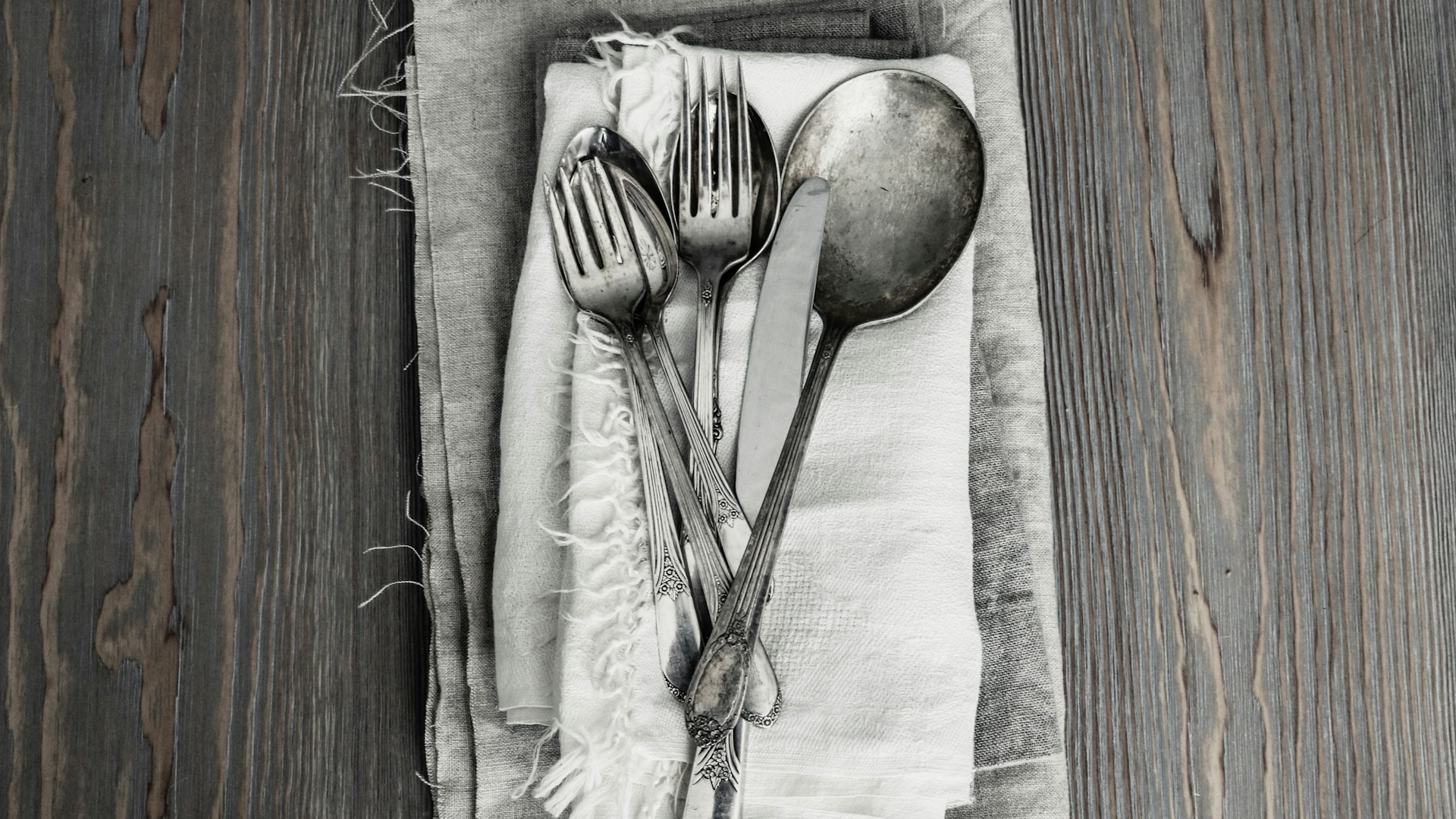
Refiners and dealers who buy silver every day point to the same names again and again. This list draws on Muzeum Gold and Silver’s silverware guide (2017, updated 2021), Specialty Metals Smelters & Refiners’ guide to sterling flatware marks (2015) and Appraisily’s guide to old silverware (2026).
Here are eight makers and the marks to look for. This list sticks to makers and marks, since condition, pattern and the number of pieces change everything about value.
Gorham Marks Its Silver With A Bear And An Anchor
Muzeum and Specialty Metals both list Gorham Silver, and describe its mark as the letter G with a bear and an anchor. Appraisily also names Gorham among the makers to watch for.
Gorham was founded in Providence, Rhode Island. If you see that little bear on the back of a handle, set the piece aside and do not donate it yet.
Tiffany & Company Pieces Say Makers Right On Them
The famous New York name shows up in both Muzeum’s and Specialty Metals’ lists, with the mark “Tiffany & Company Makers.” Appraisily names Tiffany & Co. as well.
The name is plain to read, so it is easy to miss only if you never look. A quick check of the back of each handle takes seconds.
Reed & Barton Spells Out Its Name
Both guides list Reed & Barton, whose mark is simply “Reed & Barton.” Appraisily includes it too.
The company was founded in Taunton, Massachusetts. Because the mark is just the name, look for it on the back of spoons, forks and serving pieces alike.
Towle Silver Hides A Griffin Inside The Letter T
Muzeum and Specialty Metals describe the Towle mark as a griffin inside a stylized letter T, sometimes with the word “Towle.” Appraisily lists Towle among the makers as well.
A griffin is a mythical creature with an eagle’s head and a lion’s body. It is easy to spot once you know to look for it.
Wallace Used Several Marks Including R.W. & S.
R. Wallace Silver is listed in both guides with several marks, including “R.W. & S.” and “Wallace Sterling.” Appraisily names Wallace in its list too.
Because the mark changes, do not rely on the full name being spelled out. Initials count here.
Lunt Sterling Is Stamped Right On The Piece
Lunt Silver appears in Muzeum’s and Specialty Metals’ lists with the mark “Lunt Sterling.” Appraisily lists Lunt among the makers as well.
The word “Sterling” matters. It tells you the piece is meant to be solid silver, not a plated lookalike.
International Silver Used I.S. Co. Sterling And Bought Rogers Bros.
The mark for International Silver is “International Silver” or “I. S. Co. Sterling,” according to Muzeum and Specialty Metals. Muzeum adds that International Silver Company acquired Rogers Bros. in 1898.
Muzeum says pieces made after that purchase carry the “IS” mark, which stands for International Sterling. It also notes that the 1847 Rogers Bros. brand is a different matter, since Appraisily lists “1847 Rogers Bros.” among marks that mean silverplate.
Kirk & Smith Is Another Name Worth A Closer Look
Muzeum and Specialty Metals list the mark “Kirk & Smith,” and Appraisily names Kirk among the makers to check.
The Kirk silversmiths worked in Baltimore. Look on the back of each handle for the name before you decide a set is ordinary.
Now for the other side of the coin. Appraisily says to look for “Sterling” or “925” on the back of each handle, while marks such as “Community,” “EPNS,” “A1,” “Quadruple Plate” and “Silver Soldered” mean silverplate, a thin silver layer over base metal.
Muzeum adds that “Sterling Inlaid” is a misleading mark that is not sterling. Appraisily also warns that hollow-handle knives have a steel blade and filler inside a thin silver handle.
Patterns matter too, though the names are best matched with a reference book. Appraisily suggests comparing the handle shape with a maker’s pattern books or a matching service.
Muzeum notes style clues for Rogers Bros. as well: elaborate designs came before 1900, simplified designs followed after the 1898 purchase, and its floral designs have decorative flairs along the handle. Details like these can help you date a set before you ask anyone for an opinion.
Foreign pieces have their own marks. Muzeum explains that British hallmarks include a lion for the sterling standard, a town mark such as a leopard for London, a date letter from A to Z and the silversmith’s initials.
Purity numbers help too. Muzeum lists .925, .800 and .500 as purity markings, and says “Coin” appears on early American pieces.
So before you donate, lay out your pieces and check the back of every handle. Photograph each mark, sort the sterling from the plate, and have anything with a maker’s name looked at by a reputable silver dealer or appraiser.
A few minutes with a magnifying glass could keep a family heirloom out of the donation bin.
More Stories You May Like
- Sterling Stamps And Gold Filled Marks Fool Jewelry Buyers So Learn What 925 GF RGP And 10K Really Mean Before You Pay
- Thrift Store Designer Tags Can Be Swapped And Vintage Designer Bags Can Be Fake So Check Stitching Hardware And Lining Before Buying
- Ultrasonic Cleaners Can Loosen Glued Stones And Damage Pearls And Opals In Vintage Jewelry So Think Twice Before Using One

Leave a Reply