

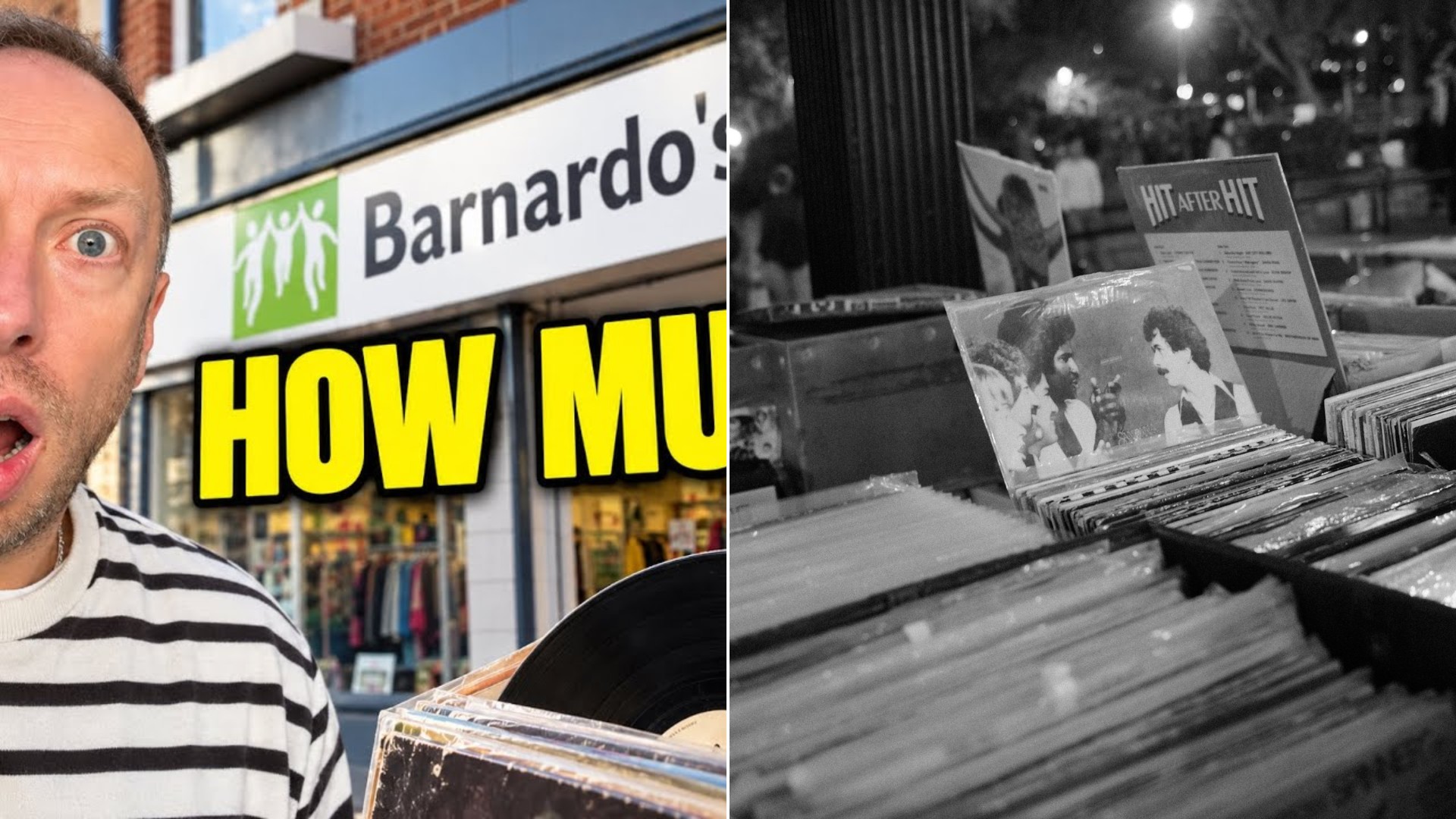
Most record collectors have a number in their head, a line they swear they will not cross. For one British vinyl hunter, that line was £30 for a single album. Then a charity shop in his hometown pinned a notice to its board, and he walked out £30 lighter and grinning.
The collector behind The Vinyl Vulture channel says he is picky about what he buys. The most he has ever paid for an album is around £50, and ordinarily he would not spend £30 on a record in any shop.
He Skipped The Faraway Trips And Walked Five Minutes To Town
Rather than head to far-flung places for a record hunt, he decided to stay close to home. His town is about a five-minute walk away, and it has a handful of charity shops that sell vinyl.
He had a good reason to go back. The last time he visited, he picked up The Peddlers’ album Sweet London, an early 1970s jazzy classic, and paid £20 for it. He admits that is a lot for a charity shop, but it is a charity close to his heart, and Discogs lists the record between £20 and £30, so it felt about right.
The town no longer has a record shop, he says. The local one has gone online, so charity shops and an antique store were the only options on the route.
Rod Stewart Records, Pricey Sean Connery And A Gary Barlow Behind Lock And Key
The first stop was a Mary Stevens Hospice shop with a decent vinyl rack and a shelf of old music books, including titles on Hendrix, The Who, The Jam and The Clash. He was tempted, but moved along. A Genesis copy of Foxtrot at £12 looked like a good price, though.
The second hospice shop was more typical charity-shop fare. He found Top of the Pops compilation albums, a stack of Barbra Streisand and a Sky album that, as he jokes, every middle-aged man seems to own. A Sean Connery record was priced at £45, which made him laugh out loud, and a Gary Barlow album was kept under lock and key.
Next came a shop with a jumble-sale feel and plenty of 1980s twelve-inch singles. He spotted Rick Astley, Bananarama and a Cooler Shaker record he remembered seeing live back in the day. He also flicked through the singles hoping for a rare Beatles find, and found a battered Crusaders copy of Street Life instead.
At the Blue Cross shop he found plenty of tapes and CDs, and a horse jigsaw that tempted him. In the album bins he found Nat King Cole, Tony Bennett and a Rod Stewart record priced at £10, which he thought looked like it was written out while the pricer was blindfolded.
Granddad’s Attic Had Great Records And Prices He Calls Insane
The antique shop, Granddad’s Attic, has a big selection, and he visits regularly. This time he took a long look at the Queen, Bowie and Beatles sections.
A copy of A Day at the Races was £18, which he thought was a shade expensive. A battered Bowie album was £35. He saw a Yes live album at £35 that he considers a £20 record, and another Yes album at £26 that he says he paid a fiver for the week before. An Eric Clapton record was £18, a Madness album was £20, and a Prince record was £50.
The one that really amused him was a copy of Paul Young’s No Parlez at £22. He says it has been sitting there for ages and hasn’t sold, and he says the reason is simple, it is overpriced. Not long after, he spotted a second copy of the same album.
Back home, he said the shop has been selling the same stock for a year. If he were running the place, he says, he would drop prices and bring in fresh records. Some of those prices were tempting enough to make him linger, but none tempted him enough to buy.
Then A Notice Board Changed Everything And He Spent £30
What he came home with was not on display. At the Mary Stevens Hospice shop, a record was listed on a small notice board, and he says he got very excited. He bought it, spending more than he usually would in any shop, let alone a charity shop. Last time he paid £20. This time it was £30.
He had two reasons. First, he says it is worth far more. Discogs puts the album between £80 and £100, and the copy is in very good condition. Second, the charity is close to his heart, and he says he has donated before anyway.
The record is Penguin Eggs, a classic folk album from 1980 by Nic Jones, which he describes as the beginning of alternative folk. He says Jones sings in the traditional folk way with a more modern twist, and that the percussive guitar playing on it, slapping the body of the guitar, was an early example of a technique that later became popular. The album includes traditional songs such as The Drowned Lovers and The Humpback Whale, with a player on melodeon and recorders and some backing vocals.
He says it was Jones’s last album, because he was in a car accident afterward and could no longer play or perform. He survived, but he did not make more records, as far as the collector knows.
He Sold A Repress Once Because He Was Skint, Then Found The Original
This is not his first copy of the album. He once owned an audiophile repress, and sold it a few years ago because he was skint. He paid about £15 or £20 for it and sold it for around £40 to £50.
This time he has an original pressing on the Topic label. Using an app to scan it, he confirmed the first pressing. He says the vinyl is almost mint, and the cover has a little edge wear, which he calls shelf wear.
An Old HMV Sticker Shows It Cost Just £5.99 In 1980
The twist came when he looked at the cover. There is an old HMV price sticker on it that reads £5.99, which is what the album originally cost. He finds it annoying and says it shows how far things have been marked up, and he wonders whether £5.99 in 1980 was about three weeks’ wages.
That small sticker is the part of the hunt that sums up the hobby. A record that cost less than six pounds decades ago now carries a market value he puts between £80 and £100.
How To Hunt For Records Without Overspending
His trip offers a few lessons for anyone flipping through bins on a weekend.
- Check Discogs first. He used it to compare asking prices on albums he spotted, and said the going rate was often well below what the shop was asking.
- Look beyond the shelves. His best find was listed on a notice board and was not out on display, so it pays to ask the staff what has just come in.
- Know your genre. He sticks to what he understands, folk and progressive rock, and passes on the rest. That makes a good deal easier to spot.
- Remember the cause. A charity shop price may feel high, but the money goes to a good place, which he says made his purchase easier.
- Do not be afraid to walk away. He passed on dozens of records that were priced higher than he thought they were worth.
For this collector, the rule he broke was the one he can live with. He kept an eye on the numbers, checked the pressing, and left a hospice shop with a prized folk album and a small, satisfying reminder of what records cost in 1980.
More Stories You May Like
- Asking For The Dealer Price And Other Flea Market Haggling Mistakes Could Cost You The Best Finds Of The Day
- Two Mystery Boxes From Johnny D’s Record Collection Get Opened In Phoenix And One Record Is Still Sealed With A $50 Price Tag
- He Almost Never Finds Crystarr Figures Out In The Wild So He Grabbed A Toy Missing His Robe And Accessories Without Thinking Twice

Leave a Reply