

A young couple at an estate sale skips the front door and stands in the driveway with a phone, comparing a photo on the screen to a long, low wooden cabinet someone carried out to the garage. They measure it with a tape. They measure it again. Then one of them walks it to the car while the other pays.
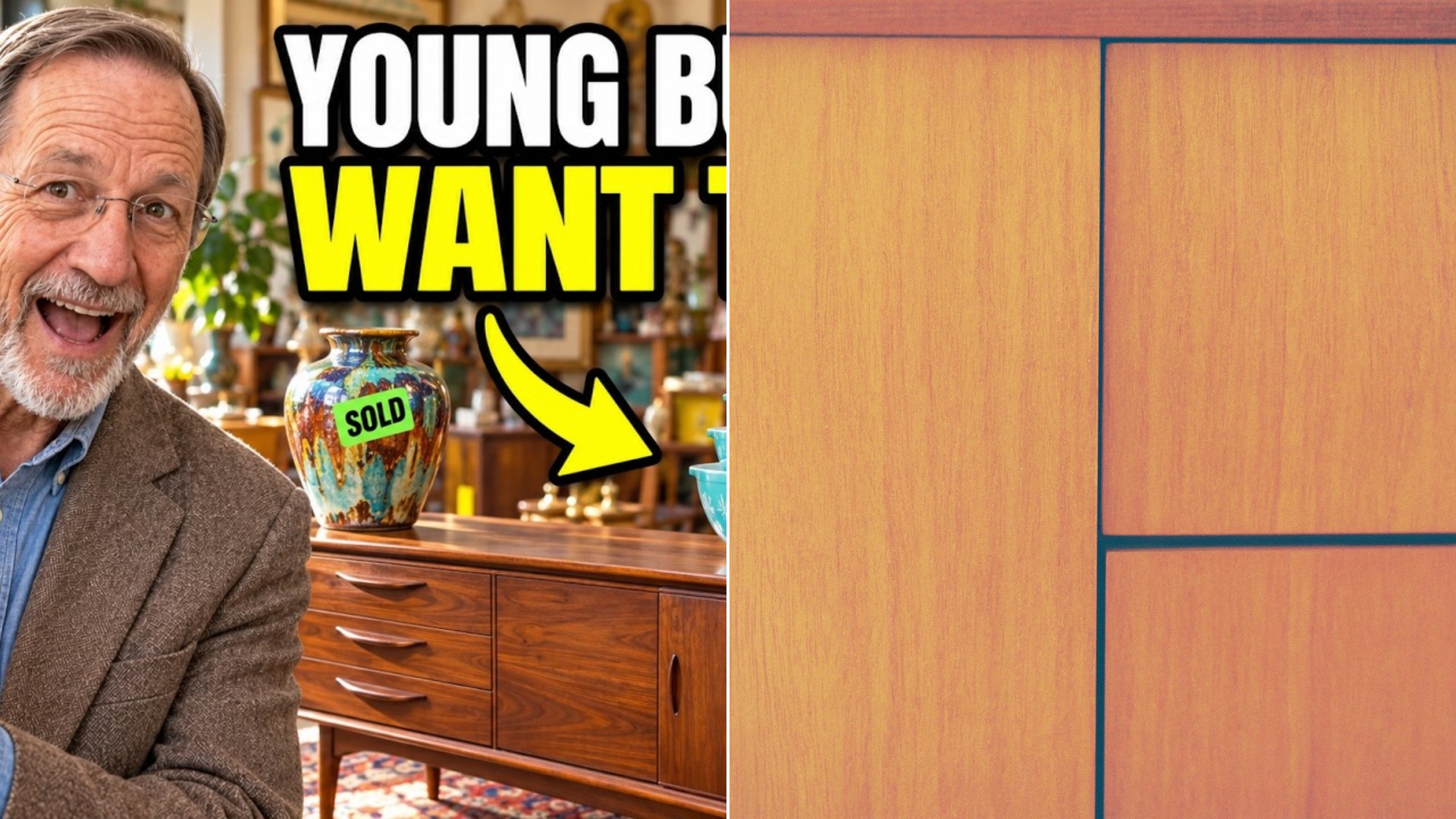
That cabinet is the kind of teak sideboard your parents bought in the 1960s, the one your family has called outdated for 30 years. According to dealer Walter Ashford, it is exactly what young buyers are paying real money for right now.
Ashford has bought and sold at estate sales, farm auctions and house clearances across the Midwest for 40 years. He is a dealer, not a certified appraiser, and he says his advice is general information, not a formal appraisal.
A Danish Credenza Sold For $2,750 Against An $800 Estimate
His proof comes from a real sale. In October at Claus’s auction gallery in California, a Danish modern teak credenza by Svend Aage Madsen sold for $2,750. The auction estimate was $800.
He says the market has not made everything old valuable. What changed is the buyer. He points to OfferUp’s 2025 secondhand report, in which a survey firm asked 1,500 American adults how they shop: 93% had bought something secondhand in the past year, and 54% of Gen Z and 44% of millennials said they choose secondhand first.
These shoppers do their hunting on phones. They save searches for a maker’s name, message sellers late at night, and arrive at estate sales already knowing what the same item sold for last month.
The Four Questions Every Young Buyer Asks In The Driveway
Ashford learned these by listening in driveways. First, will it fit? Young buyers live in apartments and small houses. Second, will I use it? They want things that do a job every day, not things that sit behind glass.
Third, is it real? Real wood, wool, glass and metal feel different from flat-pack furniture. Fourth, will it look good in a picture, because that is how they found it and how they will show it off.
The teak sideboard passes all four. It is low and narrow, it stores things, it is solid wood and veneer, and it photographs well.
The Same Wood And Style Sold For $120 Without A Name
There is an honest flip side. That same October, a Danish modern teak dining table with no maker attached sold for only $120. The difference was a name, and the name lives inside the drawer.
Other prices he cites show the range. A Lane mid-century teak dresser sold for $683 in September, and a Danish modern side table by Tove and Edvard Kindt-Larsen sold for $355.
His test is simple. Pull out the top drawer of anything from the 1950s or 1960s and check the inside, the back and the bottom for a stamped name, paper label, metal tag or model number. Photograph it before anyone moves the piece, and write down the width, depth and height.
Teak Ice Buckets, Brass Giraffes And Striped Blankets Are Selling Too
The wedding-gift teak pieces are in demand. A square wooden ice bucket designed by Jens Quistgaard for Dansk sold for $200 at Claus in October. Collectors look for the mark “Dansk Designs Denmark,” and a “Dansk International” mark generally means a later piece, often made in France.
Brass splits into winners and losers. A pair of Hollywood Regency brass giraffes sold online for $600 against a $110 estimate. A plain brass floor lamp sold for $14. Ashford’s rule is that shapes sell. A giraffe, frog or duck reads as decoration with a sense of humor, while a plain lamp or candlestick reads as old-fashioned.
He also suggests using a magnet. Brass is not magnetic, so if the magnet grabs it, it is plated steel.
Striped Hudson’s Bay wool blankets are another example. Two six-point blankets sold together for $360 at Morphe auctions in October, and a single one sold online for $331 in July. He says moth damage is what kills a wool blanket’s price, so check it in good light.
Heavy Orange Pots And Italian Glass Still Have Fans
Ashford says Le Creuset’s flame-orange Dutch ovens, first made in France in 1925, are a strong seller. A pair of flame Dutch ovens, one oval and one round, sold online for $525 last December. A cherry red set with a frying pan went for $104.
Condition is everything. A young cook checks the enamel inside the pot for chips first, and a clean interior is “the difference between $100 and 500.”
Italian Murano-style art glass has a market too. A glass pelican with goldfish inside sold online for $510. But he warns that plenty of glass sold as Murano was made elsewhere, so look for a paper label or signature, and judge the weight and layers.
Do Not Refinish It Before The Sale
Ashford confesses a mistake. For years he told families the sideboard from the den was not worth hauling to the sale, and some pieces went to the curb on his advice. “I was wrong.”
His strongest warning is about condition. The gap between a $400 coffee table and a $40 one is almost never the wood. It is the maker and the condition. A water ring, a veneer chip or thick shiny varnish can erase most of what a young buyer would pay, so “please don’t sand it or refinish it before a sale.”
Colored Pyrex should not go in a box lot either. Pull it out and keep it together.
How To Sell So Young Buyers Trust You
Because these buyers shop from pictures, he says to photograph every piece in daylight from the front and side, add a photo of the maker’s mark, and show any damage honestly. A buyer trusts a seller who shows the chip first.
He ends with something gentler. A lot of people believed nobody young wanted anything they owned. “They don’t want our formal rooms,” he says, but a couple carrying your mother’s sideboard to their first apartment is about as good a future as it could have.
More Stories You May Like
- This Estate Sale Shopper Woke Up Late For A Nine O’Clock Sale And Still Had A Pile Started Five Seconds After Walking In Before Hitting More Yard Sales
- Estate Sale Companies Can Charge Commissions And Hidden Fees So Families Should Get A Written Contract And Ask These Questions First
- Estate Sale Buyers Who Show Up Early And Sellers Who Accept Low Day One Prices Both Get Burned And Here Is How To Protect Yourself

Leave a Reply