

Kevin from the YouTube channel Cavalcade of Food has been buying Pyrex for more than 40 years, and he says he has never spent more than four or five dollars on a single piece. Back in the late 70s, the going price in thrift stores was 50 cents, a dollar or maybe two. These days, he says, he keeps seeing the same kind of glass dishes advertised online for tens of thousands of dollars, and it blows his mind.
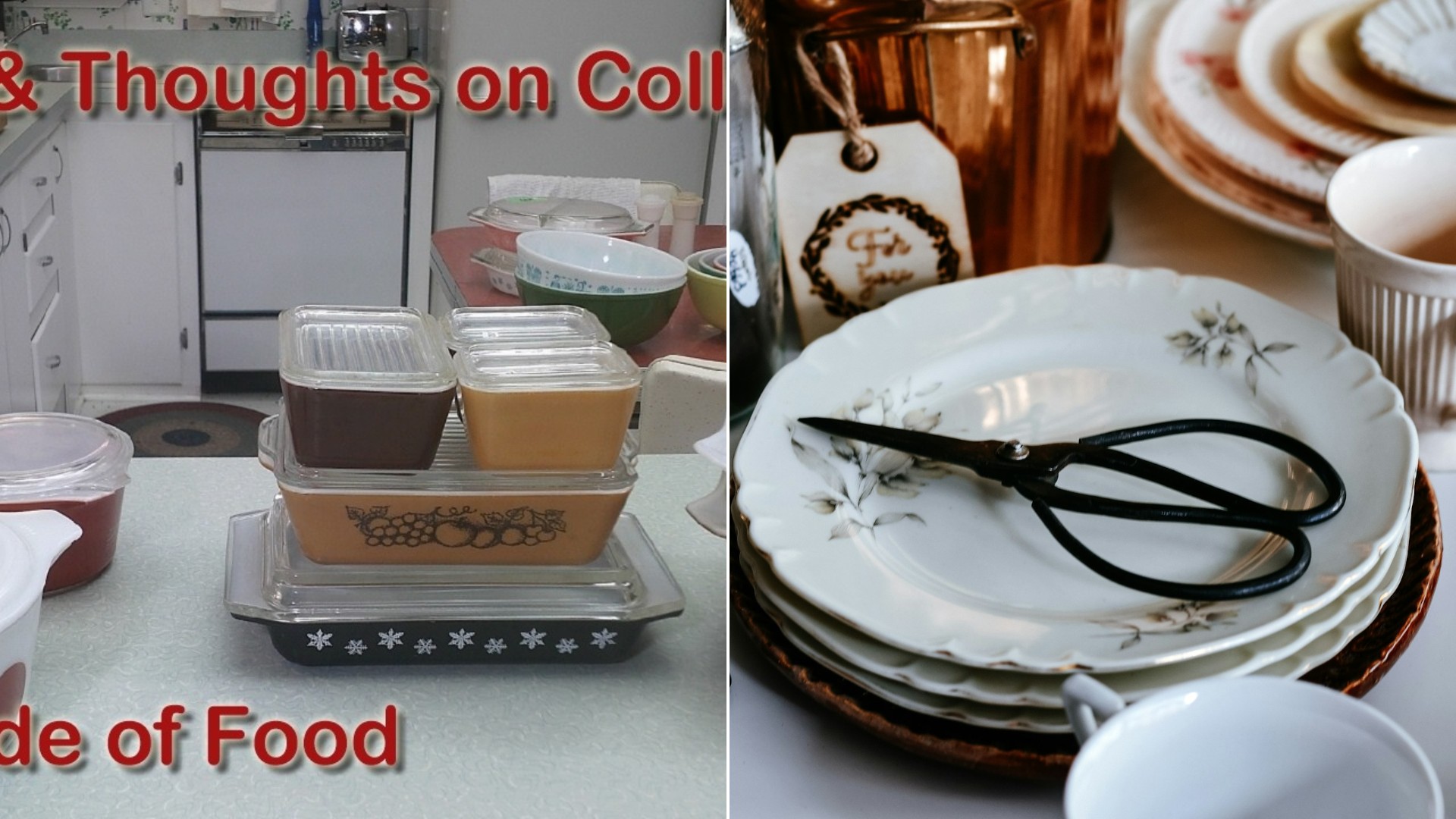
His latest video is part Pyrex show-and-tell, part gentle sermon about what collecting is really supposed to be about. He pulled out a sampling from his shelves, shared what he paid for each piece, and asked viewers to help him with something he admits he is terrible at: remembering pattern names.
When Thrift Stores Were Overflowing With Pyrex
Kevin started collecting in the late 70s and early 80s, when he was young and thrifting, although nobody called it that back then. The shelves were full of kitchenware from the 1950s and early 1960s, and it was all dirt cheap. His theory is that thrift stores run about a generation behind, roughly 20 or 25 years. So in the 90s he was seeing plenty of goods from the 1970s, and today, he says, the shelves are mostly early 2000s items. That, he points out with a chuckle, is already 25 or 26 years ago.
People are cleaning out, thinning out and downsizing, he says, and their things have to go somewhere. He loved Pyrex from the start, mostly because it works. It bakes beautifully, he says, and you can mix, store, serve and bake in the same dish. It cleans up like a dream, and his mother loved it too.
From Beanie Babies To Treadle Sewing Machines
The sky-high prices bring back memories. More than 20 years ago, he recalls, people lost their minds over Beanie Babies. His father collected them, and some were going for hundreds or even thousands of dollars, with the Lady Di bear the most coveted. If you sold one for thousands, he says, good for you, because nobody wants them now and the bottom fell out.
He offers another example. At one point everybody wanted an old treadle sewing machine, the kind with wrought iron legs and a beautiful oak cabinet. People bought them as home decor rather than for sewing, and they sold for hundreds of dollars. Now, he says, you cannot give them away. Pyrex is the hot item today, he says, but whether it will still be in five years is anybody’s guess.
How Social Media Changed The Thrift Store
Kevin has a few strong opinions about the modern thrift store. Decades ago, he says, the shoppers were mostly people who could not afford to buy new, plus some cool folks hunting vintage clothes. Today he sees people on their phones, snapping photos and looking things up. In his words, social media has ruined thrifting.
His reasoning is that someone posts that they bought an item for $3 and are selling it for $150, thousands of people see it, and they all head to the thrift store to do the same. He is quick to say there is nothing wrong with reselling and he is not criticizing it. But he insists that it is not collecting; it is being a dealer. For people who just want to find things for their own collection, he says, it is harder now.
The stores have caught on, too. He cannot believe the prices at thrift stores these days, which used to be a bargain. He understands why, though. With so many shoppers buying to resell, the stores figure they are not in the wholesale business and might as well charge more. He still enjoys going in, and every once in a while he finds a treasure.
A Tour Of His Pyrex Shelves
The video’s second half walks through his favorites, with prices he remembers. Among the casseroles is a handy size he thinks cost two dollars, one with a lid that carries a $2.92 price, and a big four-quart piece he uses often. A shallow dish is his go-to for artichoke, crab or mushroom dips because it presents well on the table. He also shows a pink casserole with a round lid that he bought for $2, and a divided dish marked $3.99 that he hopes he got on half-off day.
He adores his Cinderella-style bowls, which have a lip on each side that works as a handle or spout, and he has a set in a wheat pattern. There is an avocado green bowl, a Gold Butterfly bowl that cost 75 cents, and a favorite story about the classic set of four nesting bowls in yellow, green, red and blue. He bought three of them together for a dollar, with no yellow bowl in the bunch. About two weeks later he spotted a lone yellow bowl in a thrift store for a dollar or a dollar fifty, and he finished the set. He was a happy camper that day.
Gold Butterfly is the one pattern he knows well. It is his everyday Corelle, which he grew up with and which his mother had too. He shows a 9 by 13 baking dish he paid $1.99 for, an 8 by 8 dish at $1.25, and a loaf pan, all in the pattern and nesting together neatly. He also has canisters marked Pyrex that are meant for storing rice or coffee rather than for the oven, a dozen clear mixing bowls, and a smoky glass bowl from the 80s.
He even addresses the lead question. He has not had his pieces tested and he uses them without worry, but he says that if it bothers you, by all means skip using them and simply display them.
His Advice For Collectors
Kevin’s message boils down to a few lines. Collect what you enjoy and what makes you happy, and talk to other collectors. Buying things to sell is reselling, and that is where much of the vintage Pyrex ends up today, in the hands of either collectors or dealers. If you collect as an investment, he says, beware, because what is hot now may not be in a year or two. And if things do get hot and you want to cash in, he advises not holding on too long.
Speculation adds interest to the hobby, he allows, but it should never be the motivation. Collect what you love, he says, which for him is a kitchen full of glass that was bought for pocket change and still bakes like a dream.
More Stories You May Like
- Chunky Plastic Bracelets In A Thrift Store Bin Could Be Bakelite Worth Thousands And A Warm Water Smell Test Can Help You Tell
- Thrift Shop Shares The Magnet And Tap Tests For Spotting Real Silver And Crystal Before You Buy, And Anyone Who Has Overpaid For Glassware Will Want To Know
- Her Favorite Thrift Store Went 50 Percent Off, So She Waited On Fenton Cranberry Glass She Passed Days Earlier, And It Paid Off

Leave a Reply