

Imagine this. You run a toy shop or deal in vintage collectibles, and a collector calls to say he is driving all the way from Buffalo, New York, to sell his wrestling toy collection. You are expecting a few boxes. Then he arrives and you realize he has brought far more than you ever expected. That is the setup of a video from @ToyAttics, a channel that documents the world of buying and selling nostalgic toys.
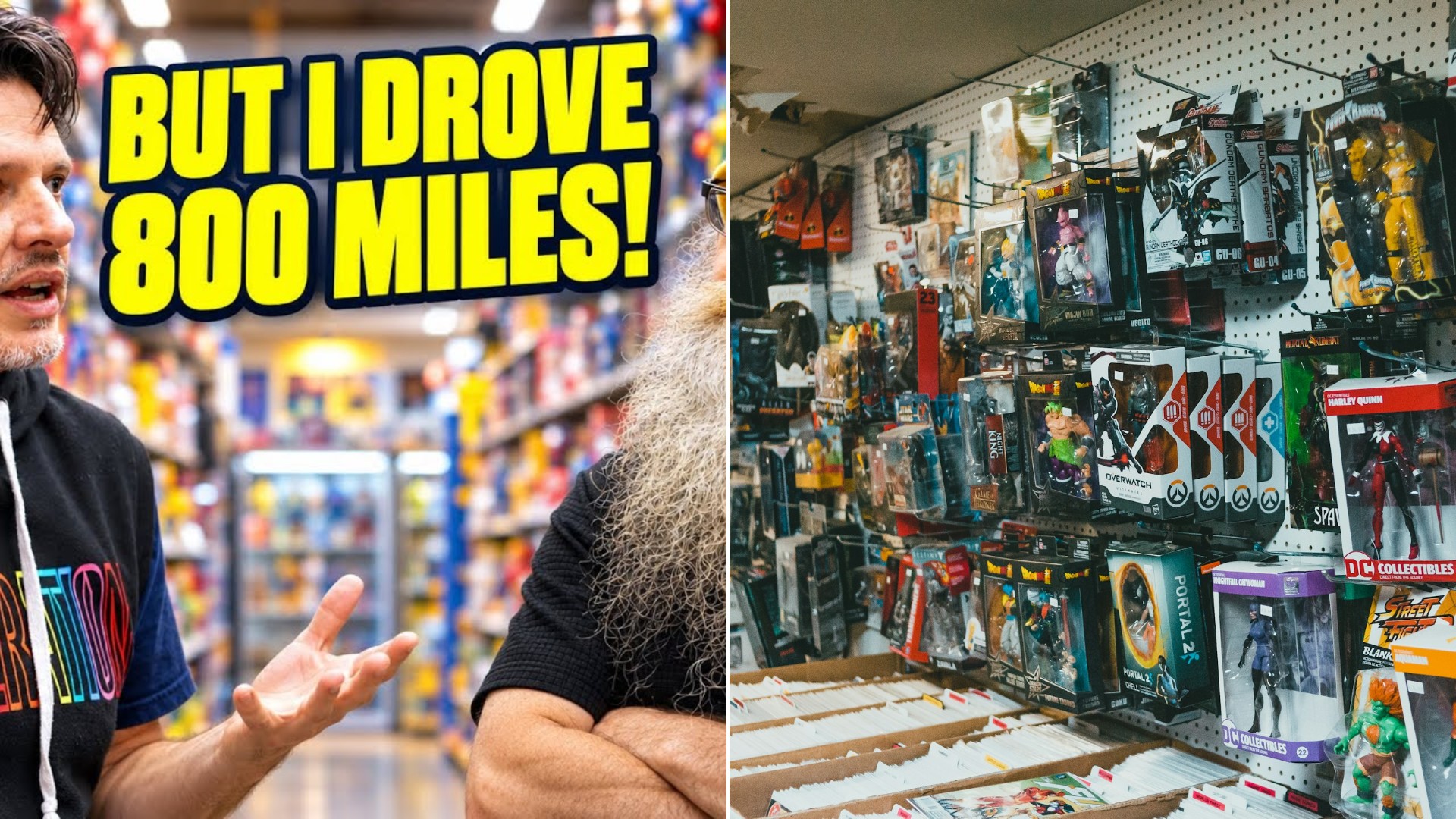
The question that opens the video is the one every dealer dreams about: what do you do when a collector drives that far to sell, and then you see how much he has brought? As the haul comes into view, the list gets longer. There are sealed wrestling sets, entrance stages, rare carded pieces and a massive ring setup, plus enough extra inventory to raise one question: can the store actually take all of it?
The host adds some context at the start. The visit was filmed while he was still under contract to produce the Toy Federation YouTube channel, and the collector was a huge fan of that show who drove down to be a part of it. He even had the host sign his shirt, which is why the host felt leaving him out of the story would not be right.
A Pile Bigger Than Planned
The collector arrived with wrestlers from the WWF and WWE eras, some Mario items and boxes of other toys. He had also forgotten a lot of vendor items he meant to bring and planned to mail them later. The dealers were caught off guard, and one of them said that if he had known a phone call was coming with this much stuff, he would have said the store was not buying.
Then came the inspection. Boxes were turned over and checked for flaws. One was called pristine, apart from a little shelf wear and slight yellowing, while another had a hole in the box and a water stain on the back. Anything with an old Toys R Us sticker got extra attention. Years came up as the pieces were sorted, with someone noting that one item was from 1990 and another from 1993. Those dates matter to collectors, because the era of a toy says a lot about how rare it is.
Grading, Basics And The Hard Math Of Inventory
One piece from 1993 sparked a debate about grading. The only graded copy the dealer could find in sold statistics was rated 85 or higher and brought about $8,000. This one, he figured, might grade in the 60s, and a low grade can hurt a piece more than it helps. His advice was that if something is likely to grade low, it is better not to grade it at all.
The conversation then turned to what actually sells. The store has struggled to sell basic wrestling figures, because buyers want the elite and ultimate lines. Rings are a different story, since the store is always interested in them. The collector, who once ran a secondhand store in Buffalo with his wife, said his wife had treated 2002, when the WWF name ended, as the cut-off for what went into the sale, and one item was not meant to be for sale at all.
The dealer was honest about his limits. He physically could not take everything, and he said 90% of what he would buy would be shoved into the back of the shop because there was no room on the floor. He explained the tension every small dealer faces: if he spends everything on basics that sell slowly, there is nothing left when somebody walks in with something rare, like first generation Transformers or a sealed early bird set. It is a hard thing to wrestle with, he said, unless you run a business.
Numbers surfaced near the end. The rings alone were discussed at $3,000, and the dealer said an additional $1,500 would cover more of the collection.
A Drive Worth Making
For a collector, driving hours with a car full of sealed sets, entrance stages and a ring is part business and part ceremony, and this one made the trip because he was a fan of the show. For the dealer, the reward of a surprise like this is a shelf of fresh inventory and a loyal fan. The risk is that one big buy can tie up money for months.
There is something quite touching about a collector who drives that far to part with a lifetime of treasures. For him, it may be the end of a long chapter. For the dealer, it is the start of a new journey for every figure on the table, each one headed for a new shelf and a new set of eager eyes.
What Sellers Should Know Before Calling A Dealer
If you have a collection in the attic, this story is a useful reminder that preparation pays off. Here are a few steps worth taking before you load the car:
- Tell the buyer what is coming. A short call or message listing the big items lets the dealer plan space and cash. A surprise pile can mean a smaller offer.
- Take inventory. Make a simple list of everything you have, noting whether each item is sealed, carded, boxed or loose.
- Photograph the condition. Clear photos of corners, windows, seals and card backs help a buyer give you a fair offer.
- Keep pieces together. Accessories, belts and inserts matter, and a complete set is usually more valuable than one with missing parts.
- Check sold prices. Look at what similar items recently sold for, not what sellers are asking.
- Think about grading carefully. A low grade can lock in a lower value, so ask an expert before you pay to have anything graded.
What Buyers Should Watch For
On the other side of the table, a big collection can be exciting but demanding. Sealed items should be checked carefully for signs of resealing, and large sets should be inspected piece by piece for missing parts. A dealer shown a mountain of toys at once has to price things fairly while still leaving room to resell at a profit.
The best deals tend to be the ones where both sides leave happy. Credit to @ToyAttics for sharing a peek at the process.
More Stories You May Like
- Kids Today Could Never Handle 80s Parents Who Never Explained Anything And Ended Every Debate With Because I Said So
- Thrifting Author Says Boomers Are About to Pass Down Nearly $100 Trillion and the Stuff Their Kids Don’t Want Will Be Going Cheap
- Woman Took Her Pristine 60 Year Old Heirloom Rolleiflex to a Repair Shop and Got It Back With Swapped Parts She Says Are Not Even Hers

Leave a Reply