

Ask people who grew up in the 1960s what they remember most, and a surprising number will talk about freedom, and about the quiet confidence that came with being trusted to handle things on your own. The creator behind @memory_files asks the question in the caption: why were 60s kids so tough? Then the creator answers it, one memory at a time.
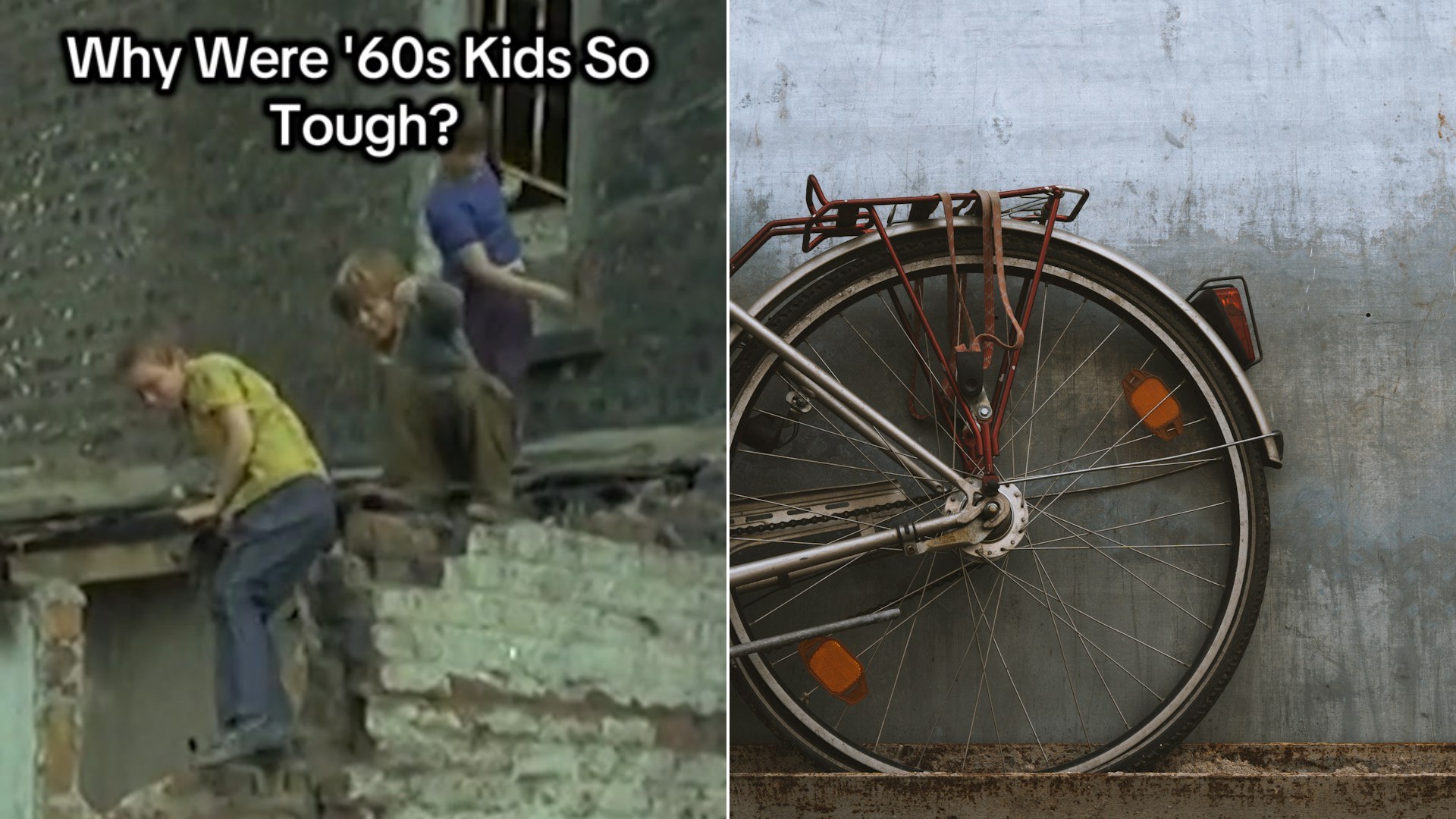
The answer is not about being hard or rough. It is about independence, responsibility and a childhood that trusted kids to figure things out.
Walking To School Without A Parent Behind You
The list begins with the walk. Kids went to school without parents following behind. They crossed busy roads and knew the route by heart. That small daily trip was a lesson in paying attention, watching traffic and being on time.
After School Meant Freedom
When the final bell rang, the day was far from over. Kids rode bikes, explored empty lots, played ball and stayed outside until someone called them home. The streetlights were the signal that the day was over. As the creator puts it, you went home tired, dusty and scratched up, and did it all again tomorrow.
The Corner Store Lesson
A trip to the corner store taught responsibility. You carried coins, remembered the list, counted your change and came back with everything you were sent for. It was arithmetic, memory and trust rolled into one errand. If you came home short, you heard about it.
Some of those stores also sold loose candy by the piece. The Wikipedia article on penny candy describes the practice of selling cheap candy in bulk from bins, with much of it sold through five-and-dime stores. For a child with a handful of coins, standing at the counter and deciding what to buy was a real lesson in budgeting.
Learning To Entertain Yourself
Kids learned to make their own fun. Marbles, cards, a ball or a cardboard box could fill an entire afternoon without a screen in sight. Boredom was not a problem for a grown-up to solve. It was a challenge a kid solved alone.
Strict Schools And Long Assignments
School discipline was strict. Chalkboards, wooden desks, handwritten work and long assignments were simply routine. There were no shortcuts and no keyboards. Writing out your answers by hand and keeping your desk tidy were part of the daily rhythm.
Chores That Meant Something
Many children had chores. Taking out the trash, mowing lawns, helping with younger siblings or delivering newspapers all taught responsibility. Some of those jobs even brought in a little spending money. A paper route, in particular, was a rite of passage for many boys and girls, requiring early mornings, careful aim and a willingness to collect payments from customers.
Fix It, Do Not Toss It
When something broke, the answer was not always to buy a new one. Kids tried fixing bikes, toys and model kits themselves. A flat tire, a loose chain or a cracked wing on a model airplane was a chance to learn how things worked. That habit of tinkering is part of why so many people from that generation are comfortable with a screwdriver and a tube of glue.
Summer, Friends And Making Up
Summer meant public pools, playgrounds, baseball and long walks home. Parents expected children to handle themselves, and arguments between friends were settled face to face. You learned to apologize, compromise or move on without an adult solving everything for you. The creator sums it up by saying many people from the 60s remember growing up with freedom, responsibility and confidence.
The World They Grew Up In
The children in this story were part of the baby boom. The Wikipedia entry on baby boomers describes the generation as people born from about 1946 to 1964, who grew up during a time of economic prosperity and rapid technological change, as suburbs spread and television became a main source of family entertainment. In a neighborhood packed with kids, it was natural for children to roam in groups, form teams and invent games. There were always friends nearby, and there was always another house to run to.
Prices were different too. If you are curious how far a quarter went back then, our look at 1964 prices and culture is a fun companion read.
Is It Fair To Call Them Tougher?
The word “tough” is a bit of a shorthand. Kids in the 1960s were not tougher by nature. They were given more chances to practice being capable. A child who walks to school, counts change, fixes a bike and settles a quarrel is building skills that help for life. Psychologists often use the word resilience for that kind of confidence, and the ingredients are simple: responsibility, practice and the chance to recover from small mistakes.
It is also fair to say that not every child had the same experience. Some had more freedom than others, and some had fewer resources. But the broad outline in this list rings true for many people, and that is why it gets such a response.
How To Pass These Skills Along
The nice thing about these lessons is that they are easy to share with the children and grandchildren in your life.
- Send them on a small errand. Give a child a short list and a few dollars and let them do the shopping at a nearby store with you waiting nearby.
- Let them count the change. It is real math practice.
- Fix something together. A bike chain, a wobbly chair or a model kit teaches patience.
- Offer small jobs. Raking leaves, washing the car or watering plants teach responsibility.
- Step back from arguments. Give kids a chance to work out a squabble before you step in.
- Bring back the simple games. A pack of cards, a set of marbles or a ball in the yard still works.
Tell Us Your Age
The creator finishes by asking people to share their age in the comments. It is a good way to see how widely these memories are shared. If you grew up in the 1960s, take a minute to write down the three things you remember most about your own freedom as a child. They make a wonderful gift for a grandchild, and they might remind you of a few things you forgot you could do.

Leave a Reply