

Ask anyone who was a kid in the 1970s about the rules at home, and you will usually get a smile followed by a story. The creator behind @memory_files put together a narrated list of seven parenting rules from that decade, the kind that would send a modern parenting group into a spin. The caption says it plainly: these are parenting rules from the 1970s that would not fly today.
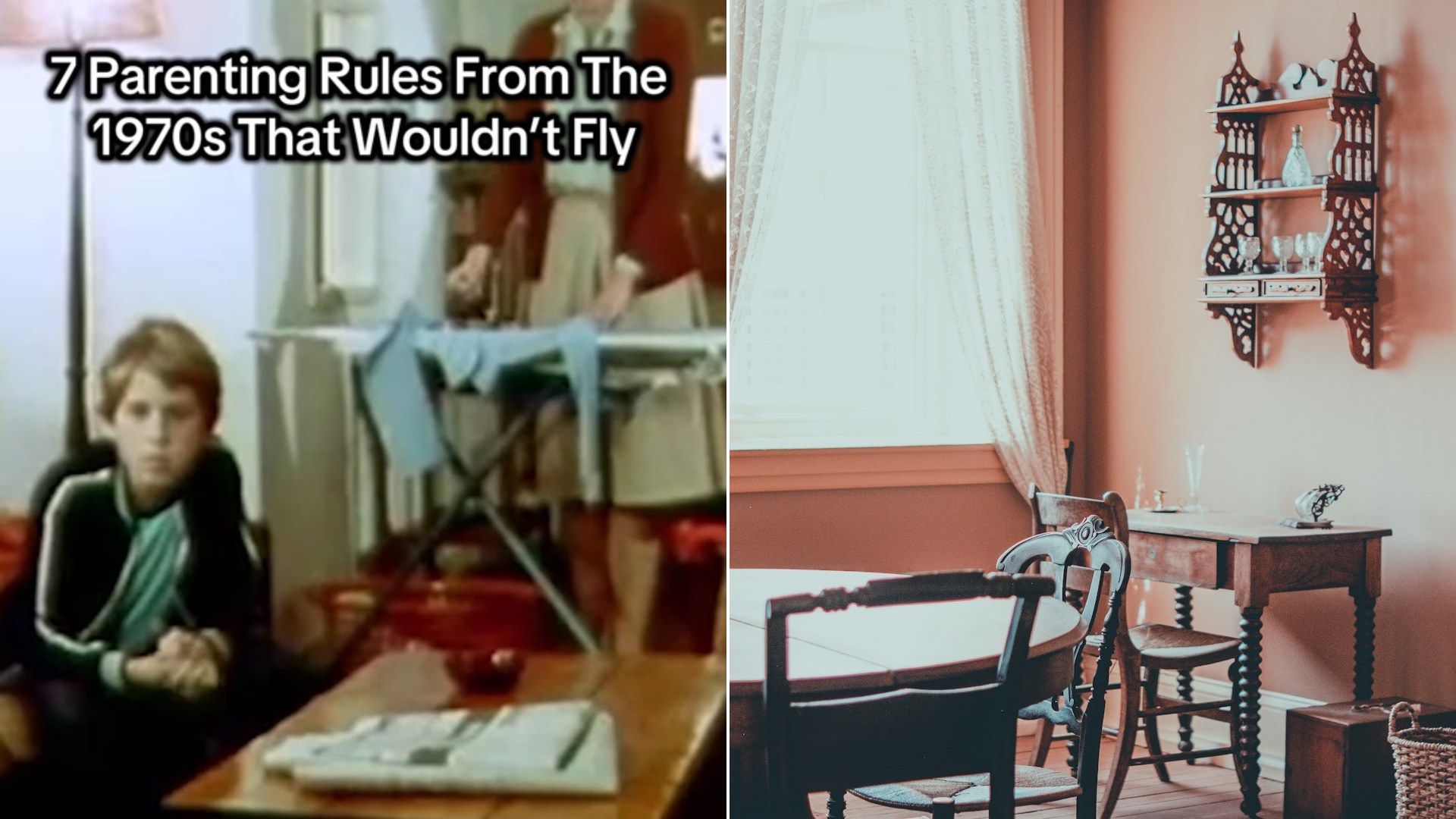
Whether you grew up under these rules, raised children under them or only heard about them from your own parents, the list is a fun trip back to the dinner table, the front stoop and the moment the streetlights came on.
Rule One: Because I Said So
The creator opens with the most famous parenting sentence of all time. In the 1970s, “because I said so” was a complete and final argument all by itself. No explanation was owed, no debate was allowed, and the conversation was over the moment those four words left a parent’s mouth.
Rule Two: The Look Across The Table
One single look across the dinner table was law. There was no shouting and no repeating yourself twice. A quiet glance made every kid in the room fall back in line without a word. Most of us can still feel exactly which eyebrow raise meant “stop that right now.”
Rule Three: Seen But Not Heard
Kids stayed quiet during grown-up conversations and often ate at a completely separate table during family gatherings, the famous kids’ table that sat next to the dining room or in the kitchen. Children were seen but rarely heard until someone spoke to them directly.
Rule Four: Chores Were Not Optional
Chores were not tied to an allowance. They were simply expected as the price of living under that roof. Everyone had a job to do, and doing it well was not something you got praise for. It was just the baseline.
Rule Five: Eat What Is Served
Whatever ended up on the table for dinner is what you ate. There were no separate meals and no polite substitutions, and nobody left the table until the plate was clear. Plenty of us remember sitting in front of cold peas well after everyone else had gone.
Rule Six: Quick Consequences
The creator says a stern talking-to or a quick swat settled most disagreements right on the spot. There was no lengthy discussion afterward, no timeouts and no negotiating your way out of the consequence. Attitudes toward discipline have changed a great deal since then, and many families today choose very different approaches. It is part of the story of the decade, though, and part of why this list gets such a reaction.
Rule Seven: Home When The Streetlights Come On
Parents did not need to know your exact location every hour of the day. You just had to be home the moment the streetlights came on, and there were no check-in calls expected before then. The creator closes by saying none of this would survive a single family group chat today, and asks which rule your own parents actually enforced.
Why These Rules Stick In Our Memory
It is easy to laugh at a list like this, but it also captures something real about how households ran. Families in the 1970s were often larger and busier, with parents juggling work, housework and a houseful of children. Rules were short, clear and rarely up for discussion because there was not time for a negotiation at every turn.
The decade also saw big changes at home. As the Wikipedia entry on Generation X notes, divorce rates doubled in the mid-1960s and peaked around 1980, and more mothers were entering the workforce before child care was widely available. That meant many kids learned to be self-reliant early. They made their own snacks, got themselves to the bus stop and kept an eye on younger siblings. Part of the “because I said so” culture was simply how busy households got through the day.
What Parents Get Right Today
Nobody needs to go back to a rulebook from 50 years ago. Modern parents have good reasons to explain their decisions, to ask children how they feel and to keep track of where they are. Many families also value having open conversations at the table. A child who understands why a rule exists often follows it more willingly.
At the same time, a few of the old habits have real value, and plenty of parents are quietly bringing them back.
- Regular chores. Even small jobs, like setting the table or feeding a pet, teach responsibility and show a child that the household depends on them.
- A shared dinner table. Eating together, with phones put away, gives everyone a chance to talk.
- Trying new foods. A “one bite” rule keeps meals simple without turning dinner into a standoff.
- Unstructured outdoor time. Kids still benefit from long afternoons of free play, ideally with some freedom to roam in a safe neighborhood.
- Clear expectations. Short, consistent rules that everyone knows are easier on kids and parents alike.
Talking To Grandchildren About The Old Days
If you grew up with these rules, sharing them with grandchildren can be a lot of fun. Kids are often fascinated to hear that you walked to school alone, stayed out until the streetlights came on and had no cell phone to call home. Here are a few ways to start the conversation.
- Ask them which rule they think would be hardest to live with.
- Tell them about the one rule you remember most and why your parents had it.
- Share one thing you appreciate about how you were raised and one thing you would do differently.
- Invite them to compare with the rules in their own homes.
These talks help children see that families have always had rules, even if the rules change from one decade to the next. They also remind everyone that parents in every generation were doing their best with what they knew.
Which Rule Was Yours?
The creator ends the list by asking viewers to name the rule their own parents enforced. For many people, the answer is “all of them.” For others, the look across the table is the one that still works on them today. Whichever one rings true for you, it is a good reminder of how much the family dinner table shaped a generation.

Leave a Reply