

“I survived the 50s.” That is how @shirleygirl_joy begins her memories of growing up, and anyone who was a kid in the 1950s will recognize the grin behind it. She was born in 1951, and what follows is a warm, funny, and surprisingly detailed tour of a childhood that ran on bicycles, playgrounds, and plenty of independence.
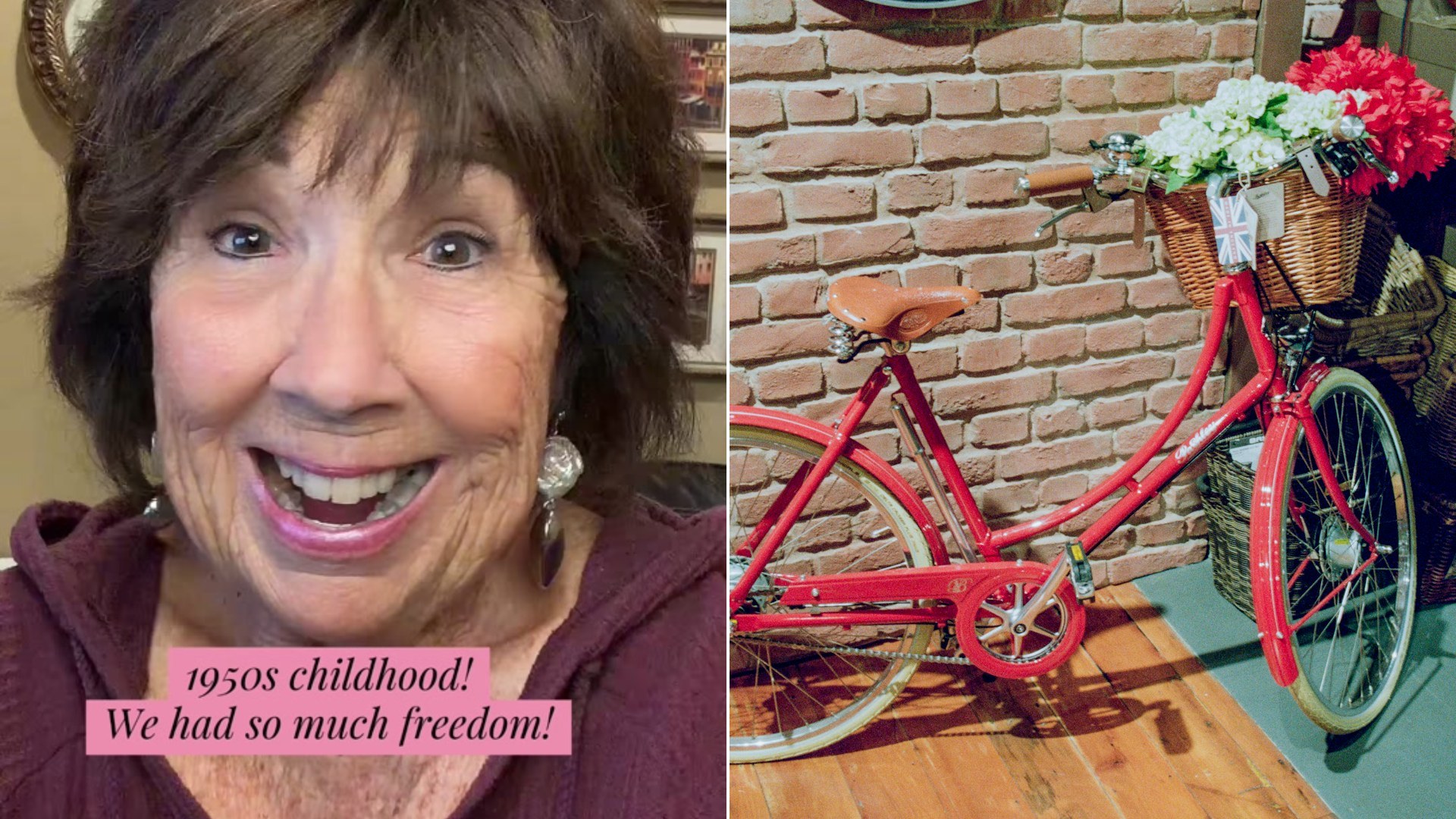
Her caption sums it up: growing up in the 50s meant freedom, adventure, and endless outdoor fun, with no helmets, no seat belts, just bikes and imaginations.
No Gear, No Belts, No Bottled Water
She starts with the safety gear she never had. There were no helmets of any kind, and no pads on her elbows or anywhere else. She never had a seat belt, because they were not even in the cars back then. Bottled water was not a thing either. When she was thirsty, she drank out of the hose, and she says she did not think a thing of it.
Life was simple, she says, with very few television stations. In the daytime, she and her friends barely watched TV at all, because they were outside.
Off On The Bike Every Morning
Her days started the same way. She took off on her bike in the morning, and nobody knew where she was. Her usual stop was the school. In those days, she explains, there were no fences around schools, so the slides and swings were open to everyone.
That is how friendships got made. She would run into somebody she knew from the playground, and that friend might say, “Come back to my house.” Off they would go to play with that child’s toys. Other days it was cops and robbers, with a cap pistol that made a really loud bang when she pulled the trigger, and a lot of chasing around the neighborhood.
Her parents were never far away, but they were not hovering either. Mom and Daddy would see her off and on during the day, and Daddy would stop and ask what was going on.
The Bike That Made Her Day
The best part of the story might be the bicycle. She describes it as a pretty good bike, a regular one with no gears. What made it special were the extras her father added. There was a beep horn, the kind where you push a button and it goes beep beep, and she thought it was pretty cool. He also put a headlight on the bike, which she calls nice, and a clamp on the back so she could carry books, a jacket she had taken off, or even her violin.
She finishes with a tribute to her parents. Mama and Daddy were great to her, Mama always had some kind of cookies baked, and it was, in her words, a great childhood. Her closing advice is short and sweet: find your joy.
Was Life Really That Unprotected?
Her memory lines up with the history. According to this overview of U.S. seat belt laws, a federal standard requiring seat belts in most new vehicles did not take effect until January 1, 1968, and New York became the first state to require occupants to wear them in December 1984. A girl born in 1951 grew up long before either date, so a family car with no belts was simply the norm.
The same is true of the open playground. Schools without fences, swings left up all day, and kids drifting in and out of one another’s yards were part of the rhythm of the era. A child who could ride a bike could cover a lot of ground by lunchtime.
The Cap Pistol Era
Her cap pistol was part of a toy craze. According to Wikipedia’s article on cap guns, the golden age of the toy lasted about twenty years after World War II, as television grew popular. Companies such as Nichols, Hubley and Mattel sold millions of them, many tied to Western heroes like Roy Rogers and The Lone Ranger. The loud bang she remembers came from caps, tiny discs of shock-sensitive explosive that go off when the hammer strikes them, producing a sharp report and a puff of smoke. They were sold in paper rolls, or as plastic rings of eight or twelve that fit into a revolver-style cylinder.
The same article notes that starting in 1988, toy guns sold in the United States must have a bright orange, red or yellow tip over the muzzle, or be made entirely in bright colors, so that no one mistakes a toy for the real thing. That rule would have seemed strange to a child on a 1950s sidewalk, where a toy holster was as ordinary as a baseball glove.
A Childhood Built Around Being Outside
One of the sweetest details in her story is how little she needed to be entertained. With only a few television stations to choose from, and nothing much on during the day anyway, the outdoors was the main attraction. A bike, a playground, a friend who might invite her home, and an imagination were all the equipment required.
That kind of unstructured play is something many child development experts say children still need. Time to wander, invent games, and settle small disagreements without an adult refereeing helps kids learn independence and creativity. It is the same lesson her story teaches, just told in a cheerful voice from the other side of seventy years.
What Kids Today Can Learn From It
There is nothing in her story that asks anyone to bring back the unsafe parts. Modern kids should absolutely wear helmets and buckle up. But there are some real gifts tucked inside her memories that are worth passing on.
- Let children roam, a little at a time. A bike ride to a nearby park, with an agreed route and a time to be home, builds confidence.
- Make the bike a favorite possession. A bell, a basket, or a headlight turns a plain bicycle into a treasure, just like that beep horn.
- Welcome the spontaneous playdate. Some of the best friendships begin when kids bump into each other at the playground.
- Keep the screens in their place. She barely watched TV in the daytime because the outdoors was more fun. That is still true.
- Bake the cookies. A warm kitchen is a memory that lasts a lifetime.
Find Your Joy
It is easy to hear a list of things that were missing, no helmets, no belts, no bottled water, and conclude that childhood was hard. Her story shows the opposite. What she remembers is a father who cared enough to add a headlight, a mother who baked, a playground with open gates, and a neighborhood full of kids ready to play.
So the next time you are swapping stories with someone from your generation, ask the question she answers so well: what was the best thing on your bike? A bell, a horn, a banana seat, streamers on the handlebars? You may be surprised how fast the whole decade comes flooding back.

Leave a Reply