

Most of us walk past the bin of “old plastic” at the thrift store without a second glance. The creator behind @virginiachamlee says that is exactly the habit to break. In a short thrift tip, she explains that a basket of chunky plastic bracelets might hold Bakelite, an early plastic that collectors still chase, and she shares a few simple ways to tell whether you have found the real thing.
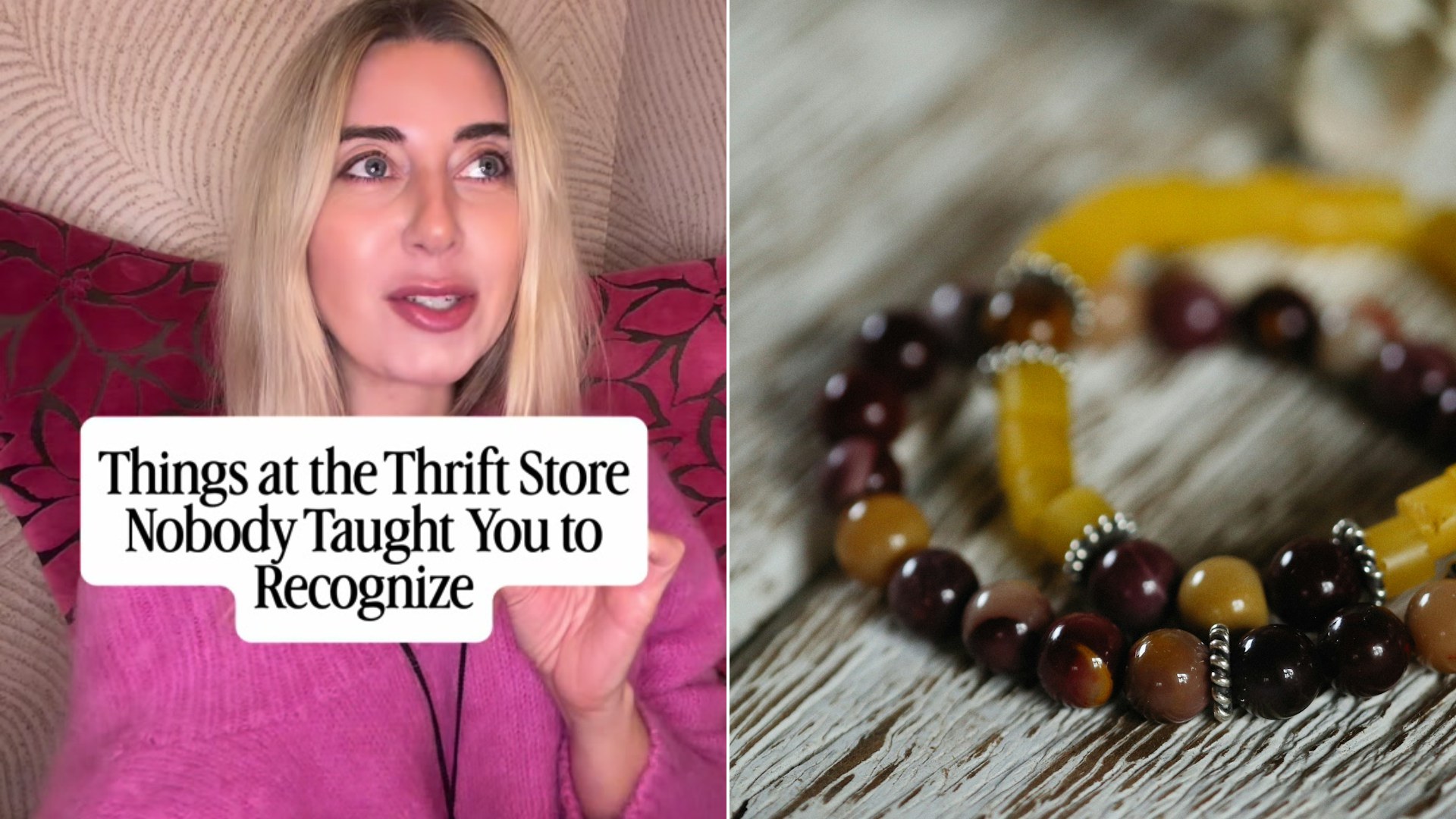
Her opening line is one many thrifters will relate to: there are things sitting on thrift store shelves right now that can be extremely collectible, but most of us were never taught how to recognize them. Her goal is to fix that, one tip at a time.
What She Says To Look For
The creator starts with the jewelry aisle. If you see a basket of chunky plastic bracelets, she says, take a second look, because those might be Bakelite. She describes it as a very collectible early plastic, and she backs that up with two price examples. A Bakelite brooch recently sold for over $2,000 at a Doyle auction, and a Bakelite bangle was listed on an online antiques marketplace for nearly $10,000.
She also reminds shoppers to look beyond the jewelry case. Bakelite was used for clocks, telephones and even salt and pepper shakers, so the same material can be hiding in the housewares aisle, the electronics shelf and the kitchen section.
Then she gives two quick checks. First, start with the look. Bakelite is chunky, and it is usually found in colors like butterscotch or green, which she calls very retro colors that we do not see as much these days. Second, she says you can put a piece under warm water and see whether it gives off a chemical, formaldehyde-like smell. That smell, she says, is another sign it might be Bakelite.
Her bottom line is simple: the next time you see a bin of old plastic stuff at the thrift store, dive in.
A Little Background On Bakelite
It helps to know why this material is such a big deal. According to Wikipedia’s entry on Bakelite, the chemist Leo Baekeland developed it in 1907 in Yonkers, New York, and his U.S. patent was granted in December 1909. It is a thermosetting resin made by combining phenol and formaldehyde, which is why the formaldehyde smell the creator mentions is tied to the material itself. Once it is molded and hardened, it does not melt again, which made it perfect for things that had to stand up to heat and electricity.
That toughness explains the long list of uses. The same source notes that Bakelite went into electrical insulators, radio and telephone cases, kitchenware, pipe stems, billiard balls, poker chips and dominoes. In other words, the creator is right that it turns up far beyond bracelets.
The jewelry boom came in the 1920s and beyond, and well-known designers of the era used it. Collectors still love the bold, sculptural look: carved bangles, dangling charms, big buttons and brooches shaped like animals and fruit. Those were never meant to be delicate. They were meant to be noticed, which is why they still look so modern on a sweater or a denim jacket today.
Colors And Shapes Collectors Hunt
The colors she names, butterscotch and green, are two of the classics. The material also came in black, brown, red, yellow, gray and blue, and in blends. Molded pieces were often darker, because fillers in the mix tended to hide bright colors. Those warm, glassy shades the creator mentions, which collectors often describe with food names such as butterscotch, cream corn and apple juice, are among the pieces people get most excited about.
Pay attention to weight and feel too. Real Bakelite jewelry tends to feel heavier than modern plastic of the same size, and it has a solid, slightly warm feel in the hand. When two pieces clack together, the sound is deeper and duller than the light tick of cheap modern plastic. None of that proves anything on its own, but it can tell you which pieces are worth testing.
How To Test A Piece Safely
The warm water trick from the video is one version of a smell test. Another common approach among collectors is to rub the piece firmly with your thumb until it warms up and then sniff it. Some people also use a small dab of a polishing cream on a cotton swab and watch for a yellow tint on the swab, a method many vintage dealers swear by. If you try any of these, keep a few precautions in mind.
- Test in a hidden spot, such as the inside of a bangle, and never soak anything with glued parts, rhinestones or metal findings.
- Skip heat and flame. Burning or scratching a piece to test it can ruin the very thing you hope to keep.
- Use warm water, not hot, the way the creator suggests. A quick rinse is plenty.
- Remember that no single test is final. Combine the look, the weight, the smell and the age of the style.
Be aware that look-alikes exist. The Wikipedia entry notes that the word “Bakelite” is often used loosely in the resale market for other early plastics, such as Catalin, and that modern imitations sometimes called “fakelite” are around too. Collectors often use Bakelite as a catch-all label for several early phenolic plastics, so the exact name on a tag may not tell you much. What matters to a buyer is age, color, carving and condition.
Reading The Prices Wisely
The two price points in the video are real, but they are best read as examples of the top end, not what you should expect from a bin find. A brooch that brought over $2,000 at a respected auction house and a bangle listed near $10,000 are special pieces, usually with fine carving, rare colors or a strong maker. A plain, scuffed bangle at a thrift store is unlikely to reach those levels.
Still, the lesson holds. Thrift store pricing is often based on how an item looks at a glance, not on what it is. A staff member sorting donations may sort bracelets by size and price them all the same. That is where a shopper who knows the material can come out ahead, even if the payoff is a lovely piece of jewelry and not a windfall.
A listing price is also not the same as a sold price, and the creator is careful to describe one as a listing. If you think you have something good, compare it with completed sales from reputable sellers and auction results and not just asking prices.
Where Else To Look
Because the creator stresses the non-jewelry uses, it is worth listing the places where Bakelite likes to hide.
- Telephones and radios. Heavy black rotary phones and tabletop radios from the early and middle twentieth century often have Bakelite cases.
- Kitchen items. Pot and pan handles, knobs and old utensil handles in warm brown or butterscotch are common.
- Desk and shelf pieces. Clocks, pen sets and small boxes are worth a look.
- Salt and pepper shakers and game pieces. Dominoes and poker chips from vintage sets are another place the material turns up.
Caring For What You Find
Once you have a piece, keep it simple. Wash it gently in lukewarm water with mild soap and dry it with a soft cloth. Avoid harsh chemicals and long soaks. Store jewelry so that pieces do not knock against each other, since hard knocks can crack old plastic. And if you suspect something valuable, an appraiser who knows costume jewelry can confirm what you have before you sell.
The creator signs off by asking viewers to save the tip for their next thrift trip and wishing everyone happy hunting. It is good advice. The next time that bin of chunky bracelets looks like a pile of junk, take the extra minute. You may just walk out with a piece of design history for the price of a cup of coffee.

Leave a Reply