

Some family heirlooms arrive with a ceremony. Others arrive because someone is moving and does not want to pack. The second kind of handoff is how the creator behind @westweddingco ended up with her grandmother’s wedding dress, a gown from 1958 that she says she had never even seen before. Her reaction when she finally opened it is one of the sweetest parts of the story.
@westweddingco
A Dress With a 1958 Story
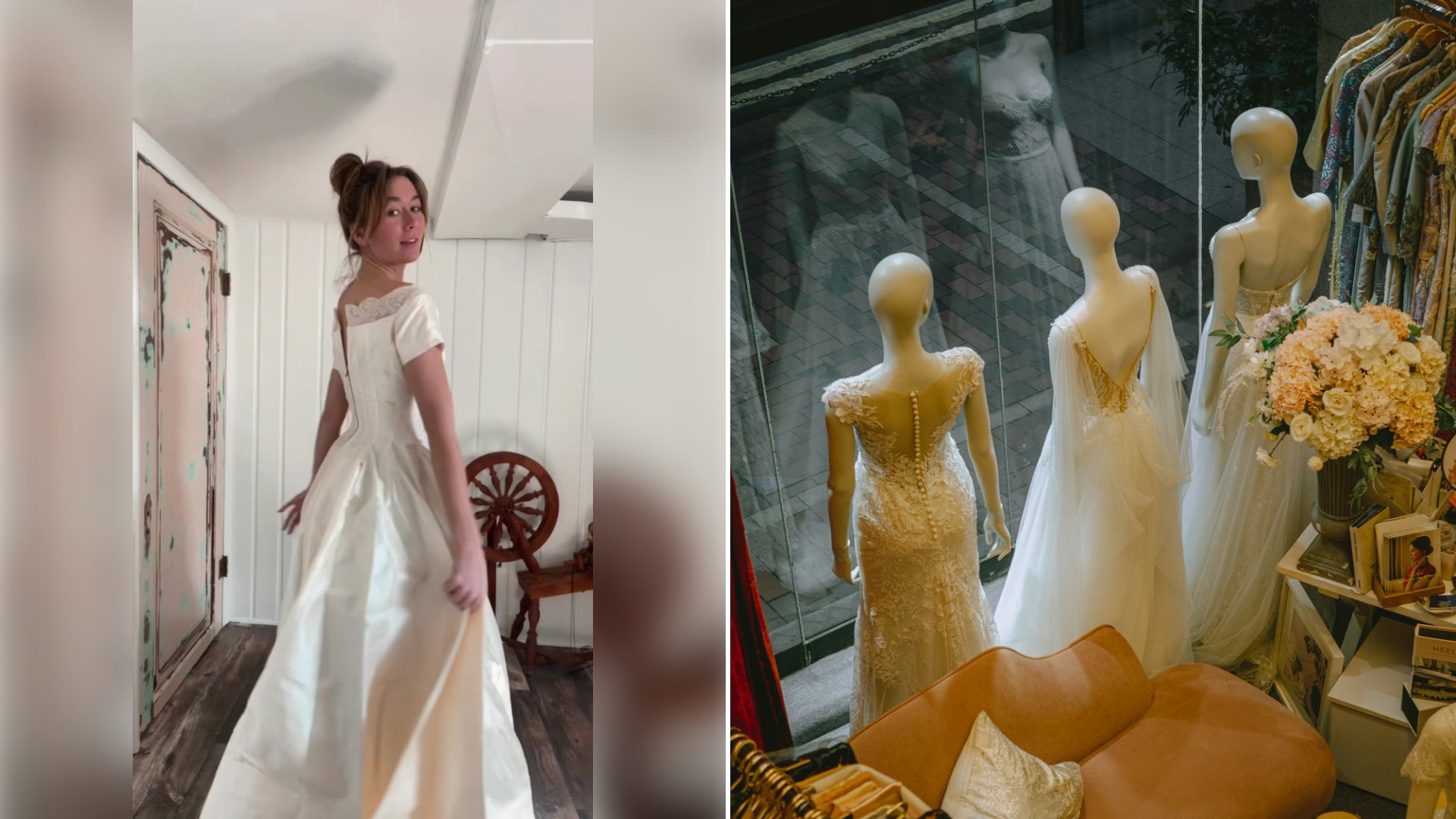
She starts with the basics. This is her grandma’s wedding dress from when she was married in 1958 in Germany. Her grandpa was stationed there at the time, and her grandma was a school teacher. It paints a picture: a young couple in a faraway place, a ceremony in the late 1950s, and a dress that would be tucked away for decades.
Her grandma wanted her to have the dress because the family was moving, and she did not want to pack it up. It is a very practical reason for a very sentimental gift. Moves are often the moment families decide what to keep, pass on or let go, and a wedding gown that has been stored for more than sixty years can easily end up in the second pile unless someone steps in.
Opening the Gown for the First Time
What makes the moment charming is that she says she had never seen it. As she lifts it out, she narrates her reaction. She points out the back, then explains that the front is a lot longer. For anyone who loves old gowns, that detail is a hint about the silhouette. Many mid century wedding dresses were designed with a longer, fuller front or a flowing back that gave them dramatic movement.
She decides to try it on, though she admits right away that she does not think it will fit around her waist. She is right. She cannot get the zipper all the way up in the back. Even so, she holds the dress in front of her and calls it the most elegant thing ever.
Homemade Details Inside
Peeking inside, she discovers something wonderful. The gown is super homemade on the inside, which she finds really cool. That detail suggests careful handwork, with interior seams, linings or support layers that were put together by hand. In the 1950s, many brides wore dresses sewn by a relative or a local seamstress, and the inside of a garment can tell you as much about the maker as the outside does.
She also finds a tag in the dress from a place called Belle Pride.
Surprised by the Condition
Another thing that astonishes her is how well the dress has held up. She says she cannot believe it is in such good shape. Considering that it is decades old, that is no small thing. Fabric, lace and trim from the 1950s can become brittle, yellowed or stained, especially if the dress was stored in a hot attic or a plastic bag.
She then asks the question many vintage owners ask. Can you steam an old dress without damaging it? She also says she needs to send the gown to someone who can turn it into a pattern without taking it all apart. Both are smart instincts, and both are worth a closer look.
Can You Steam an Old Dress?
Steaming can be a gentle way to relax wrinkles, but old fabrics need caution. Heat and moisture can cause water spots on silk, loosen glue in trims, shrink certain fibers or weaken threads that are already fragile. Many textile specialists suggest testing a small hidden area first, holding the steamer at a distance and never letting the dress hang wet. For very old or very delicate garments, a conservator or a cleaner experienced with vintage wedding dresses is usually the safest option.
Turning a Gown Into a Pattern
Her idea of copying the dress is a creative way to preserve it. A skilled pattern maker can measure each piece, trace its shape and record the construction details without cutting any seams. Some work from careful photographs and measurements, building a pattern that lets someone sew a new version in modern sizing. This way the original stays safe in storage, while a replica can be worn, danced in and enjoyed.
If you are thinking of doing something similar, ask the maker how they handle fragile fabrics, whether they document the interior structure, and how they plan to store the original during the process. It is also wise to take clear photos of the whole dress, inside and out, before it leaves your hands.
Tips for Caring for a Heirloom Gown
If a dress like this lands in your family, here are a few basics.
First, store it in a cool, dry place. Attics and basements swing between hot and damp, which can stain and weaken fabric. A closet in the main part of the house is much better. Second, avoid plastic bags and wire hangers. A breathable cotton garment bag and a padded support protect the shoulders. For heavy gowns, many people prefer to store them flat in an acid free box with layers of acid free tissue.
Third, be gentle when you handle it. Lift from the bodice and skirt together so the weight is supported, and avoid pulling on the zipper or buttons. Fourth, record the story. Write down who wore the dress, when and where, and keep the note with the garment. A name and a date turn an old dress into a family document.
The Wish at the End
The best line comes at the end. She says she would wear it, and then she wishes she had known it existed, because she would have gotten married in it four years ago. It is a wistful moment, but not a sad one. It is the voice of someone who realized too late that her family had been keeping something wonderful in a box.
Her story is a reminder to ask relatives what they have stored away before a move, a cleanout or a milestone. Heirlooms are only useful if the people who might love them know they exist. A homemade dress from 1958 has now found a new home, and even though the zipper would not close, she called it the most elegant thing ever.

Leave a Reply