

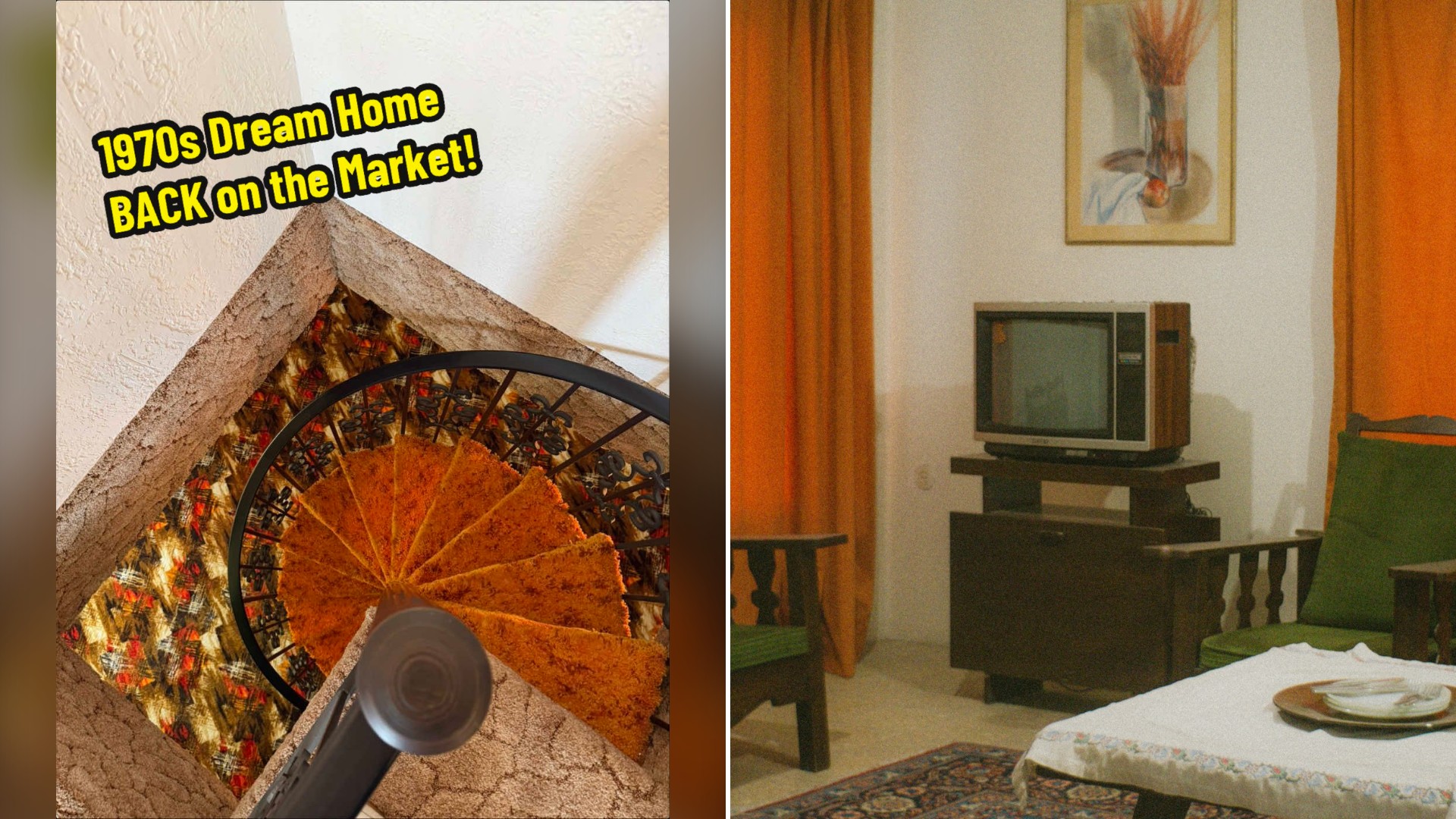
Some houses are built to follow trends, and some seem to freeze them in place. A well known 1970s time capsule home in Paw Paw, Michigan is back in the spotlight after a price cut, and real estate creator @homes_with_max took people on a tour of it on social media, showing off a level of plaid carpet and wallpaper that is hard to find anymore.
@homes_with_max
The House And The Price
According to the creator, the house just took a major price cut and is now listed at $627,000. He says it was custom built for the family that ran the local bowling alley, which seems like a fitting backstory for a home with this much personality. His caption described it as untouched for decades and called it everybody’s favorite 1970s time capsule. Prices on listings change often, so anyone curious should check the current listing, which he says is linked in his bio.
A Tour Of The Bedrooms
This tour focused on the bedrooms, and the creator pointed out that there are four. Bedrooms one and two have plaid carpet, each in a different color, along with textured ceilings. Bedroom three goes further, with a carpeted wall, a detail that stops you in your tracks if you have never seen it before.
The primary bedroom has what he called a luxurious carpeted bathroom, finished with wallpaper. On the wall hangs an old aerial photograph of the house. It is a great touch, a picture of the property taken from above, framed and hung inside the very place it shows.
The Service Wing
Beyond the bedrooms, the creator walked through what he called the service wing. It includes a den with a fireplace and textured ceilings, a laundry room covered in wallpaper and an all original kitchen. His caption mentions other features as well, including a walk out basement with a bar, a billiards lounge, multiple fireplaces and vintage kitchen appliances.
By his estimate this is the best preserved 1970s home he has toured. He said he hopes it does not get torn down, a worry shared by many people who love houses like this. When a home has this much original character, a new owner has a big choice to make: restore it, update it or start over.
Why Carpet Everywhere Made Sense In The Seventies
It might seem odd today to carpet a bathroom or a wall, but in the 1970s wall to wall carpet was a symbol of comfort and modern living. Manufacturers promoted new synthetic fibers that were durable and came in bold colors, and homeowners loved the warm, quiet feel underfoot. Carpet also helped soften sound in big open rooms, which suited houses with lots of hard surfaces like wood paneling and brick.
Carpeting walls took the idea further. It added texture, absorbed echoes and made rooms feel cocoon like, which was especially popular in lounge spaces and bedrooms. Plaid carpet, meanwhile, fit a decade fond of bold patterns, from wallpaper to upholstery to bedspreads.
Textured ceilings were popular for a practical reason. They hid imperfections in drywall and helped with acoustics, and they were quicker to finish than a perfectly smooth surface. Today they are often removed, which makes a house with them intact feel like a preserved page of history.
What To Know Before Buying A Preserved Home
If you fall in love with an original condition house, go in with a clear plan. Start with a thorough inspection. Older homes may have outdated wiring, plumbing, insulation or heating systems that need attention, no matter how good the decor looks. Ask about the age of the roof, the condition of the foundation and whether any materials from that era, like certain flooring or ceiling treatments, need testing before any renovation. A qualified inspector or contractor can tell you what applies to a specific house.
Decide early what you want to keep. Some owners preserve everything and treat the house like a living museum. Others keep the standout rooms, like a wallpapered bathroom or a bar, and modernize the rest. There is no wrong answer, but it helps to make that decision before work begins, since it is hard to undo a demolition.
Check local rules too. Some towns have historic designations or guidelines that affect changes to a property, and insurance for an older home may have different requirements. Ask early so there are no surprises.
Living With Retro Style Today
You do not need to buy a time capsule to enjoy this look. Seventies inspired decor is easy to bring in with small pieces. Try a plaid throw, a bold patterned wallpaper in a powder room, a warm toned lamp or a vintage barware cart. Thrift stores and estate sales are full of pieces from the era, and they cost far less than a whole house.
If you do want to see what a real one looks like, tours like this are the next best thing. They let people appreciate craftsmanship and design choices that may not exist much longer. Many fans of old houses follow creators like @homes_with_max for just that reason, to enjoy the details and to cheer on a hopeful buyer who will take good care of a place with this much history.
If you are planning a visit to a house like this in person, bring a notebook and a camera, ask the agent what has been updated and what has not, and take your time in each room. Details like switch plates, light fixtures and built in cabinets are easy to miss, and they are often the best part of an original condition home.
Whether or not the Paw Paw house finds an owner who keeps its carpeted wall, it already holds a spot as a vivid reminder of how a bowling alley family once chose to live.

Leave a Reply