

Thrift stores used to be where you went to save money. One creator who goes by @relicsbeyondtheveil says that is no longer a given, and she has the price tags to prove it. She called her visit to one store the most unhinged thrift store she has ever been to, then walked through aisle after aisle of eye-popping numbers.
View this post on Instagram
The Christmas Aisle
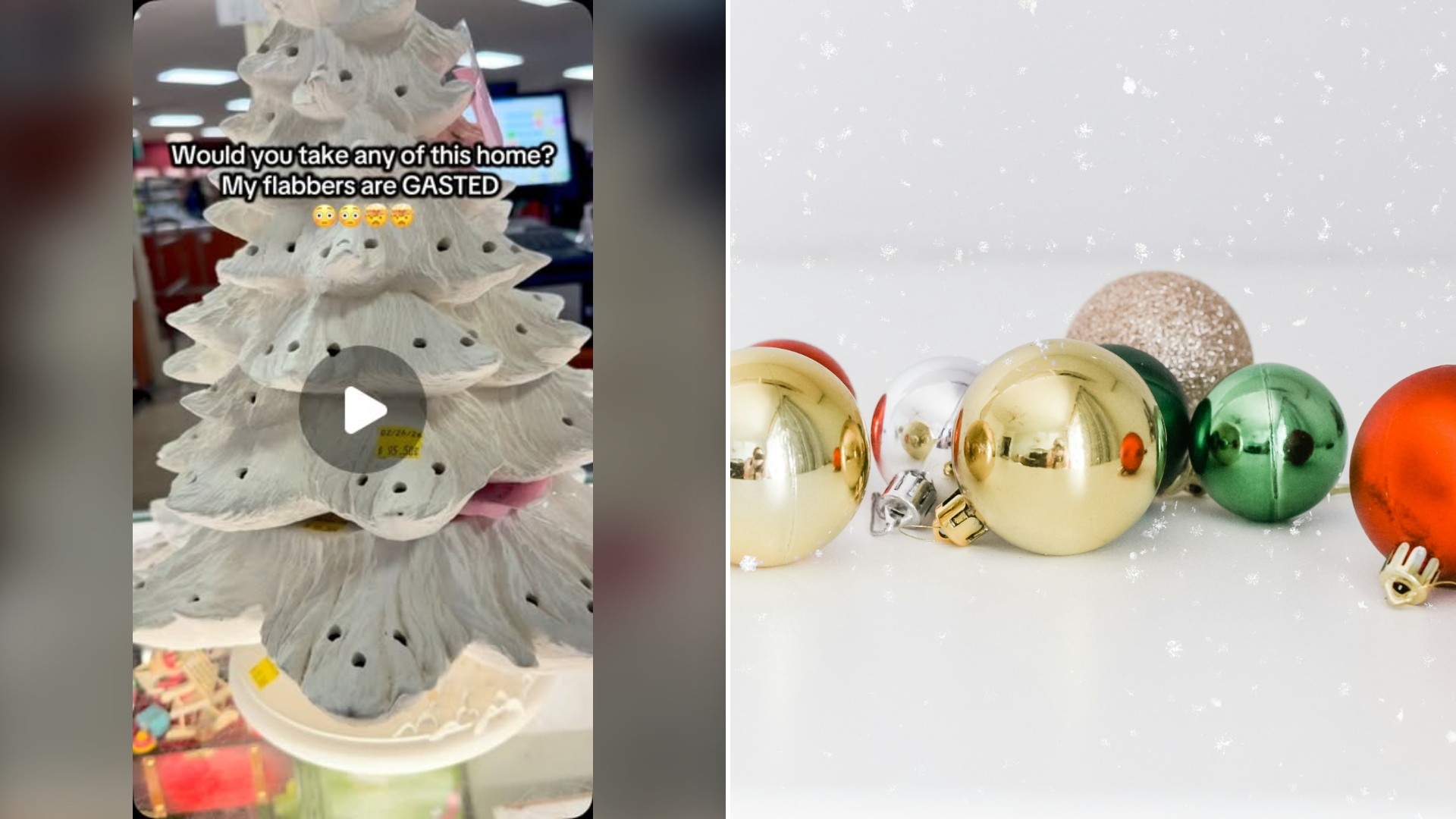
She starts with the holiday section, and it sets the tone. An unlit Christmas tree is priced at $95. Little figures from activity sets are $80 apiece. A small village shop piece, the Hoo-ville style, is $165, and bags of standard ornaments are $22.50 each.
Then the numbers climb. One piece she says was originally around $699 at TJ Maxx is marked $650. A single ornament is $950. Sets of shiny brites, the glass ornaments many of us remember from our grandparents’ trees, are $29.50 for a set of three and $39.50 for a set of four. A little candle lamp is $20, a cow blow mold is $150, plastic cups are $25, and if you want a plate for Santa’s cookies, that is $11.50.
The Art Wall
The art section is no gentler. She points out a painting from 2001 by an artist nobody has heard of, priced at $255, and a picture she enjoys but not at $50. A vintage Abercrombie and Fitch picture is $220, a Fenton picture is $100, and a ceramic barn owl, which she admits is cool, is $300.
Why Thrift Prices Keep Climbing
Shoppers who remember when a dollar bought a bag of treasures are noticing the change everywhere. Part of it is that resale has become big business. Many stores now price items by checking what similar pieces sell for online, so a common ornament can get a collector’s price tag even if it will sit on a shelf for months. Holiday items are especially exposed because demand spikes before Christmas, and sellers know shoppers are in a buying mood.
Another factor is that many people now shop secondhand first. As more buyers hunt for bargains, stores that once priced to move have found they can ask more. Some thrift shops are run by charities and use their proceeds for good causes, which is a fair reason for higher tags. Others are for-profit resale shops that price like small retailers. Knowing which kind of store you are in can change how you read a price.
That does not mean every thrift store is overpriced. Prices vary a lot from one shop to the next, and a price tag is only a request. If you are shopping for decor this season, there are smart ways to protect your wallet.
How to Tell a Fair Price From a Rip Off
A good rule of thumb is to compare the thrift price with what a new version costs and what the same item has recently sold for secondhand. If the used item costs nearly as much as a new one, it is rarely a deal, unless it is a true vintage piece that is no longer made. Common mass-produced decor, like standard ornaments, plastic cups and blow molds, is usually easy to find again, so there is little reason to overpay.
Pieces with a recognizable maker, like Fenton glass, can be worth real money, but only if the condition is good and the piece is authentic. Check the bottom for marks, look for chips and cracks, and remember that a famous name on a tag is not proof of value.
- Compare before you buy. Look up a similar item on a resale site and see what it has actually sold for, not just what sellers are asking.
- Check condition closely. Chips, missing pieces and faded paint can turn a high price into a bad deal.
- Ask about sale days. Many thrift stores run color-tag specials or discount days that cut prices sharply.
- Look at estate sales and yard sales. Sellers there often price to clear space, not to maximize profit.
- Shop early in the season. Holiday stock is picked over fast, and prices rarely drop until after the holiday.
- Walk away. If a price feels wrong, it usually is. There is almost always another shop down the road.
Where to Find Better Deals on Holiday Decor
If sticker shock sends you out of the store empty handed, you still have options. Church bazaars, community rummage sales and neighborhood swaps tend to price items low because the goal is to clear the tables. Estate sales often have boxes of vintage ornaments for a fraction of the thrift store tag, especially in the last hours of the final day. Asking family and friends if they are downsizing can also turn up decorations that come with a story and no price at all.
What It Means for Bargain Hunters
For decades, secondhand shopping meant stretching a budget. Now some stores price like boutiques. The store walk-through from @relicsbeyondtheveil is a reminder to carry a little skepticism along with your shopping bag, and to treat every tag as the start of a conversation rather than the final word. Follow her at @relicsbeyondtheveil for more thrift store finds and reality checks.

Leave a Reply