

Every bar needs a statement piece, and one thrifter’s home bar was missing hers. Then, standing next to a blue cart in the aisle of a Goodwill, she held up a heavy, vintage style countertop wine opener in bronze and wood and asked it, only half joking, whether it was gorgeous. She bought it on the spot, and then did what every curious thrifter does. She went home to find out whether it actually worked.
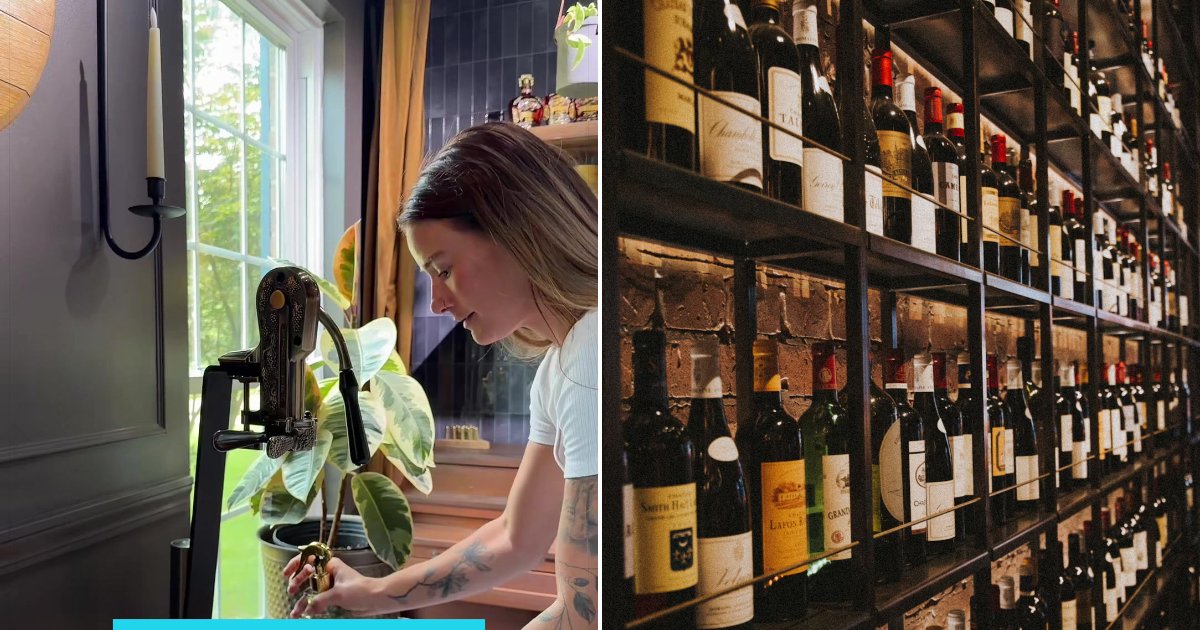
The test run comes from @iamkatielynn, who cleaned it, mounted it, and tried it on two different bottles.
@iamkatielynn
From Goodwill Shelf to Home Bar
At home, in a bar area with dark gray wainscoting and green plants, she sprayed cleaner on a cloth and wiped down the ornate metal parts and the wooden base. Up close, the metalwork shows embossed grapes and vines, and the word Reserve appears around the decoration. It looks like something that belongs behind a tasting room counter.
Next came the setup. She tightened the bracket in place with a cordless drill, then put an already opened bottle of red wine into the clamp and lowered the lever. It was not as easy as it looked. When she released the bottle, the cork had been pushed down into the bottle instead of pulled out, and she realized she had done something wrong. Not one to give up, she brought out a second bottle, a green one, locked the neck into the clamp, and worked the lever down and back up. This time there was a satisfying click, and when she unlocked the clamp the cork was out. Her partner then helped by lifting the top lever to release the cork from the mechanism, and the device was empty and ready for the next bottle.
Why Mechanical Barware Is Fun to Thrift
Countertop openers belong to a long tradition of clever kitchen and bar gadgets that were built heavy and made to last. Many were designed for restaurants, bars, or serious home entertaining, and the best ones combine real function with decorative casting. Even when a piece does not get used daily, it can serve as sculpture on a bar cart or shelf. That blend of usefulness and display value is exactly why they appeal to thrifters decorating a bar.
How to Test a Mechanical Find
The thrifter’s approach is a good template. Clean the piece first, then check how the parts move before you trust them with anything breakable.
- Move every lever, arm, and screw by hand to make sure nothing sticks or wobbles.
- Look for rust, cracks, and missing screws, especially around joints and mounting holes.
- Learn how the mechanism is supposed to work before the first try. A quick search by shape and material can save a mistake.
- Start with an inexpensive bottle you do not mind losing.
- Mount it on something sturdy, and keep fingers clear of the clamp and the lever.
Her first attempt is a useful reminder that vintage gadgets rarely come with instructions. Sometimes the trick is in the order of steps or the way the bottle is seated, and a failed first try does not mean the piece is broken.
Cleaning Metal and Wood Together
Pieces that combine metal and wood need a gentle touch. A cloth that is barely damp is safer than soaking, because water can swell wood and speed rust on exposed metal. Dry everything right away. If you want to remove built up grime from embossed details, a soft brush can reach into the grooves without scratching. Avoid strong chemicals on parts that will touch a bottle, and consider a light coat of furniture wax on the wood once it is clean and dry. Leave deep patina alone unless it hides damage, because collectors often prefer a piece that looks honestly aged.
Styling a Home Bar With Thrifted Pieces
- Pick one statement object and let it anchor the space, rather than crowding the counter.
- Repeat the metal tone in smaller details, such as trays, coasters, or candle holders.
- Use plants for softness against dark walls and heavy metal.
- Keep the working pieces within easy reach, so they get used and enjoyed.
The Takeaway
A Goodwill shelf delivered a heavy, handsome, working piece of barware, and the trial and error of learning to use it became part of the charm. Buy the thing that makes you stop in the aisle, give it a good clean, and be patient while you work out how it wants to be used. If it does not work on the first bottle, try the second.
Credit for the original post goes to @iamkatielynn on TikTok.

Leave a Reply