

Home renovations turn up all kinds of forgotten relics behind walls and trim, but few are as oddly specific as what creator @rem__state found while tearing out old baseboard trim: a stack of vintage Pokemon cards, apparently used decades ago as makeshift shims to level out the wood against an uneven wall. Whoever installed that trim clearly reached for whatever was on hand, and what was on hand turned out to be a handful of cards from one of the most collected franchises in the world.
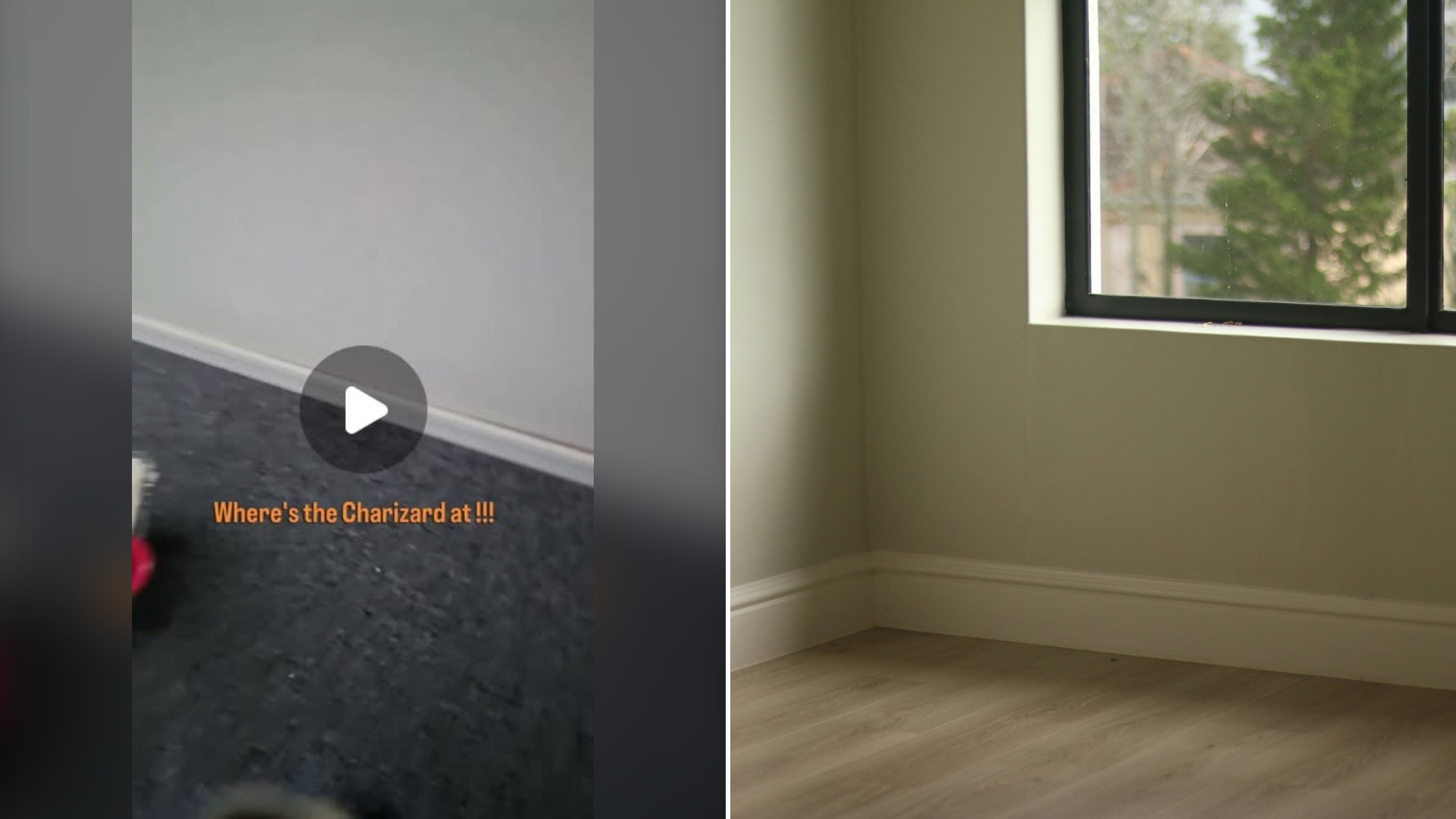
The video captures the moment of discovery in real time, and the sheer randomness of the find is what pushed it to 1.8 million views. Commenters immediately started speculating about the cards’ potential value, while others shared their own stories of bizarre objects uncovered during home renovations.
Using scrap material as a shim behind baseboard or trim is a genuinely common carpentry shortcut, since any thin, rigid material can fill small gaps between trim and an uneven wall surface. What makes this particular case unusual is the material itself. Pokemon cards exploded in popularity in North America starting in 1999, meaning whoever renovated this specific section of wall was likely working sometime in the late 1990s or early 2000s, grabbing whatever was lying around a kid’s bedroom or a box of now-irrelevant cards rather than making a special trip for proper shims.
Whether the cards found behind this particular baseboard carry any real value depends entirely on which specific cards they are. The vast majority of Pokemon cards from the original print runs are common, low-value cards worth only a few cents to a few dollars even in good condition, since the sets were printed in enormous volume. But first-edition holographic cards, especially rarer characters from the original base set, can be worth hundreds or even thousands of dollars in good condition, and tens of thousands for pristine, professionally graded examples of the rarest cards. The catch here is condition. Cards used as construction shims have almost certainly been bent, creased, scuffed, or otherwise damaged by the exact pressure and friction that made them useful as spacers in the first place, which would significantly reduce or even eliminate their collector value regardless of rarity.
That damage factor is a familiar heartbreak in the Pokemon card collecting world, where condition grading can mean the difference between a card worth a few dollars and one worth a life-changing amount of money. Professional grading services evaluate centering, corners, edges, and surface condition on a strict numerical scale, and even minor imperfections invisible to a casual eye can drop a card from a top grade down to a far less valuable tier. A card that’s been folded or crushed behind trim for twenty-plus years would likely grade at the very bottom of that scale, if it would grade at all.
Beyond the dollar value question, stories like this one tap into something renovators and home flippers run into more often than people expect: previous owners leaving behind genuine time capsules inside walls, floors, and trim work, whether intentionally or, as seems to be the case here, purely by accident. Newspaper clippings, old currency, children’s toys, and handwritten notes have all turned up during renovations over the years, each one offering a small, unplanned window into who lived in a house before and what their daily life looked like.
For @rem__state, the real prize here might not be resale value at all. It’s the pure, inexplicable weirdness of finding a stranger’s old Pokemon cards doing structural work inside a wall, a discovery that’s equal parts renovation hazard and accidental nostalgia trip.

Leave a Reply