

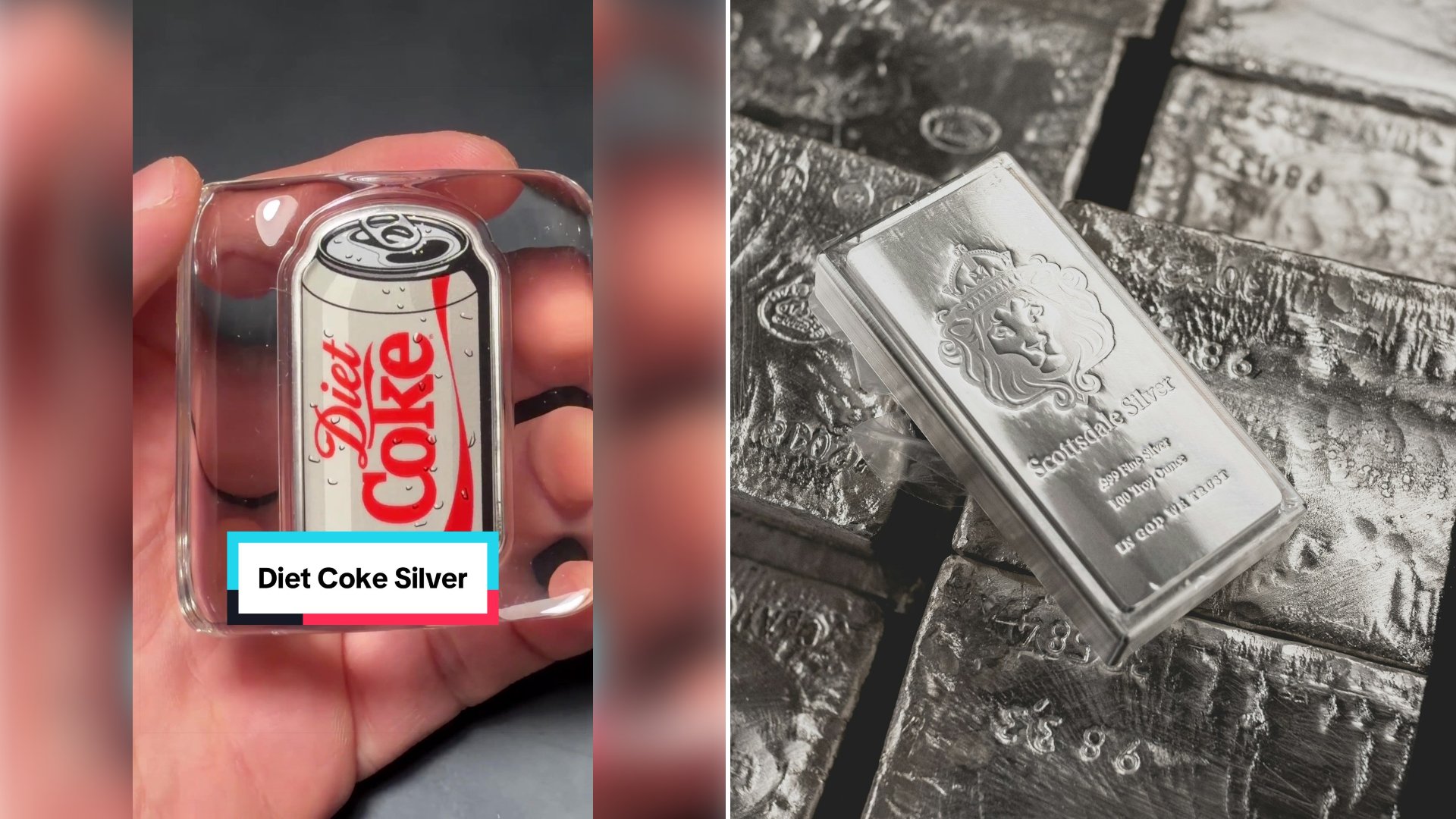
A customer walks into a coin shop with something the owner clearly hasn’t seen before: a one-ounce silver bar stamped with the Diet Coke logo. The owner films the whole exchange, weighing it, testing it, and working through how much to actually offer for a piece of novelty silver that has nothing to do with government mints or traditional bullion brands. It’s a small, low-key transaction, but it opens up a bigger question that plenty of casual collectors never think to ask: does branded silver like this hold real value, or is it just a shiny piece of advertising?
@humphreytalks walks viewers through the shop’s usual process: checking the stated purity and weight stamped on the bar, running a quick test to confirm it’s genuine silver and not a plated fake, then calculating an offer based on the spot price of silver that day. It’s the same process any coin shop runs on a plain, unbranded bar, except this one happens to carry a soda logo instead of a mint mark, which is exactly what makes the video stand out.
@humphreytalks
Branded or “novelty” silver bars like this one are a real, if niche, corner of the collectibles world. Companies, casinos, and even soft drink brands have commissioned small-run silver bars for decades as promotional items, corporate gifts, or limited giveaways, and most of them were never meant to circulate as investment-grade bullion. That matters for pricing, because a coin shop values a bar like this almost entirely on its melt value, the weight multiplied by the day’s silver spot price, rather than on any collector premium, unless the piece can be tied to a documented limited run or a known mintage number.
That’s the core tension in novelty branded silver as an investment. Spot silver itself has been a genuinely strong asset over the past few years, trading well above where it sat for most of the 2010s and pushing past $30 an ounce at various points in recent trading. So the metal content alone gives a bar like this real, measurable value. But the “collectible” branding rarely adds much on top of that metal value unless the piece is scarce, well documented, and in demand with a specific niche of collectors who track advertising and promotional silver. Without a known mintage figure, a buyer is really just betting on silver’s price, with a logo along for the ride.
Resale premiums on novelty silver can also vary wildly depending on who is selling and where. A general coin shop, like the one in the clip, will typically price branded silver close to melt value because they’re buying it as a commodity to resell at a modest margin. Specialty auction sites and collector forums can sometimes command a premium for pieces with a clear production story or a limited, verifiable run, but that premium is far from guaranteed and depends entirely on finding the right buyer who already collects that specific category.
For anyone tempted to treat a quirky branded bar as a serious investment, the practical takeaway from clips like this one is pretty consistent: the silver content is real and tracks the broader metals market, but the novelty itself is closer to a conversation piece than a guaranteed appreciating asset. It’s an interesting corner of the collectibles world precisely because it rewards curiosity more than it rewards a calculated bet, which is probably why a walk-in sale like this is unusual enough to film in the first place.
More from Vinyl and Velvet
- Reseller Says Thrift Store Employees Do Not Look Up Prices After Finding a Red Nikon Coolpix for $15, Then Shows Sold Listings From About $135 to $166 to Back It Up
- Convention Attendee Brings His Childhood Pokemon Binder to a Dealer Booth Just to See If He Has Anything Good, and Walks Away Minutes Later With a Blind Cash Offer of 21,000 Dollars
- Thrift Store Shopper Says a $250 Gamble at the Glass Counter Turned Out to Be a 1969 Rolex Oyster Perpetual Date Ref 1500 After a Service, in a 13 Second Text Card Reel

Leave a Reply