

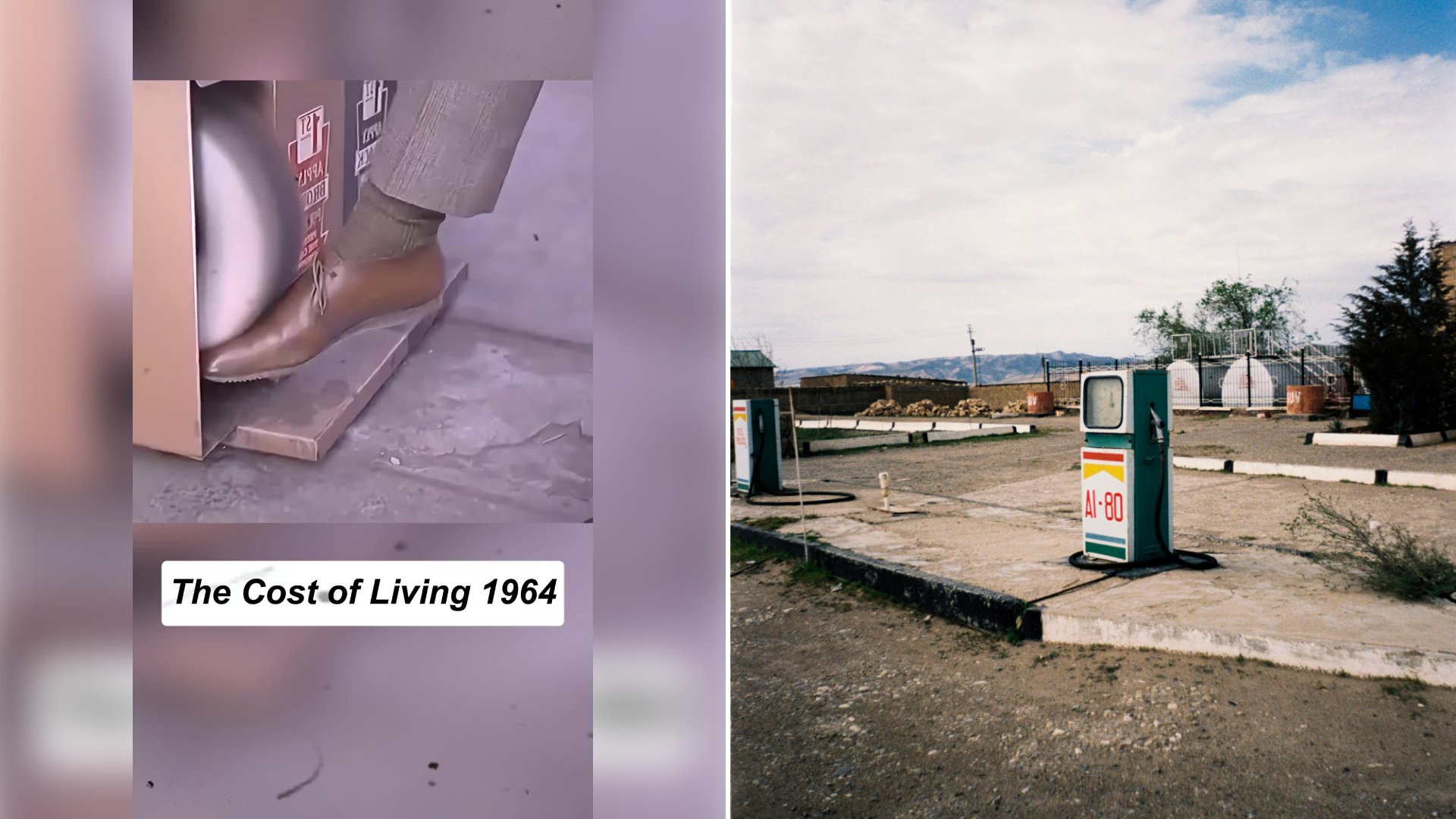
Grainy, sun-bleached archival footage opens the video: a gas station attendant filling a tank by hand, a family walking out of a department store with bags, a price sign at a diner counter. Then the comparison cuts in, placing 1964 side by side with today, and the gap between the two eras lands with real weight — not because anyone is exaggerating, but because the actual numbers from 1964 already sound almost unbelievable on their own.
The video comes from @playthearchive, a creator who regularly digs up and recontextualizes real archival footage rather than relying on stock clips or recreations. That commitment to actual period footage is a big part of why this one landed the way it did — viewers were not just hearing numbers read aloud, they were watching the era those numbers came from play out in real time.
@playthearchive
The documented cost of living figures from 1964 back up just how dramatic that gap really was. Gasoline averaged around thirty cents a gallon that year. The federal minimum wage sat at one dollar and twenty-five cents an hour. A new car typically cost somewhere in the range of three and a half thousand dollars, and the median price of a new home in the United States was around twenty thousand dollars — figures that look almost like typos next to today’s equivalents, but that were simply the normal cost of living for an average household at the time.
Wages from the era matched that lower cost of living, which is the part nostalgic comparisons like this one are careful to include rather than ignore. A dollar in 1964 does not mean the same thing a dollar means now, since inflation has reshaped the value of money dramatically across the intervening decades. The honest takeaway from a side-by-side like this is not that everything was simply cheaper and therefore easier, but that the entire scale of prices, wages, and everyday expectations has shifted together, which is exactly why direct dollar comparisons feel so jarring without that context attached.
Beyond the raw numbers, 1964 also marked a genuine cultural turning point, landing in the middle of the British Invasion’s arrival in American pop culture and a rapidly expanding television and consumer culture that was reshaping how families spent their evenings and their money. Archival footage from that specific year carries a particular visual texture — the cars, the storefronts, the clothing — that makes it instantly recognizable as a distinct moment rather than a vague, generic “the past.”
That specificity is exactly what makes this kind of content so sticky. A vague statement that “things used to be cheaper” does not land the same way as watching real footage next to real documented prices from a single, named year. It turns a familiar nostalgic talking point into something that feels concrete and verifiable, which is likely why a comparison built this carefully keeps resonating with viewers who were not even alive to remember 1964 firsthand.
More from Vinyl and Velvet
- Gen X Creator Lists Childhood Things That Felt Normal, From Waiting in a Running Car to Buying Cigarettes for His Parents and Spending Hours Out of Reach of Any Phone
- Rob Lowe Tells a Podcast Host the 1980s Were Better for Fame Because There Was No Social Media or Cell Phone Cameras and You Just Did Not Know Where Anybody Was
- Realtor Opens the Medicine Cabinet in Her Childhood Bathroom at Mom’s House, Calls It an Archaeological Dig and Holds Up Icy Hot, Clairol and Lip Gloss She Jokes Is From 1998

Leave a Reply