

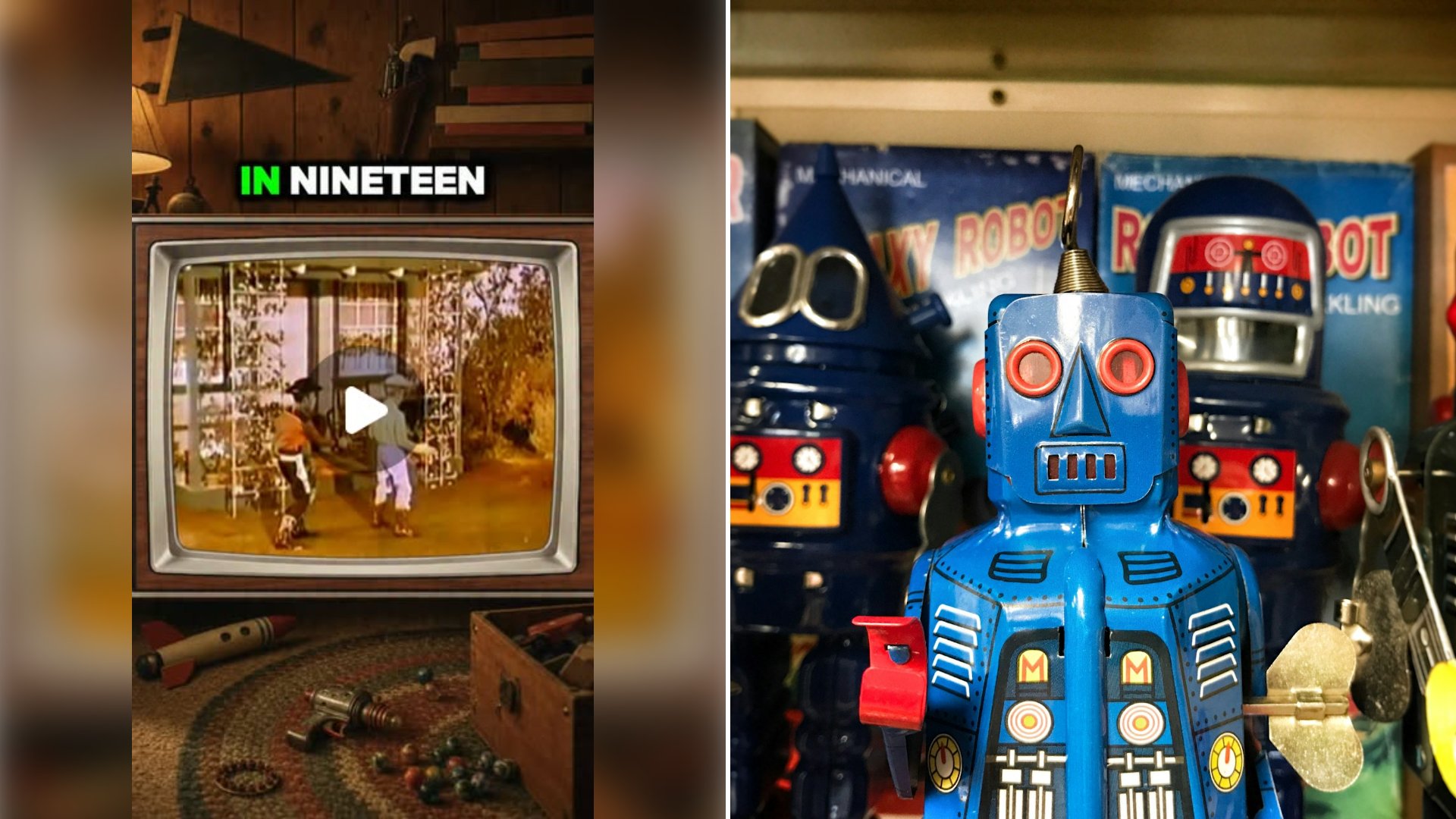
Toy historian @retrolayers runs through a list that sounds almost too outrageous to be real, except every entry genuinely was sold to children in the 1960s. A cowboy hat built to fire real bullets. A toy rocket launcher that actually launched. A toy marketed as a bomb, sold straight to six year olds by a mainstream toy company. Each item on the list sounds like a joke until the receipts show up, and that whiplash between disbelief and documentation is exactly what makes this kind of content so watchable.
It is tempting to assume lists like this exaggerate for shock value, but the 1960s toy industry really did operate under almost no federal safety oversight compared to today. Manufacturers were largely free to design and market toys however they chose, with minimal regulatory review of choking hazards, projectile dangers, or chemical content before a product hit store shelves. That regulatory gap is the entire reason toys involving real projectiles, sharp metal parts, or genuinely combustible components could be marketed directly to young children without raising the alarms they would trigger instantly today.
That regulatory landscape did not stay frozen in place. Growing public concern over unsafe products throughout the 1960s and early 1970s, toys very much included, helped push Congress to create the Consumer Product Safety Commission in 1972, a federal agency specifically tasked with setting and enforcing safety standards for consumer products, including toys, before they reach store shelves. The creation of a dedicated oversight body is itself a pretty clear signal of how little structured safety review existed before it, since agencies of that kind typically get created in direct response to a documented pattern of harm rather than as a precaution against a hypothetical one.
Looking back at toys from this era also says something about how differently childhood risk was understood a few generations ago. Parents in the 1960s were not reckless, they were operating inside a culture that generally treated bumps, scrapes, and the occasional real injury as an ordinary part of growing up rather than a preventable failure. Toy advertising from the period leaned directly into realism and danger as selling points rather than liabilities to downplay, which is a strikingly different marketing instinct than anything a toy company would attempt today, when safety testing and liability review shape a product’s design from the earliest stages.
That contrast is really the engine behind why nostalgic content about dangerous old toys performs so well. It is not just shock value for its own sake, it is a genuine, measurable before-and-after of how child safety standards have evolved across just a few decades. A list like this works as a kind of accidental history lesson, using toys everyone can picture clearly to illustrate a regulatory shift that would otherwise sound dry and abstract. The toys themselves are the punchline, but the real story underneath them is how much the definition of an acceptable risk for a child’s plaything has changed since the era that produced them.
More from Vinyl and Velvet
- Game Boy Owner Says Mom Kept the Toys R Us Receipt From July 18, 1994, Showing a $49.99 Game Boy and a $19.99 Yoshi Game, and the Old Handheld Still Turns On Today
- Man Powers Up the Original Xbox From When He Was 15 for the First Time Since About 2007 and Opens the Tray to Find a Halo 2 Disc Still Inside, With a Warped Tour Sticker on Top
- Convention Attendee Brings His Childhood Pokemon Binder to a Dealer Booth Just to See If He Has Anything Good, and Walks Away Minutes Later With a Blind Cash Offer of 21,000 Dollars

Leave a Reply