

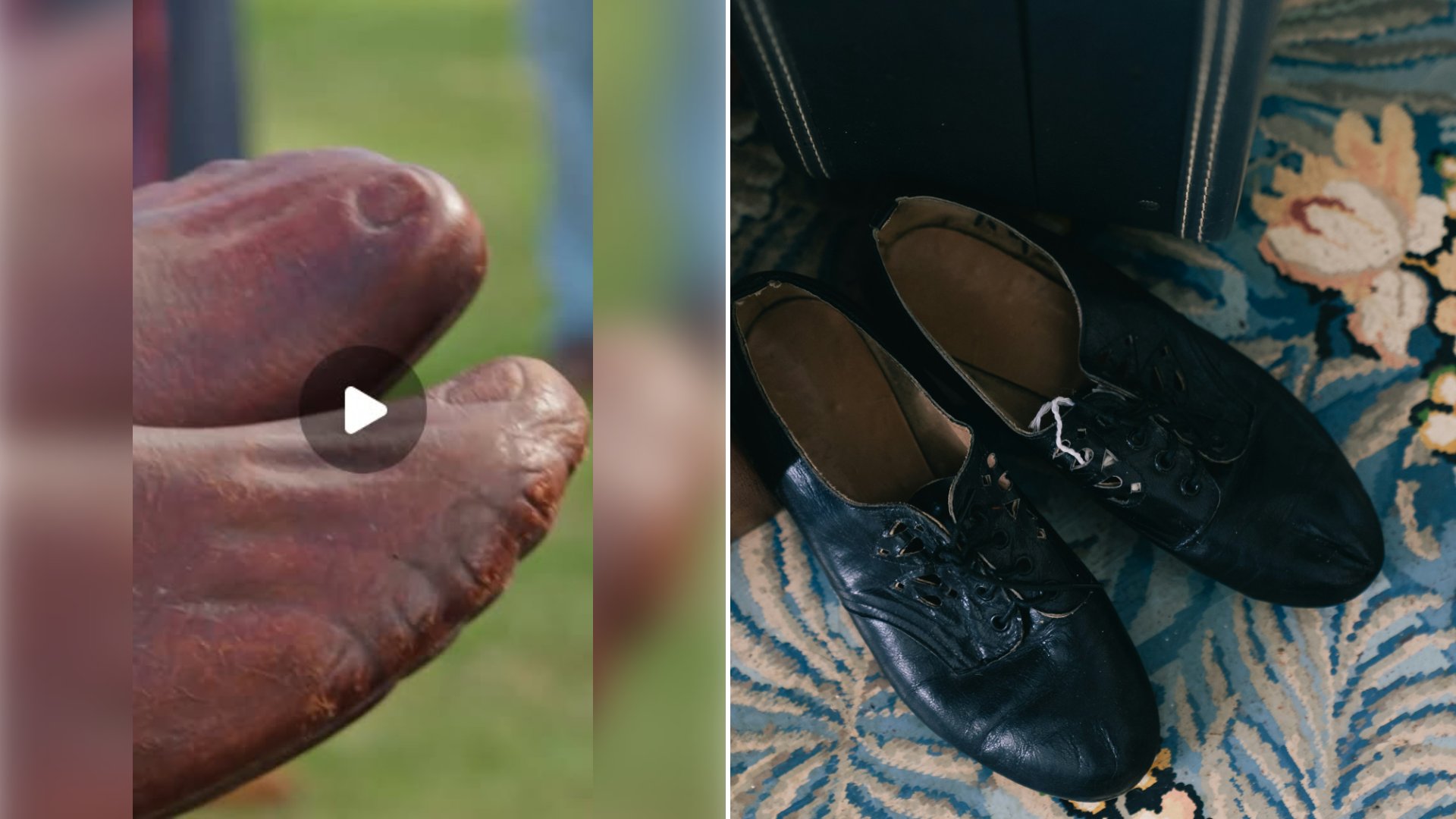
Antiques Roadshow has built an entire format around the moment an everyday object turns out to be something far more significant than its owner realized, and this clip from @bbcantiquesroadshow is a near-perfect example of why that format still works. A guest brings in a genuinely strange pair of shoes, surrealist in design and shaped unmistakably like bare feet, acquired decades earlier while the guest was living in Paris. The expert picks them up, and the reaction on the guest’s face before a single word of valuation is spoken already says this is not a routine appraisal.
Surrealist fashion is a real and well-documented chapter of design history, not a niche curiosity invented for a television segment. The movement reached its fullest expression in fashion during the 1930s, when artists and designers began treating clothing and accessories as canvases for the same dreamlike, unsettling imagery that defined surrealist painting. Everyday objects were deliberately transformed into something uncanny, and footwear shaped like a part of the body it is meant to cover fits squarely into that tradition of taking the familiar and making it strange on purpose.
Paris was the epicenter of this movement for a reason. The city was home to the overlapping worlds of high fashion and the surrealist art scene throughout the 1930s, and one of the most famous collaborations of the era paired designer Elsa Schiaparelli with artist Salvador Dali, producing pieces like the celebrated shoe-shaped hat that is still studied in fashion history courses today. That collaboration, and the broader circle of artists and couturiers working in Paris at the time, is exactly the kind of creative environment that could have produced a pair of foot-shaped shoes like the ones in this clip. Anyone living in Paris during that period with access to the right boutiques or artist circles could plausibly have come home with a piece that straddled the line between wearable fashion and art object.
What makes surrealist fashion pieces valuable to collectors today is partly their rarity and partly their crossover appeal. They sit at the intersection of two collecting markets, fashion history and fine art, which means interest in a well-documented piece can come from both directions at once. A pair with a credible provenance story, like a guest who can speak to exactly where and when it was acquired, gives an appraiser something real to work with, since unprovenanced pieces in this category are far harder to authenticate and value with confidence.
That is ultimately what makes this kind of Antiques Roadshow segment so compelling to watch. The guest was not chasing a prize when the shoes were acquired decades ago, they were simply drawn to something strange and memorable while living abroad. Decades later, an expert with the right historical context looks at the same object and recognizes it as part of a real and documented design movement, one with its own collectors, auction history, and place in fashion history. The gap between how an object is acquired and how it is later understood is the entire engine of the show, and a pair of surrealist foot-shaped shoes from Paris is about as vivid an example of that gap as it gets.
More from Vinyl and Velvet
- Man Brings a Ring His Late Friend Left Him to an Antiques Roadshow Appraiser Who Reveals It Is a 2,000 Year Old Carved Portrait of Julius Caesar Set Inside a Famous Roman Workshop’s Gold Signet
- Thrift Shopper Pays Just 35 Dollars for a Plain Looking Bust at the Store, Then Learns From Historians Responding Online That It Is Actually an Authentic Ancient Roman Artifact
- Creator Posts a Crowded Archive Shop Shoe Tour Where On Screen Labels Name Comme des Garcons, Balenciaga, McQueen, Tom Ford, YSL and Margiela Seasons as Each Pair Is Held Up

Leave a Reply