

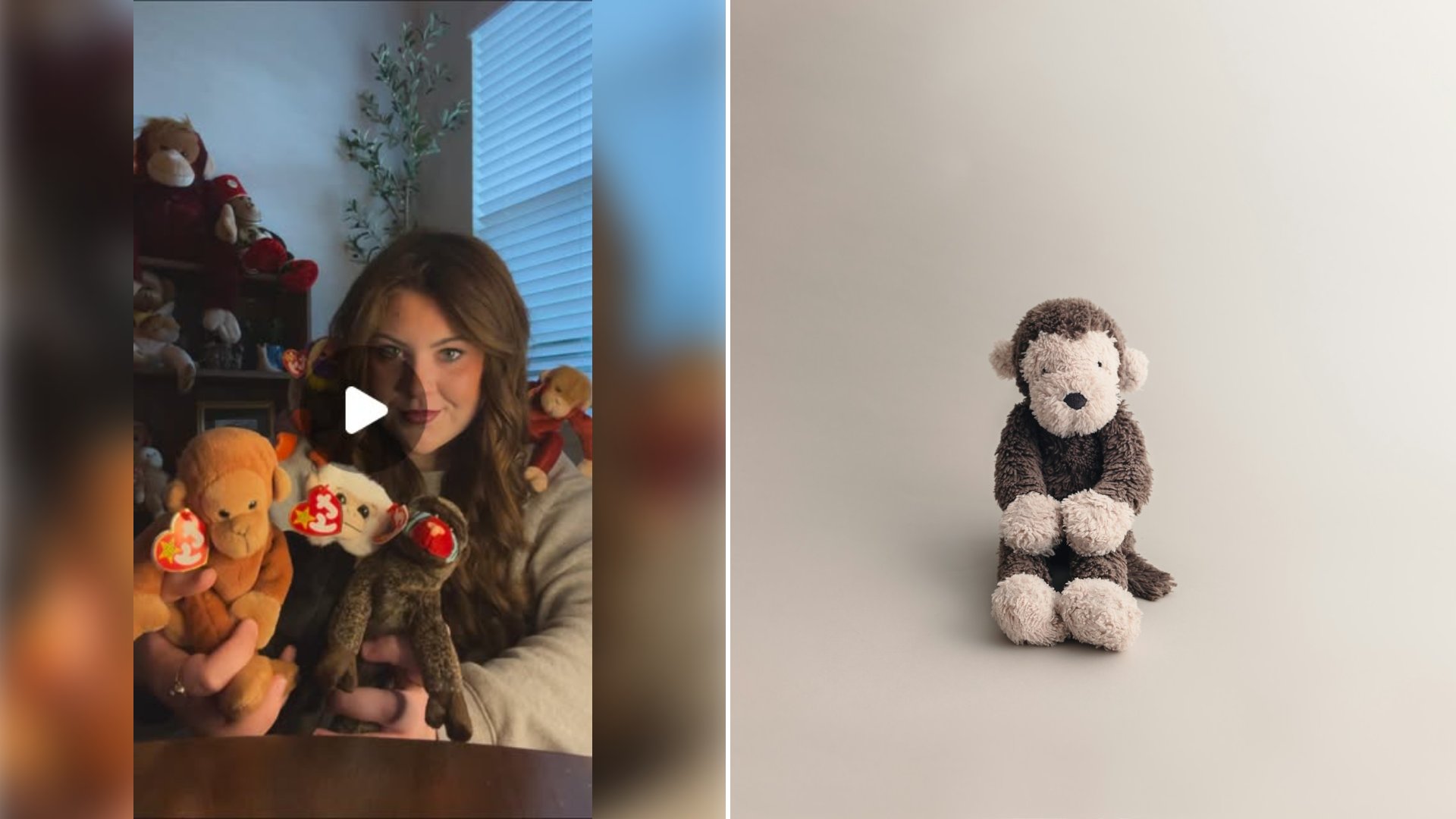
Niche collecting has a way of turning an ordinary Facebook Marketplace transaction into genuine must-watch content. In a reel from @monkeygirlbrooke, a dedicated collector messages a seller with an oddly specific request: she wants every single monkey themed Beanie Baby the woman owns, no exceptions. The seller delivers, and the unboxing that follows pulls plush after plush out of the bag, each one a different nineties-era monkey design, until it’s clear this wasn’t a small side collection at all.
The appeal here is twofold: there’s the satisfaction of a full, uninterrupted unboxing, and there’s the specificity of the ask itself. Collecting by theme, in this case monkeys specifically, rather than just grabbing any Beanie Baby available, is a hallmark of serious collector behavior, and it’s exactly what makes this haul feel different from a casual secondhand buy.
Beanie Babies were one of the defining collectible crazes of the 1990s, produced by Ty Inc. starting in 1993 and quickly growing into a full-blown cultural phenomenon fueled by limited releases, retired designs, and a secondary market where certain pieces sold for far more than their original retail price. The craze was driven in large part by scarcity tactics: Ty regularly “retired” specific designs, meaning they’d never be produced again, which pushed collectors to buy multiples and stockpile pieces they believed would appreciate in value once they were no longer available.
Among the monkey-themed releases, a handful of specific designs have held onto genuine value with collectors decades later. Bongo, a brown-faced monkey released in the mid-1990s, is one of the most recognizable monkey Beanie Babies and exists in multiple production variations, some of which carry noticeably higher resale value depending on tag generation and design details like tail color. Nana, an earlier version of that same monkey design before it was rebranded as Bongo, is considered rarer and tends to command more interest from serious collectors specifically because of how early and limited that particular print run was. Other monkey-themed pieces from the line have more modest resale value individually, but a complete or near-complete set of monkey-specific Beanie Babies, like the one gathered in this reel, carries added value simply because assembling every variation within a single theme takes real time and effort.
Tag condition plays an outsized role in determining what any individual Beanie Baby is actually worth. Ty’s signature heart-shaped tags went through several generations over the years, and collectors can often date a specific plush, and estimate its rarity, based on tag style, font, and whether the tush tag (the smaller tag sewn into the seam) matches the swing tag’s production era. A monkey Beanie Baby with its original tags intact and undamaged is worth meaningfully more than the same design with tags that are bent, torn, or missing altogether, which is why serious collectors handle tagged plush items carefully even decades after they were made.
What makes a buy like this one notable isn’t just nostalgia. It’s the recognition that Beanie Babies, dismissed by plenty of people as a passing nineties fad, actually built a durable collector market that’s persisted for over thirty years. Niche collectors who specialize in a single theme, whether that’s monkeys, bears, or any other category within the massive Ty catalog, represent a dedicated corner of that market where completeness and specificity matter more than simply owning the most famous or expensive individual pieces.
For anyone sitting on a childhood stash of old Beanie Babies, the lesson from hauls like this is simple: check the tags before assuming a plush is worthless clutter, and don’t underestimate how much a themed collector might be willing to pay for a complete set within their specific niche.
More from Vinyl and Velvet
- Barbie Collector Says She Quit Dolls at 16 for Being Too Cool, Then Dug Out Her Childhood Barbies When Covid Hit and Now Films a Room Packed Wall to Wall With Them
- Convention Attendee Brings His Childhood Pokemon Binder to a Dealer Booth Just to See If He Has Anything Good, and Walks Away Minutes Later With a Blind Cash Offer of 21,000 Dollars
- Son Posts Daily Videos of His Father’s Hand Sculpted Winnie the Pooh Collectible Made for The Bradford Exchange in Hopes of Helping Him Finally Retire, and Pooh’s Own Voice Actor Shows Up to Comment

Leave a Reply