

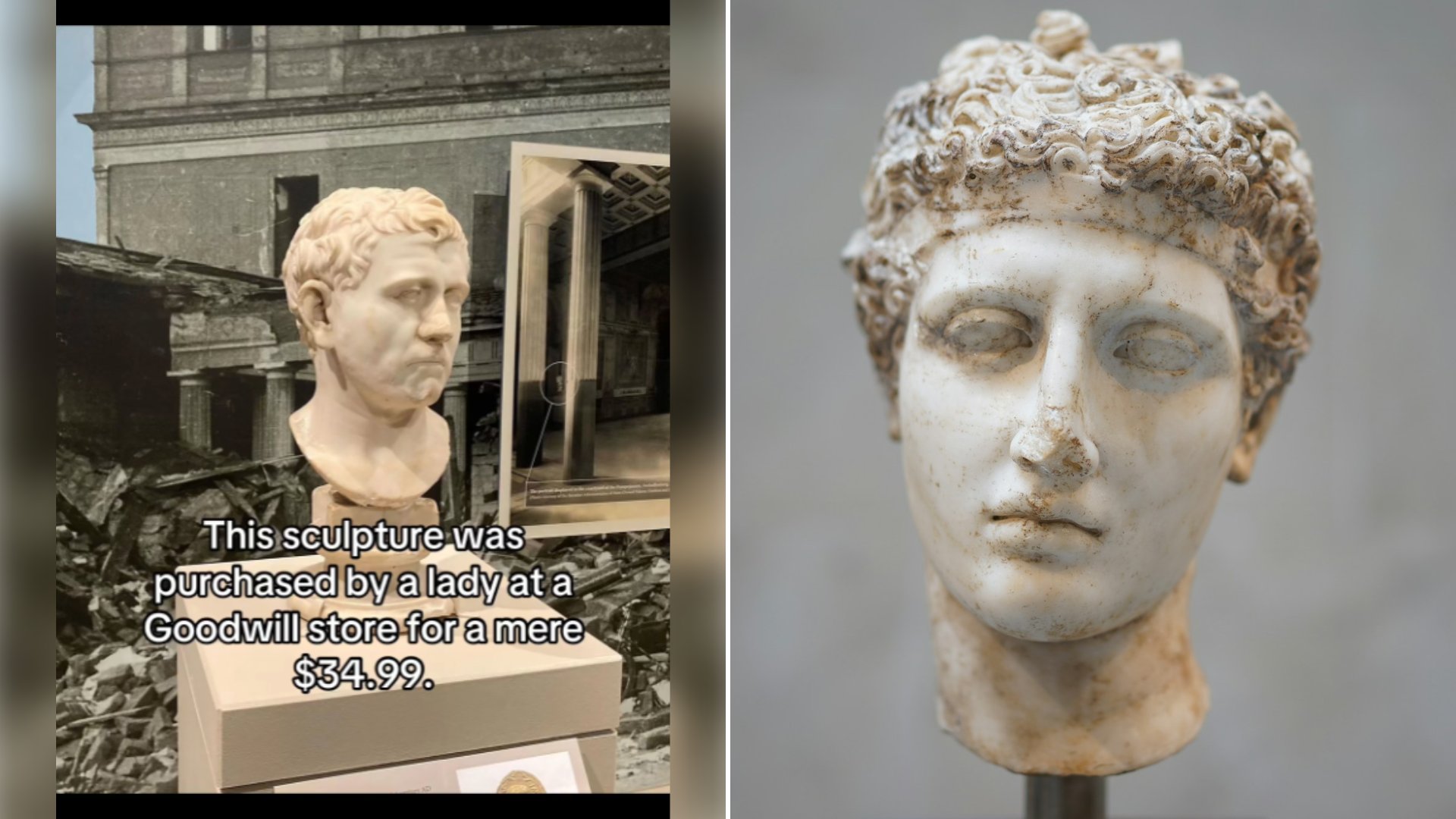
Most thrift store busts are reproductions, the kind of mass produced decor piece that shows up in home goods stores by the hundred. The one @user2817734081290 found for $35 turned out to be something else entirely.
“This $35 Thrift Store Bust Turned Out to Be an Ancient Roman Artifact,” the caption states plainly, tagged simply #art and #history. There’s no lengthy backstory in the post itself, just the claim and the object, left for viewers and, apparently, actual historians to weigh in on.
@user2817734081290
Genuine ancient artifacts surfacing in thrift stores and estate sales is rarer than viral posts sometimes suggest, but it is not unheard of. Museums and auction houses have documented a number of cases over the years in which authentic ancient Roman, Greek, or Egyptian pieces were sold for a few dollars at a yard sale or thrift store before an expert recognized the carving style, material, or wear pattern as consistent with genuine antiquity rather than a modern reproduction. These pieces typically end up in secondhand circulation after passing through generations of a family that didn’t know, or had forgotten, what they originally held, often following an estate liquidation where nobody involved had the specialized knowledge to flag the piece before it was priced and shelved alongside ordinary home decor.
Authenticating a find like this is a genuinely specialized process, and reputable experts generally caution against relying on social media consensus alone. Archaeologists and classical art historians typically look at the carving technique and tool marks, the type and source of the stone or marble, the specific wear and patina patterns consistent with centuries of aging versus artificial aging techniques used on modern reproductions, and stylistic details that can sometimes be matched to a known workshop or period. Provenance, meaning a documented ownership history, matters enormously too, both for establishing authenticity and for navigating the legal questions that can follow finding genuine antiquities, since many countries have strict laws governing the export, sale, and repatriation of culturally significant artifacts.
That legal dimension is worth taking seriously for anyone who believes they’ve found something similar. Unlike a vintage handbag or a piece of retro electronics, a genuine ancient artifact can carry real ownership and export complications depending on where it originated and how it left its country of origin decades or centuries ago, which is why collectors and auction houses generally recommend consulting a university classics department or an accredited antiquities appraiser before attempting to sell or even publicly display a suspected ancient find.
Whether this particular bust ultimately gets formally authenticated, the video has already done what minimal captions built around a wild claim tend to do best: get strangers online debating something a little bit unbelievable.
More from Vinyl and Velvet
- Jeweler Reads the Engraving Inside an 18 Karat Wedding Band a Snorkeler Says She Found in the Adriatic Off a Puglia Beach Club and Vows to Return It to Whoever Knows the Full 2017 Date
- Safe Technician Empties a Hidden Safe He Says a Family Found Two Months After Losing Their Sister and Pulls Out Coin Collection Books, a Pouch of Rolled Coins and a Revolver Booklet
- Thrifter Lifts a Blackened Horned Toad Off a Glass Shelf for $3.99, Says It Is a James Avery Bronze Paperweight That Sells for $190 New, Then Polishes It Gold With a Nail Buffer

Leave a Reply