

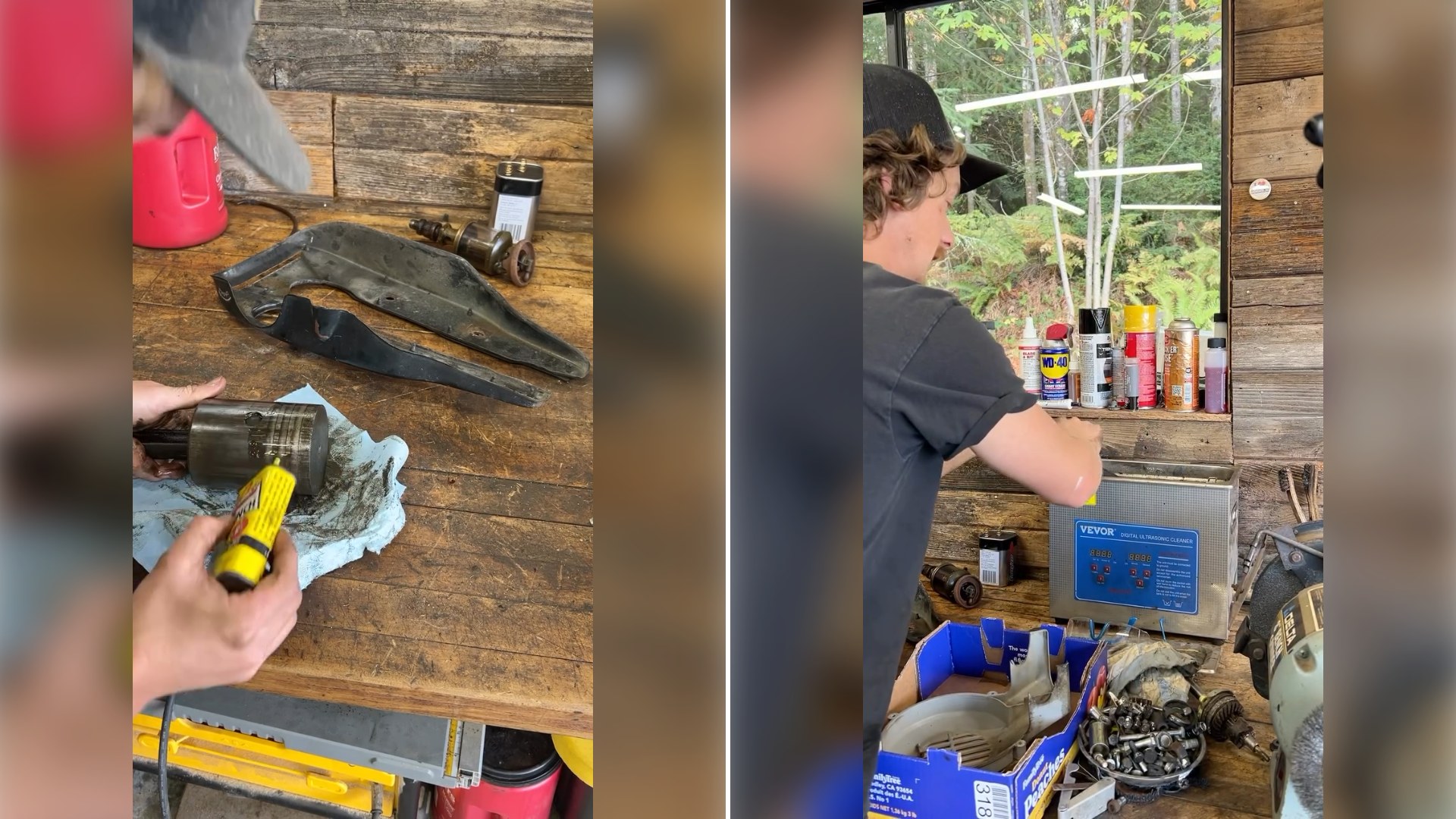
Some restoration projects reward quick dramatic payoffs, while others earn their satisfaction through sheer methodical patience, and creator @the_barn_brothers delivers the latter in a recent Instagram reel documenting the painstaking process of freeing up a seized 99-year-old engine, working through the problem piece by piece rather than rushing toward a shortcut that might risk permanent damage.
An engine approaching its hundredth year of existence represents a genuine artifact of early industrial and agricultural mechanization, built during an era when internal combustion technology was still relatively young and manufacturing tolerances, materials science, and metallurgical understanding differed considerably from modern engineering standards. Successfully diagnosing and repairing a machine this old requires not just mechanical skill but genuine historical knowledge of period-specific construction techniques and common failure points that modern mechanics, trained exclusively on contemporary equipment, would have no particular reason to understand.
The piece-by-piece approach documented in content like this one reflects best practice within serious vintage engine restoration circles, where disassembling a seized mechanism methodically, documenting each component’s condition and position, dramatically reduces the risk of causing irreversible damage compared to attempting a faster, less careful approach. This kind of careful, documented disassembly also serves a valuable secondary purpose, creating a visual record that other restorers facing similar seized mechanisms on comparable engines can reference for their own projects.
What makes watching this kind of granular restoration process so compelling is the genuine educational value embedded in witnessing real problem-solving unfold in real time, rather than a polished, edited-down highlight reel that skips over the actual diagnostic reasoning. Viewers get to see not just the eventual solution but the systematic troubleshooting process itself — which components get examined first, how a mechanic determines whether a part needs replacement versus careful cleaning and reconditioning, and how decades of accumulated grime and corrosion actually get addressed in practice.
This near-century milestone also carries genuine historical weight worth appreciating on its own terms. An engine built in the mid-1920s would have been manufactured during a period of significant technological transition, as internal combustion engines rapidly displaced earlier steam and manual power sources across agricultural and small industrial applications throughout rural America. Successfully reviving a surviving example from this specific transitional period offers a tangible connection to that broader historical shift in how rural communities powered their daily work.
The vintage and antique engine restoration community has increasingly recognized the value of thorough documentation efforts like this one, understanding that detailed restoration records contribute meaningfully to a shared body of practical knowledge that benefits the entire hobby. As fewer people retain direct mechanical experience with engines of this specific vintage, well-documented restoration projects become increasingly valuable reference material for future restorers who may encounter similar mechanical challenges without the benefit of firsthand experience to draw upon.
There’s also something genuinely admirable about the sheer dedication required to work through a restoration project of this difficulty without rushing toward an easier, potentially damaging shortcut. The temptation to simply force a stuck component loose, rather than patiently working through proper penetrating oil application and incremental pressure, must be considerable, and resisting that temptation in favor of a careful, piece-by-piece approach reflects genuine respect for the historical integrity of the machine being restored.
It’s also worth noting how this kind of slow, methodical restoration content has found real resonance with audiences increasingly drawn to process-oriented content that rewards patience over instant gratification, standing in deliberate contrast to much of the internet’s usual fast-paced content cadence.
Ultimately, @the_barn_brothers’s painstaking documentation succeeds because it honors both the mechanical complexity and the genuine historical significance of a machine approaching its hundredth birthday. Freeing up a seized engine piece by piece isn’t the fastest approach available, but it’s clearly the right one for a machine this old and this worth preserving properly.

Leave a Reply