

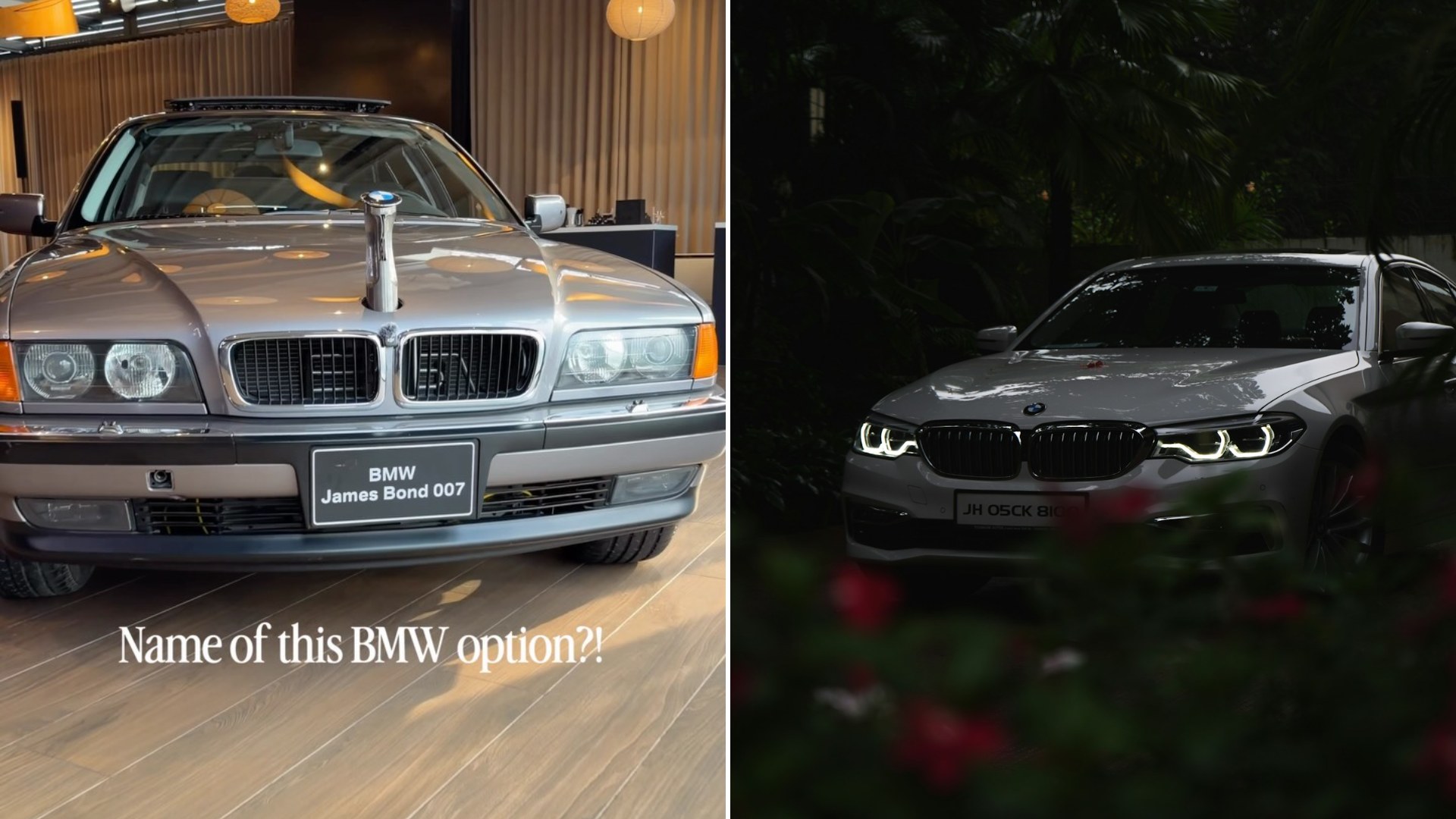
Few cars carry the kind of built-in cinematic mystique that a James Bond movie tie-in vehicle does, and creator @bratudor leans into exactly that mystique in a recent Instagram reel revealing a genuinely hidden mechanical feature on a vintage James Bond-edition BMW. The close-up demo shows the feature triggering smoothly, offering a small but genuinely thrilling glimpse of cinematic fantasy built directly into an actual, functioning automobile.
BMW’s association with the James Bond franchise, which began prominently in the mid-1990s and continued through several subsequent films, represented a significant moment in automotive marketing history, pairing the brand’s performance engineering reputation with cinema’s most famous fictional secret agent. Limited edition and tie-in vehicles released around these films often incorporated genuine design cues, special badging, or in some documented cases functional gadget-inspired features intended to evoke the elaborate spy gadgetry audiences had just watched on screen, blurring the line between movie prop and real-world consumer product.
What makes a hidden feature reveal like this one so satisfying is the way it rewards close, patient attention to a vehicle that might otherwise look entirely conventional at first glance. Bond-era vehicle marketing thrived on exactly this kind of surprise — the promise that an ordinary-looking car might conceal something unexpected, whether that meant a genuine functional gadget or simply a clever styling detail referencing the films. A video that patiently demonstrates one of these features in close-up detail essentially recreates that same thrill of discovery for a modern audience decades removed from the original film releases.
Collectors of film-licensed and tie-in vehicles occupy a genuinely specialized niche within the broader classic car collecting world, one that sits at the intersection of automotive enthusiasm and pop culture memorabilia collecting. These vehicles carry a dual collectible value: the inherent worth and engineering pedigree of the car itself, combined with the added cultural cachet of its cinematic association, which can significantly increase both collector interest and resale value compared to an otherwise identical standard model lacking the film tie-in.
There’s also something worth appreciating about how this kind of content bridges multiple fan communities simultaneously. Classic car enthusiasts, James Bond franchise fans, and general nostalgia audiences each bring a slightly different appreciation to a video like this one — car enthusiasts admire the engineering and mechanical execution, Bond fans delight in the direct connection to beloved film moments, and general nostalgia viewers simply enjoy the inherent coolness of a hidden gadget-style feature regardless of its specific cinematic origin.
The broader fascination with movie and television tie-in vehicles has grown considerably within collector circles in recent years, as these cars increasingly represent snapshots of very specific cultural moments when a film franchise’s popularity directly shaped automotive marketing and limited production decisions. A Bond-edition BMW isn’t just a car; it’s a physical artifact of a particular moment when a studio, a filmmaker, and an automaker collaborated to blur the boundary between entertainment and consumer product in a way that feels distinctly tied to its specific era.
It’s also worth noting how maintaining and demonstrating these kinds of specialty mechanical features requires genuine ongoing care from an owner, since specialized components incorporated into limited production runs can be considerably harder to repair or source replacement parts for compared to standard factory equipment. A feature still functioning smoothly decades after the car’s original release speaks to careful, dedicated maintenance by an owner who clearly understands and values the vehicle’s unique provenance.
This kind of reveal content also performs a valuable role in keeping relatively niche automotive history visible and accessible to new audiences who may have missed the original film releases or the associated vehicle marketing campaigns entirely. For younger viewers unfamiliar with the specific era of Bond films and their corresponding vehicle tie-ins, a close-up demonstration like this one offers an engaging, low-effort entry point into a genuinely interesting corner of both automotive and film history.
Ultimately, @bratudor’s reveal succeeds because it captures something that both car collecting and film fandom share at their core: the pleasure of noticing and appreciating details that reward genuine attention and knowledge. A hidden mechanical feature functioning exactly as designed decades after its original release is a small, concrete reminder that the fantastical gadgetry of cinema occasionally found its way, however modestly, into the real world.

Leave a Reply