

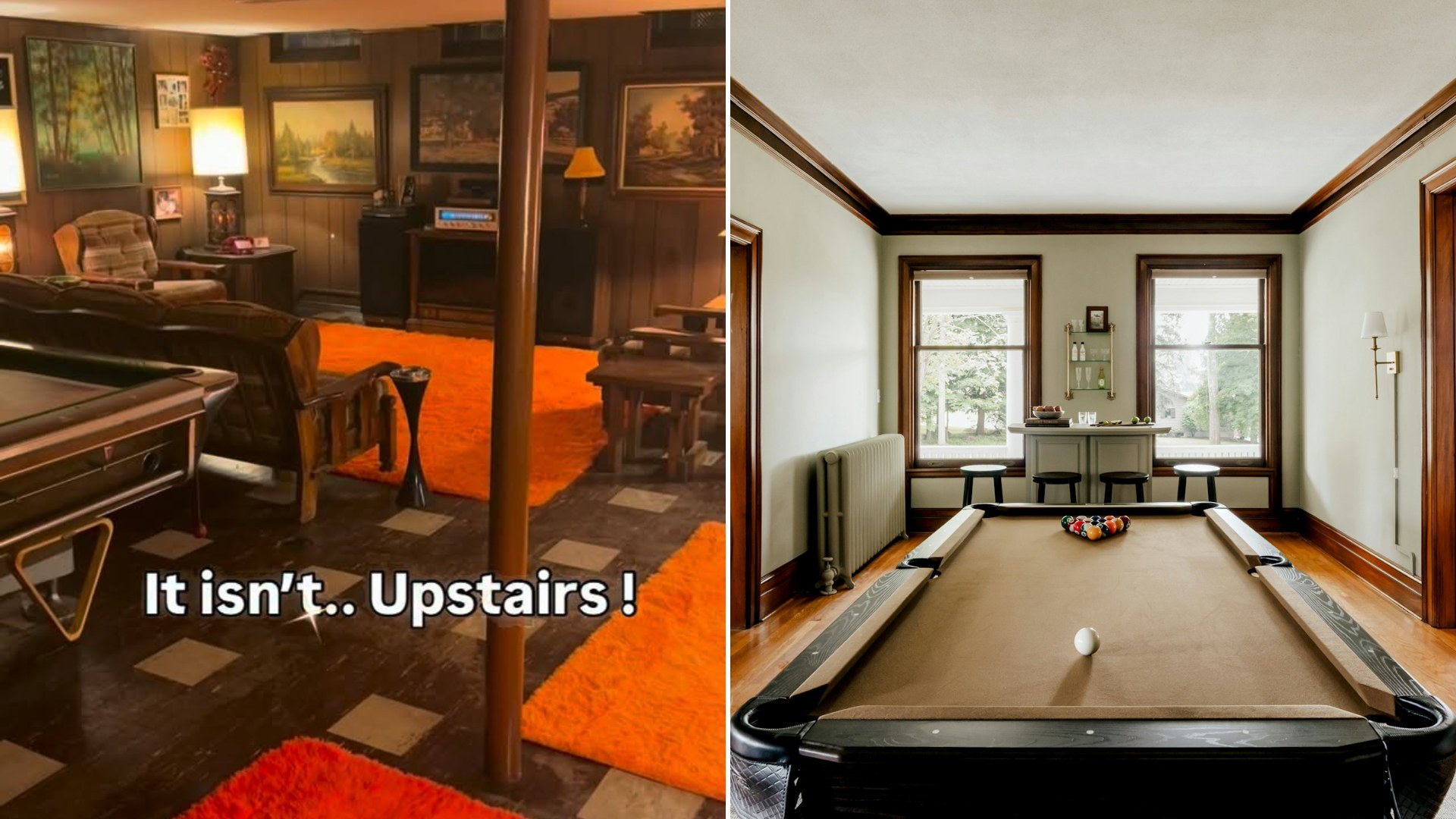
Basements have a special place in the architecture of American nostalgia, and creator @jbmcburbs gives hers a loving tour in a recent Instagram reel, walking viewers through a space decked out entirely in authentic 1970s style. Paneled walls, shag carpet, and period-correct furnishings combine into a genuinely immersive retro environment, and she doesn’t just show it off — she explains exactly why this specific aesthetic means so much to her.
The 1970s basement occupies an almost mythological status within American home nostalgia, representing a very specific kind of domestic retreat that flourished during that decade in particular. Wood paneling, shag carpeting, wet bars, and dedicated rec room furniture turned basements from purely functional storage and utility spaces into genuine entertainment hubs, built specifically for family game nights, teenage hangouts, and the kind of casual, low-stakes socializing that defined suburban leisure culture during that era.
What makes a fully committed retro basement like this one so compelling is the sheer intentionality required to create and maintain it in the present day. Unlike simply living in an older home that happened to retain its original 1970s features, actively curating and furnishing a space to this level of period accuracy requires genuine research, patient sourcing of authentic or convincingly reproduction furniture and decor, and a clear aesthetic vision sustained across every visible detail, from wall treatments down to the smallest accent pieces.
This kind of deliberate retro home design has become an increasingly visible trend within broader interior design culture, representing a genuine rebellion against the beige, minimalist, and strikingly uniform aesthetic that has dominated mainstream home design trends for much of the past decade. Where that minimalist approach prioritizes neutral palettes and uncluttered simplicity, a committed 1970s basement embraces bold colors, pattern mixing, and a maximalist sensibility that feels genuinely refreshing and personality-driven by comparison, especially to viewers fatigued by algorithmically similar modern home renovations.
There’s also a strong generational and personal history dimension often embedded in spaces like this one. For many people who grew up with a grandparent’s or parent’s genuine 1970s basement, recreating that same aesthetic in their own home isn’t purely about design trends — it’s an act of honoring specific, cherished memories of a space that held real emotional significance, whether that meant childhood holiday gatherings, formative teenage hangouts, or simply the comforting, specific feeling of a particular relative’s house.
The explanation element of a video like this one — taking time to articulate why the space matters rather than simply showing it off visually — adds an important layer of authenticity that distinguishes genuine nostalgic design from purely aesthetic trend-chasing. When a creator explains the personal reasoning behind specific design choices, it transforms the space from simply a visually interesting backdrop into a meaningful expression of identity and memory, which tends to resonate far more deeply with audiences than decor chosen purely for its visual appeal.
Retro and vintage home design content more broadly has flourished across social media platforms in recent years, part of a larger cultural moment in which younger generations in particular are actively seeking out design sensibilities that feel warmer, more characterful, and more distinct from the sleek, somewhat impersonal aesthetic that has dominated real estate listing photography and influencer home content for years. A fully committed period basement stands in direct, charming contrast to that trend.
It’s also worth noting the practical craftsmanship and sourcing challenges involved in maintaining a space like this authentically. Genuine vintage wood paneling, period-correct light fixtures, and original shag carpeting have become increasingly difficult to source as both the materials themselves and the manufacturers who originally produced them have largely disappeared, meaning a well-executed retro basement often represents years of patient collecting, estate sale hunting, and careful restoration rather than a single quick renovation project.
Ultimately, @jbmcburbs’s basement tour resonates because it offers something increasingly rare in home content: a space that feels genuinely lived-in and personally meaningful rather than staged for maximum visual impact. In an era of homogenized interior design trends, a fully committed retro basement stands as a cheerful, colorful reminder that homes can, and perhaps should, reflect genuine personal history rather than whatever aesthetic happens to be algorithmically popular at any given moment.

Leave a Reply