

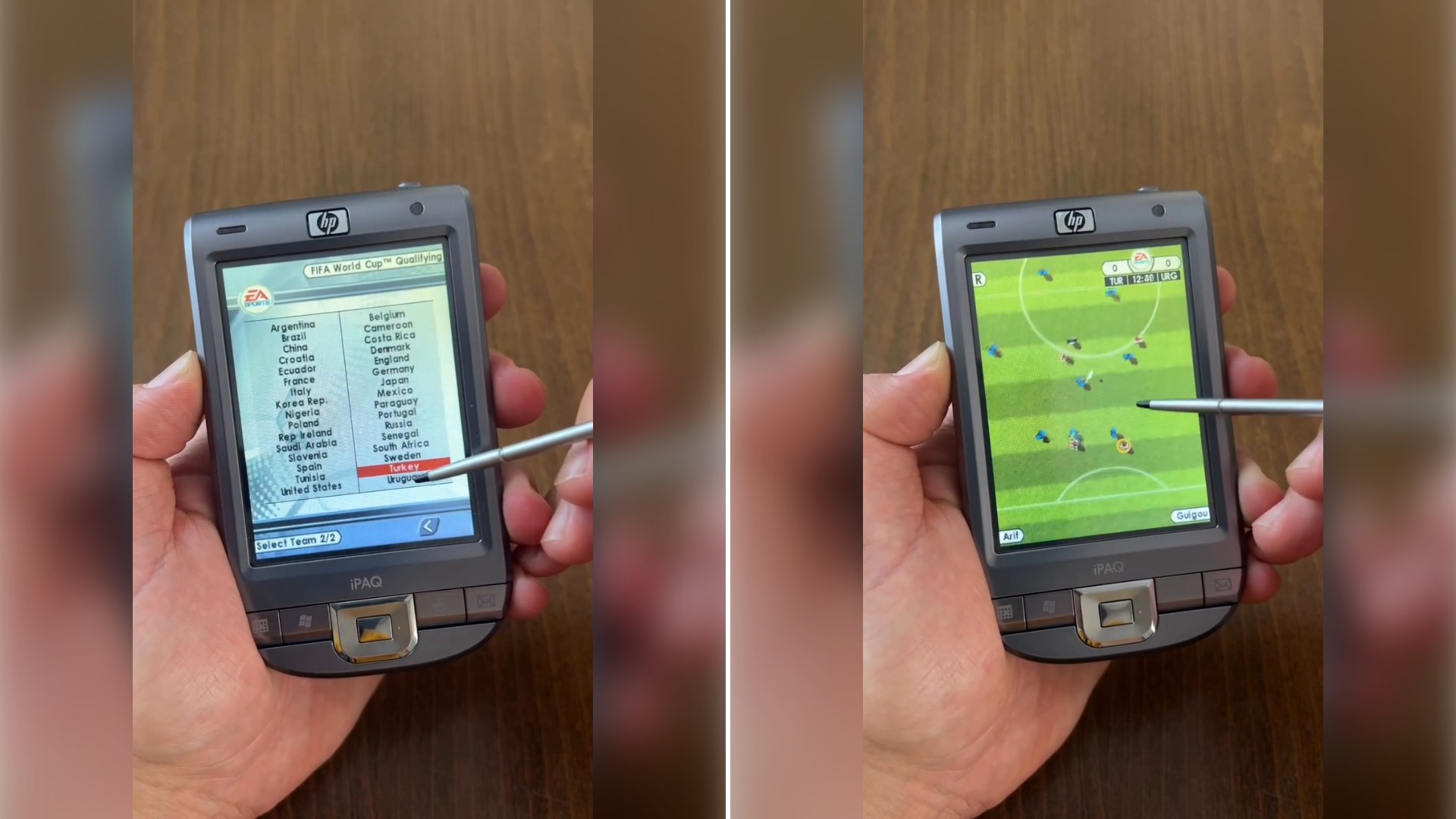
Before smartphones absorbed nearly every portable function into one device, personal digital assistants briefly promised to be the future of mobile computing, and @new.retrogamer revisits that forgotten chapter in this clip. Demonstrating an old HP iPAQ PDA, he loads up a mobile port of FIFA 2002, showing off a corner of early-2000s handheld gaming history most people have completely forgotten ever existed.
PDAs like the HP iPAQ represented a genuinely fascinating transitional moment in portable computing history, bridging the gap between simple organizers and the fully-featured smartphones that would eventually render the entire category obsolete within just a few years. At their peak in the early 2000s, these stylus-operated touchscreen devices were marketed primarily toward business professionals for calendars and contacts, which makes the existence of full mobile ports of console-quality games like FIFA 2002 a genuinely surprising footnote most casual tech history remembers completely overlooks.
Vintage PDA collecting occupies a genuinely underserved niche compared to more established retro tech categories like vintage game consoles or home computers. Despite being mass-produced in significant numbers during their heyday, PDAs were largely discarded or forgotten once smartphones made them redundant, which means well-preserved, functional examples are often harder to track down today than contemporary devices that had larger, more enduring collector communities from the start.
The specific choice to demonstrate FIFA 2002 running on period-appropriate hardware highlights an often-overlooked chapter in mobile gaming history that predates the App Store era by half a decade. Mobile adaptations of major console titles during this period required genuinely impressive technical compromises to fit onto devices with a fraction of the processing power, memory, and screen resolution of their console counterparts, making a successful port a real engineering achievement worth appreciating on its own terms.
Stylus-based touch interfaces specifically represent a design approach that has almost entirely vanished from modern consumer electronics, replaced by finger-based touchscreens that prioritize different interaction patterns entirely. Watching someone navigate menus and gameplay using a stylus on a resistive touchscreen offers a genuinely instructive contrast for younger viewers who have only ever known capacitive, finger-driven touch interfaces, highlighting just how much interface design has evolved over roughly two decades.
This kind of retro tech demonstration content also plays an important role in preserving institutional knowledge about hardware and software that official manufacturers have long since abandoned supporting. Without hobbyists actively keeping these devices running, documenting their quirks, and sharing that knowledge, entire categories of early mobile computing history risk disappearing from collective memory far faster than their more celebrated console and computer counterparts.
Videos like this one ultimately do valuable work in expanding what counts as worthy of retro tech appreciation, reminding viewers that meaningful innovation happened across far more device categories than the console and computer lineages that typically dominate nostalgia conversations, even in short-lived, now largely forgotten product lines like the PDA.

Leave a Reply