

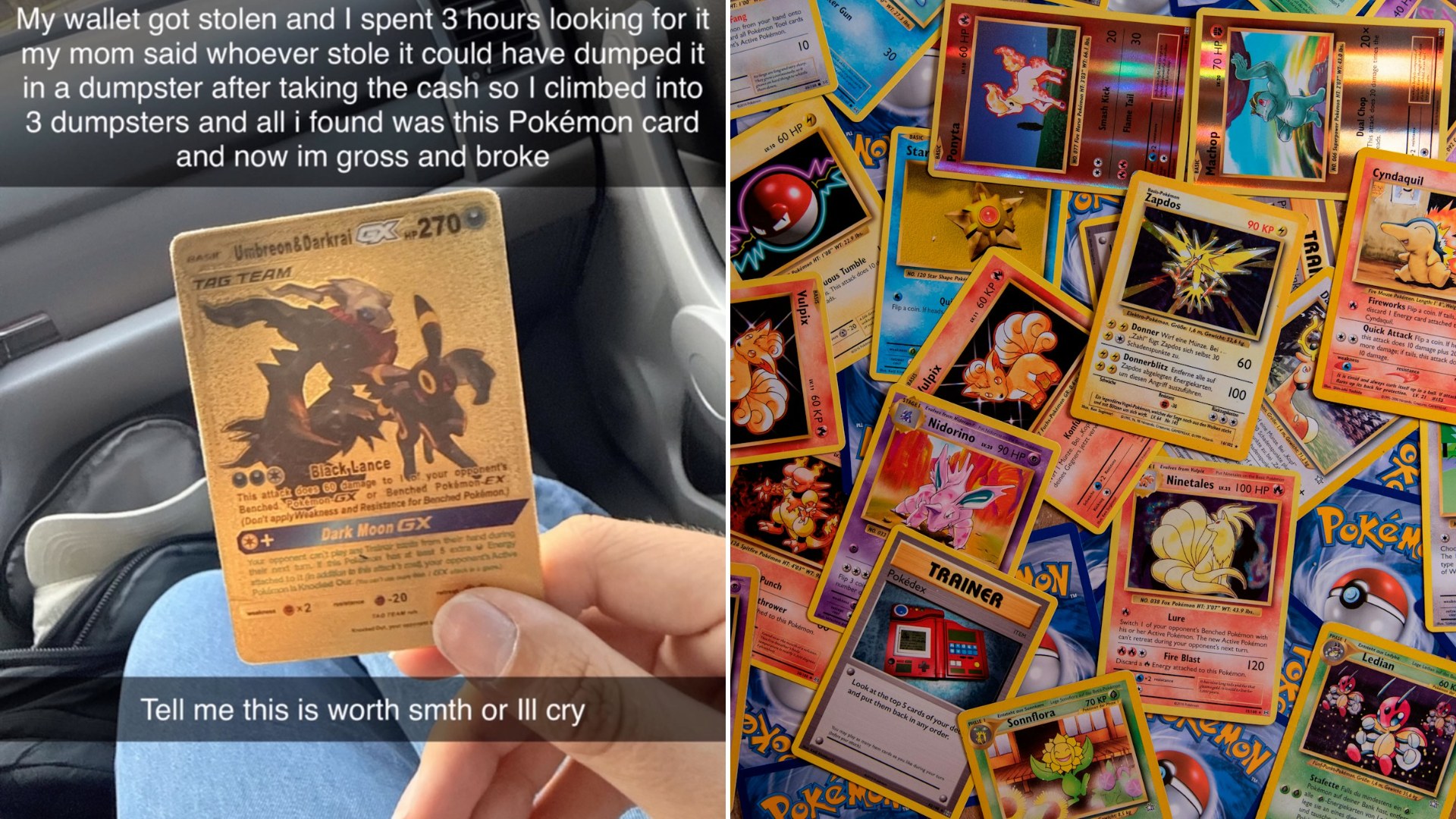
Sometimes the universe has a strange sense of humor, and creator @emmy.mabess captures a perfect example in a recent Instagram reel. After losing her wallet and resorting to digging through dumpsters in hopes of recovering it, she comes up empty-handed on the wallet front — but stumbles instead on an unexpected Pokemon card, turning a frustrating, slightly gross search into an oddly delightful consolation prize.
There’s a particular genre of internet content built around exactly this kind of narrative inversion — setting out to find one thing, failing entirely, and stumbling onto something completely unrelated in the process. It works because it mirrors a genuinely common human experience: the universe rarely delivers exactly what we’re looking for, but it occasionally offers something unexpected in its place, and there’s a kind of dark comedy and quiet poetry in that mismatch that resonates well beyond the specific circumstances of a lost wallet.
Dumpster diving itself occupies an interesting and increasingly normalized place in online culture, shifting over the past decade from something viewed with a degree of social stigma to something approached with genuine curiosity and even enthusiasm among certain online communities. Whether driven by necessity, environmental consciousness, or simple curiosity about what gets discarded, digging through trash and discarded bins has become a surprisingly well-documented online genre, with creators regularly showcasing surprising, valuable, or simply strange finds pulled from places most people would never think to look.
The specific detail of a Pokemon card turning up in this context adds an extra layer of cultural resonance given the franchise’s massive and ongoing collecting boom. Cards end up discarded for all sorts of mundane reasons — a kid outgrowing the hobby, a parent clearing out a bedroom, a card simply falling out of a pocket or bag — and the fact that even a stray, randomly discarded card can carry genuine value or at least genuine recognition speaks to just how thoroughly Pokemon has saturated popular culture across multiple generations.
This kind of accidental discovery also taps into a broader fascination with what collectors sometimes call “the find” — that electric moment when something valuable or interesting surfaces completely unexpectedly, outside any deliberate searching process. Unlike the curated hunt of a thrift store visit or an estate sale, a genuinely random find like this one carries an almost magical quality precisely because there was no strategy involved, just pure chance intersecting with a moment of frustration and persistence.
There’s also something worth noting about the specific emotional arc this kind of video delivers for viewers. It opens on a relatable low point — the genuine stress and inconvenience of a lost wallet — and resolves not with the expected relief of recovery, but with an unexpected pivot into something lighter and more whimsical. That emotional subversion, trading disappointment for surprise delight, is a big part of why videos structured this way tend to generate such strong engagement and shareability.
It’s also worth considering how content like this reflects a broader cultural comfort with documenting unglamorous, even mildly embarrassing moments in real time. A decade or two ago, searching through a dumpster might have been something kept entirely private out of simple social discomfort; today, it’s filmed, narrated, and shared without hesitation, part of a larger shift toward radical transparency and relatability in how people present their everyday lives online.
The trading card world specifically benefits from this kind of crossover content, since it introduces Pokemon cards and collecting culture to viewers who might otherwise have no particular interest in the hobby. A viewer tuning in purely for the wallet-search narrative gets a small, organic introduction to trading card collecting as a side effect, potentially sparking curiosity about a hobby they’d never otherwise have encountered through more conventional collecting content.
In the end, @emmy.mabess’s video works precisely because it refuses to resolve neatly. The wallet, presumably, is still missing, yet the video doesn’t read as a failure — it reads as a small, funny reminder that searching for one thing often leads us somewhere we never expected to look, and that sometimes the unexpected find is the better story anyway.

Leave a Reply