

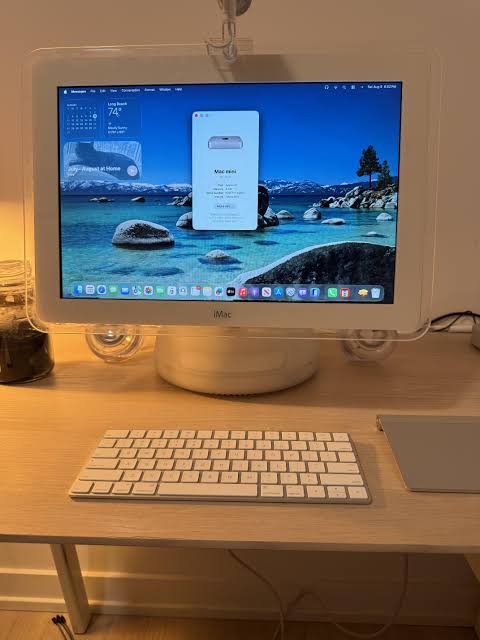
Some vintage tech ages into pure nostalgia, and some ages into genuine design icon status, and the iMac G4 manages to land squarely in both camps. In this clip, @bradcanning shows off her still-functioning 2002 iMac G4, lingering lovingly on the design quirks and mechanical details that made Apple’s old desktop so distinctive at a time when most computers were content to be beige boxes.
Launched in 2002, the iMac G4 remains one of the most instantly recognizable computer designs ever produced, with its dome-shaped base and flat-panel screen mounted on a free-floating articulated arm that could swivel, tilt, and adjust in ways that felt almost futuristic at the time. Twenty-four years later, that design has not just aged gracefully, it has arguably become more visually striking in a world of flat, interchangeable laptop silhouettes that all tend to blur together.
Vintage Apple hardware occupies a genuinely unique position within the broader retro computing collecting world. While most vintage computer collectors focus on functionality and historical software significance, Apple products specifically draw an additional layer of interest rooted purely in industrial design, a direct result of the company’s long-standing emphasis on form as inseparable from function, something the iMac G4 embodies about as completely as any product in Apple’s entire history.
The swivel-arm mechanism specifically deserves real credit for how well it has held up mechanically across two decades. Moving mechanical parts tend to be the first thing to fail in aging electronics, yet a surviving G4 that still smoothly adjusts on its arm after twenty-four years speaks to a level of build quality that stands in sharp contrast to the planned obsolescence often associated with modern consumer tech, where devices are frequently designed to be difficult or impossible to repair at all.
There is also something quietly countercultural about keeping a machine like this in working daily use rather than simply displaying it as decoration. Running genuinely functional vintage hardware, rather than treating it purely as a design object, requires real technical knowledge: sourcing compatible parts, navigating long-discontinued software, and troubleshooting hardware that Apple itself stopped supporting decades ago. That hands-on commitment separates serious vintage computing enthusiasts from people who simply appreciate the aesthetic from a distance.
The iMac G4’s design language has also experienced a notable resurgence in broader popular culture recently, showing up as inspiration in product design, interior decor, and even fashion photography as a younger generation discovers early-2000s aesthetics with fresh eyes. That renewed cultural relevance has pushed demand and prices for well-preserved units steadily upward among collectors who specifically chase that distinctive translucent, colorful design language Apple largely abandoned in later product lines.
Showcasing a machine like this is ultimately an argument for why great industrial design deserves to be preserved and actively used, not just admired in photographs. A computer this visually bold, built to last this long, offers a compelling rebuttal to the idea that consumer electronics are inherently disposable.

Leave a Reply