

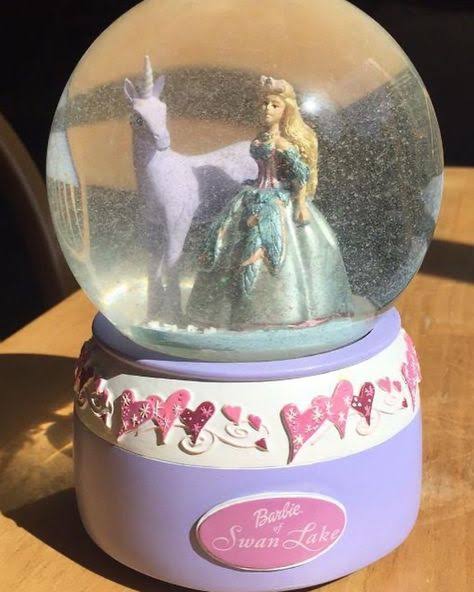
Every serious collection eventually earns a proper showcase moment, and @thecurious.collector gives her early-2000s Barbie snow globes exactly that in this video. Walking through her assembled set piece by piece, she treats what could easily be dismissed as nostalgic novelty items like prized pieces of a genuinely considered personal collection, complete with the kind of care and context usually reserved for more conventionally valuable collectibles.
Barbie merchandise from the early 2000s occupies a particularly interesting window in the brand’s long history, a period that bridged the more sculptural, nineties-era doll aesthetic with the increasingly digital, media-tied marketing of the mid-2000s. Snow globes specifically were a common licensed tie-in product during this era, often sold through department stores and specialty gift shops rather than toy aisles, which has made well-preserved examples genuinely harder to track down than the dolls themselves.
Snow globe collecting as a broader category has always occupied a slightly overlooked corner of nostalgia collecting, frequently treated as kitschy souvenir items rather than serious collectibles. Yet that perception is exactly what creates opportunity for collectors willing to specialize. Because fewer people actively hunt for themed snow globes compared to dolls, figures, or trading cards, a patient and knowledgeable collector can assemble a genuinely rare, hard-to-replicate set over time without facing the same competitive pressure found in more mainstream collecting categories.
There is also something distinctly tactile and almost theatrical about snow globes as objects that sets them apart from flatter collectibles like trading cards or stickers. Each one is a tiny, self-contained scene, miniature Barbie figures frozen mid-pose inside a swirling, snow-filled dome, which gives a full shelf of them a genuinely immersive, diorama-like quality when displayed together rather than simply functioning as a row of identical items.
Early-2000s Barbie nostalgia specifically has been gaining real momentum recently as the millennials and older Gen Z viewers who grew up with that exact era of the brand reach an age where they have both disposable income and a strong emotional pull back toward their childhood. Licensed tie-in merchandise from that period, often overlooked at the time as cheap promotional material, is increasingly being recognized as a genuine artifact of a very specific cultural moment in girlhood media and marketing.
Showcasing a collection like this also does meaningful work in legitimizing niche nostalgia categories more broadly. By treating her snow globes with genuine reverence rather than irony, the creator signals to her audience that value in collecting is not strictly dictated by resale price or mainstream recognition, but can come just as easily from personal meaning and the sheer specificity of an assembled set.
Collections like this one ultimately serve as a reminder that nostalgia rewards specificity. A broad Barbie collection might include dolls, playsets, and clothing spanning decades, but a tightly focused set built around one narrow category from one specific era often ends up telling a richer, more personal story than a sprawling general collection ever could.

Leave a Reply