

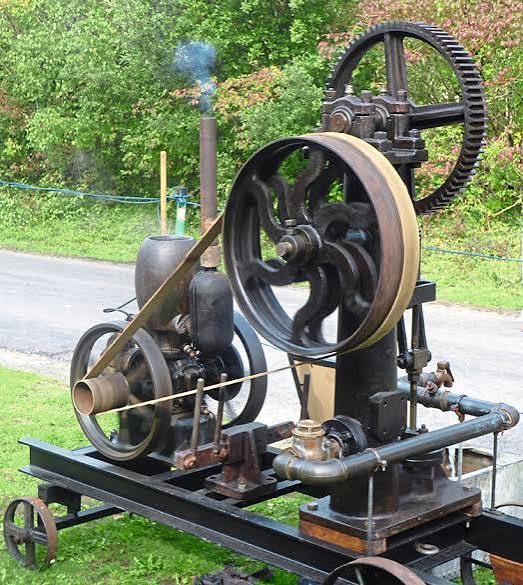
Few moments in restoration content hit quite as hard as the sound of an old engine finally catching after days of frustration, and @the_barn_brothers deliver exactly that payoff here. After days spent chasing down a stubborn mechanical issue, the creators finally get their nearly century-old stationary engine running for the first time in decades, a 1927 relic brought back from total silence through sheer persistence.
Antique stationary engines occupy a fascinating, often overlooked niche of mechanical collecting. Before small gas and diesel engines became common on farms and in workshops throughout the early twentieth century, these hit-and-miss engines powered everything from water pumps to grain grinders, forming the quiet mechanical backbone of rural and industrial life for decades. Most surviving examples have sat dormant for generations, which makes the process of coaxing one back to life a genuinely rare and technically demanding undertaking.
What makes restoration content like this so compelling is the sheer unpredictability of the troubleshooting process. Unlike restoring something with readily available modern parts and documentation, a century-old engine often requires improvisation, fabricating replacement components by hand, diagnosing problems through sound and feel rather than diagnostic tools, and drawing on mechanical intuition built up over years of hands-on experience. Days of failed attempts shown leading up to a successful start are not padding, they are the actual substance of what makes restoration work genuinely difficult.
There is also a distinct audio signature that antique engine enthusiasts prize above almost anything else in the hobby. The distinctive, uneven rhythm of a hit-and-miss engine, firing only often enough to maintain speed rather than running continuously, produces a sound unlike anything in modern machinery. For collectors and restorers in this space, successfully reviving that specific sound after decades of silence is often treated as the real finish line, more significant than the engine’s cosmetic condition or even its resale value.
This kind of mechanical preservation work also carries genuine historical weight beyond the satisfaction of a successful repair. Each surviving engine represents a tangible link to how rural communities and small industries actually functioned before widespread electrification, and keeping them operational preserves not just an object but a working demonstration of engineering approaches that have otherwise largely disappeared from living memory.
The brotherly dynamic on display throughout this kind of content adds another layer of appeal as well. Restoration projects of this scale rarely succeed through a single person’s effort alone, and watching two people troubleshoot collaboratively, trading theories, dividing tasks, and sharing in the eventual payoff, captures something genuine about how this kind of hands-on mechanical hobby tends to actually get passed down and sustained within families.
For anyone drawn to vintage machinery, this video is a reminder that restoration is rarely instant and never guaranteed. The real reward lives in the process itself, the troubleshooting, the small incremental progress, and finally that unmistakable moment when a century-old machine proves it still has life left in it.

Leave a Reply