

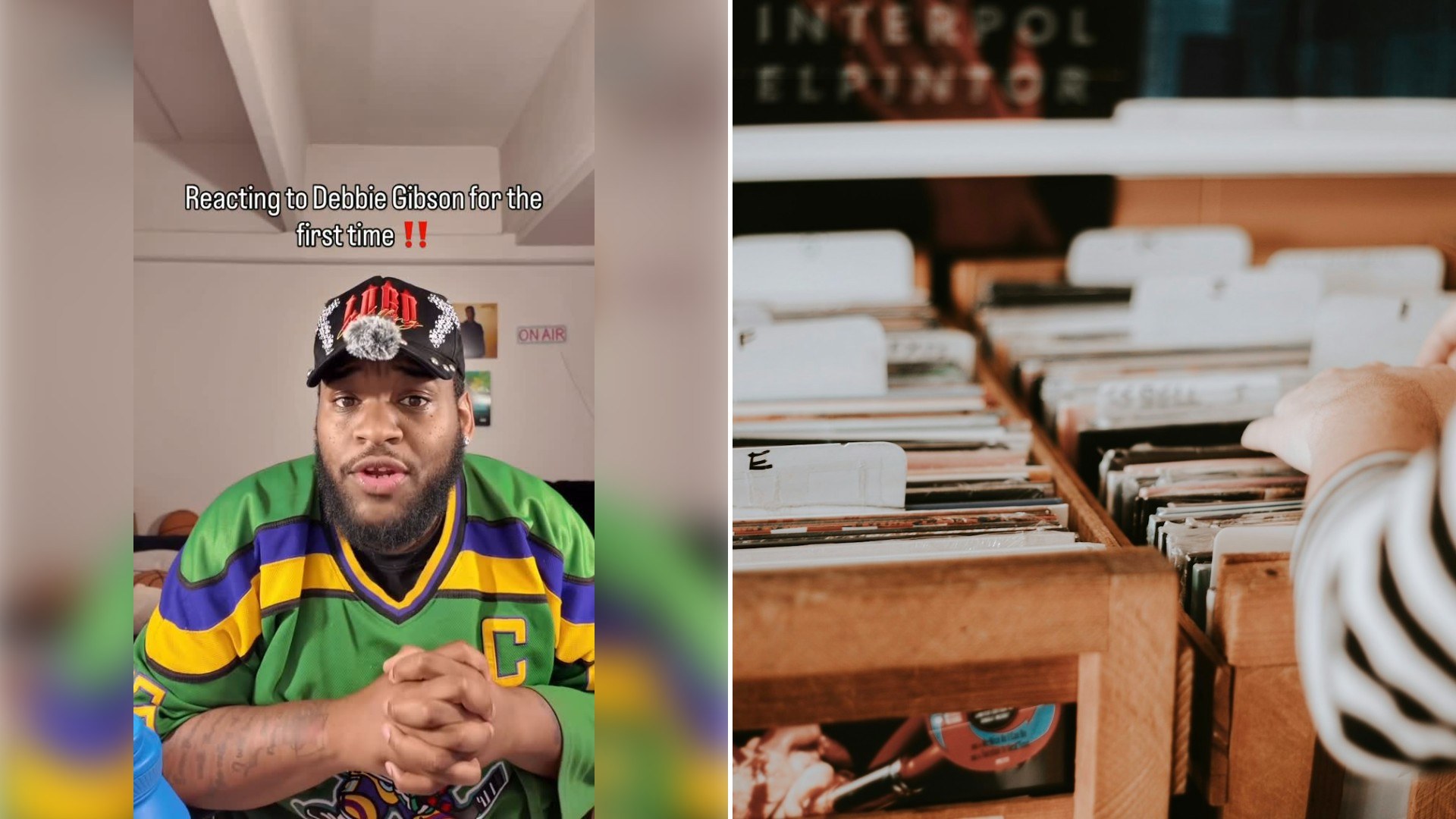
First-listen reaction videos live or die on genuine, unscripted response, and @camj859 delivers exactly that, sitting down to hear Debbie Gibson’s classic pop single Lost in Your Eyes for the first time on camera. As the track plays, he sings along where he can, offers live commentary, and reacts in real time to a song that, for an entire generation, needs no introduction at all.
The format works because it serves two audiences at once. For viewers who grew up with the song, watching someone experience it fresh offers a kind of vicarious nostalgia, a reminder of how genuinely good the track is through someone else’s unfiltered discovery. For viewers encountering it for the first time alongside him, the reaction doubles as an introduction to a piece of late 1980s and early 1990s pop history they might otherwise never have sought out on their own.
Debbie Gibson emerged as one of the defining teen pop stars of the late 1980s, and Lost in Your Eyes remains one of her most enduring hits, the kind of song that continues to surface in nostalgic pop culture conversations decades after its original release. First-listen reaction content has become one of the more effective ways that older music finds new audiences online, often introducing younger viewers to artists and songs that never would have crossed their radar through normal streaming algorithms alone.
That cross-generational function is part of what gives this kind of video staying power well beyond a single nostalgic watch. It is simultaneously a tribute for longtime fans and an introduction for newcomers, doing double duty in a way that a straightforward retrospective video rarely manages.
Part of what makes a first-listen reaction genuinely compelling, rather than simply pleasant, is the unpredictability baked into the format. Unlike a scripted retrospective, nobody watching, including the person reacting, knows in advance exactly which line, which vocal run, or which musical turn will land the hardest, and that uncertainty is what keeps the format from feeling like a rehearsed performance even when the reactor is clearly enjoying himself the whole way through.
Debbie Gibson’s broader place in pop history is also worth sitting with for a moment, since she was notable at the time not just as a performer but as a young artist heavily involved in writing and producing her own material, a rarer position for a teen pop star of that era than it might seem in retrospect. That behind-the-scenes involvement is part of why songs like this one have aged with a certain songwriting sturdiness that purely performance-driven pop hits from the same period do not always share.
There is also something worth noting about how singing along, even imperfectly, changes the emotional register of a reaction video compared to simply listening quietly. A reactor who cannot help joining in on a chorus signals a kind of physical, involuntary response that reads as more genuine than verbal praise alone, giving viewers a clearer sense of exactly which part of the song is doing the emotional work in real time.
This kind of content also reflects a broader shift in how older pop music circulates today, less through radio replay or generational word of mouth and more through exactly this kind of individual rediscovery, shared publicly and stumbled upon by algorithm rather than sought out deliberately. A song like this one, decades removed from its chart peak, gets a small second life every time a reaction video like this one introduces it to someone new.
There is also something worth saying about the specific comfort of watching a familiar song land well with someone new. Music nostalgia carries an inherent vulnerability, the small risk that a song someone loves might not hold up to a first-time listener’s more objective ear, and a genuinely positive reaction lands as a kind of validation for longtime fans, confirming that the song’s quality was never just a product of childhood attachment.
The late 1980s and early 1990s produced an enormous catalog of pop songs that have since drifted out of regular rotation even as the artists behind them remain fondly remembered, and reaction content like this one has quietly become one of the main ways that catalog stays in circulation at all. Without radio airplay or major re-releases driving rediscovery, individual creators reacting to individual songs have become an unlikely but genuinely effective substitute, keeping deep catalog pop hits alive one reaction video at a time.
It is also worth noting how much the intimacy of this kind of video, one person, one song, a single continuous listen, sets it apart from a more produced retrospective piece covering an artist’s entire career. That narrow focus lets a single track get the kind of undivided attention it rarely receives once it has become background music for an entire generation, giving even longtime fans a chance to actually hear the song again rather than simply recognize it passively.
Songs like this one also carry a kind of built-in emotional shorthand for viewers who associate them with a specific moment in their own lives, a school dance, a long car ride, a particular friendship, and watching someone else discover that same melody fresh has a way of quietly pulling those personal associations back to the surface, even though the reactor himself has no access to any of that history.
For fans of classic pop music, reaction videos like this one are a good reminder that some songs hold up regardless of when someone actually discovers them, and watching that discovery happen in real time remains one of the simplest, most satisfying formats in music nostalgia content.

Leave a Reply