

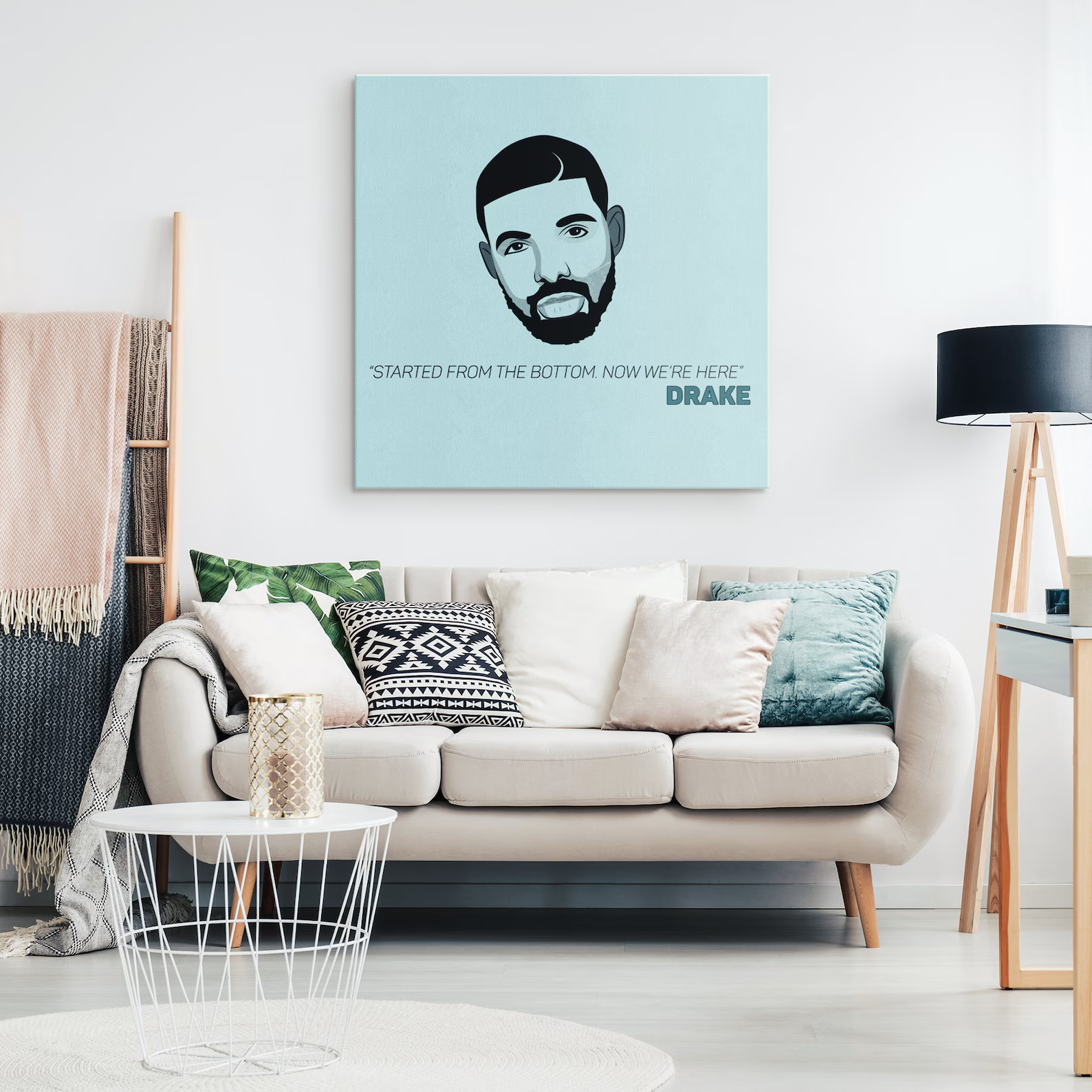
Sometimes the best pop culture discoveries happen in the most unlikely aisles, and that is exactly the kind of moment @feverrart captured while browsing a home goods store. Wall art sections tend to be filled with predictable, safe imagery, abstract shapes, generic landscapes, motivational quotes rendered in trendy fonts, which is precisely what made a custom Drake-themed piece sitting on the shelf such a genuine surprise when the creator came across it during an otherwise ordinary shopping trip.
The short clip shows the creator grabbing the piece to show viewers, the surprise of the discovery doing most of the storytelling work on its own. There is no elaborate setup needed for a moment like this one; the entire appeal comes from the sheer incongruity of finding a wall art tribute to one of the most recognizable names in contemporary music sitting alongside otherwise generic home decor, the kind of pop culture crossover that nobody expects to encounter while browsing for something to hang above a couch.
@feverrart
That element of surprise captures the fun of stumbling onto a pop culture item in an ordinary retail aisle, a specific kind of small joy that has become its own recognizable genre of content online. Shoppers are increasingly primed to document exactly this kind of unexpected find, the moment when a mundane errand suddenly produces something worth pulling out a phone for, and a piece of art referencing a major recording artist tucked in among ordinary decor fits that formula perfectly.
Home goods retailers have increasingly leaned into pop culture and music-inspired decor over recent years, recognizing that shoppers, particularly younger ones furnishing their first apartments or refreshing existing spaces, are often looking for pieces that reflect personal taste and cultural interests rather than generic, forgettable art. A tribute piece tied to a globally recognized artist represents exactly that kind of intersection between mainstream retail and genuine fan culture, offering shoppers a way to bring a piece of the music they actually listen to into their physical living space.
That shift also reflects a broader trend in how retailers approach wall art and home decor more generally, moving away from purely decorative, mood-board style pieces and toward items with genuine cultural specificity and conversation value. A generic abstract print rarely generates a reaction from a houseguest, but a distinctive, recognizable piece tied to a specific artist or cultural moment almost always does, giving shoppers a reason to choose a more memorable, personality-driven option over the safer, more anonymous alternative sitting right next to it on the same shelf.
For shoppers hoping to find their own unexpected pop culture treasures while browsing home goods stores, the general advice from enthusiasts in this space is simple: slow down and actually look through the full selection rather than skimming past a wall art section on the assumption it will all be generic. Inventory in these sections tends to rotate frequently and inconsistently across different store locations, meaning a genuinely distinctive piece, like a Drake-themed tribute, can show up in one store and never appear in another, rewarding shoppers who take the time to actually browse rather than assume they already know what they will find.
Ultimately, moments like this one are a fun reminder that pop culture has a way of showing up in unexpected corners of everyday life, whether that is a piece of wall art in a home goods store or a familiar reference tucked into an otherwise ordinary product. For fans who recognize the reference the instant they see it, the thrill of discovery is exactly the same regardless of where it happens, and a quick trip to buy home decor turning into a genuine double take is a small, satisfying win worth sharing.
It is also a small reflection of how much personal identity people now expect their home decor to carry. A generic print might fill a blank wall, but a piece tied to an artist someone genuinely listens to does something more, turning a functional purchase into a small, visible expression of taste that a truly anonymous print could never manage on its own.
There is also a broader retail lesson buried in a small moment like this one, since a distinctive, unexpected piece is often what gets photographed, shared, and talked about long after a shopping trip ends, giving a single well-chosen item outsized marketing value compared to an entire wall of safer, more forgettable options.
For readers who enjoy this kind of unexpected retail discovery themselves, the best strategy is simply treating even routine errands as an opportunity to browse a little more slowly than usual, since the shelves most likely to hold a genuine surprise are often the ones shoppers are most inclined to walk past without a second look.
That kind of impulse purchase, driven entirely by surprise rather than planning, is often what turns an unremarkable shopping trip into the one a person actually remembers weeks later, long after any originally planned purchase has been forgotten.
In the end, it is a small, funny story precisely because nobody expects a home goods aisle to double as a pop culture time capsule, yet every so often, it apparently does.

Leave a Reply