

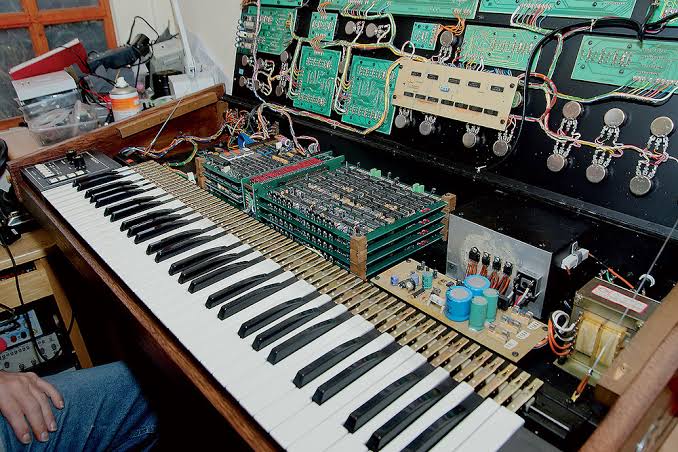
There is a distinct satisfaction that comes from hearing a piece of decades-silent technology make sound again, and that exact moment plays out in a video from @datachild, who demonstrates a vintage 1970s Muson synthesizer and sequencer picked up secondhand. Analog synthesizers from this era occupy a genuinely important place in music history, built during the formative years of electronic music production when the entire category of instrument was still being defined, experimented with, and reinvented by manufacturers and musicians alike.
In the video, the creator inserts colored plug-in keys into the sequencer, a physical, tactile method of programming that predates the digital interfaces most modern musicians would recognize, and the machine responds by triggering a short electronic tune. That moment, watching a decades-old sequencer actually execute the sequence it was fed, captures something that a lot of vintage gear demonstrations chase but rarely achieve so cleanly: real, functional proof that the old technology still works exactly as its original engineers intended.
@datachild
The clip is built around the simple joy of getting a decades-old piece of music tech to work again, and that simplicity is precisely its strength. There is no elaborate backstory needed, no dramatic reveal, just the quiet satisfaction of colored keys going into their slots and a machine that had presumably sat silent for years suddenly producing music once more, a small technical resurrection that resonates with anyone who has ever tried to coax old electronics back to life.
Vintage synthesizers like this one occupy a fascinating position in music technology history, built during a period when manufacturers were experimenting wildly with different approaches to sound generation and musical programming before industry standards had fully solidified. Plug-in key based sequencing systems, like the one shown here, represent one of many creative solutions engineers developed before more standardized digital sequencing methods eventually became the industry norm, which makes surviving, functional examples genuinely valuable both historically and musically.
That historical value has fueled a dedicated collector and musician community built specifically around vintage analog synthesizers, with enthusiasts seeking out functional examples of instruments that manufacturers stopped producing decades ago. Unlike digital instruments, which can often be replicated in software, analog synthesizers produce sound through genuinely unique physical and electrical processes that many musicians and collectors argue simply cannot be fully recreated by modern digital emulation, no matter how sophisticated the underlying technology has become.
Getting one of these instruments actually functional again after years of storage is rarely as simple as just plugging it in, however. Analog electronics from this era are prone to component degradation over time, capacitors in particular tend to dry out or fail after decades of inactivity, and connectors and switches can corrode or stick from disuse, meaning a successful demonstration like the one in this video often represents real technical troubleshooting behind the scenes before the machine was ever ready to perform on camera.
For anyone drawn into the world of vintage synthesizer collecting after watching a video like this one, specialists in the space generally recommend starting with instruments that have a strong repair community and available documentation, since working on genuinely obscure or poorly documented models can turn into a frustrating dead end without any technical support to fall back on. Whatever the specific instrument, though, moments like this one, an old machine finally making music again after years of silence, remain one of the most quietly rewarding experiences in the entire hobby.
It is also a reminder of how much specialized knowledge goes into keeping instruments like this one alive at all. Musicians and technicians who work on vintage synthesizers often become part historian and part electrician, since understanding why a given circuit was designed a certain way in the 1970s is frequently the only path to safely repairing it decades later without damaging components that can no longer simply be ordered from a catalog.
There is also something poetic about a sequencer built to loop the same short tune decades ago finally getting the chance to play that tune again for an entirely new audience, one that in many cases was not even born when the machine was first manufactured and sold.
For readers with an old, silent piece of electronics of their own tucked away in a closet or attic, this kind of video is also a gentle nudge to look into whether it might still be salvageable, since a local repair specialist familiar with vintage audio gear can sometimes revive equipment that looks, at first glance, completely beyond saving.
Even a partial revival, one working function out of several on an otherwise silent machine, can be enough to justify the effort involved, since for many owners the goal is less about full restoration and more about proving that a piece of personal or musical history has not been lost for good.
In the end, whether or not the synthesizer ever gets used for a full recording again, simply proving it still can is its own small, satisfying accomplishment worth sharing.
A little documentation goes a long way here as well, since sharing the exact model and the specific fix that finally got it working helps the next person who stumbles across a similarly silent machine in a closet or an estate sale bin somewhere down the line.

Leave a Reply